Conti Chiara, Carrozzino Danilo, Patierno Chiara, Vitacolonna Ester, Fulcheri Mario
Department of Psychological, Health, and Territorial Sciences, University "G. d'Annunzio" of Chieti-Pescara , Chieti , Italy.
Department of Psychological, Health, and Territorial Sciences, University "G. d'Annunzio" of Chieti-Pescara, Chieti, Italy; Psychiatric Research Unit, Mental Health Centre North Zealand, University of Copenhagen, Hillerød, Denmark.
Front Psychiatry. 2016 Jun 21;7:113. doi: 10.3389/fpsyt.2016.00113. eCollection 2016.
Type D personality consists of a mixture of high levels of negative affectivity and social inhibition, resulting in a stable tendency to experience negative emotions, by inhibiting the expression of these emotions. We have reanalyzed the clinically relevant studies examining the role of this personality profile in diabetes, by providing a qualitative synthesis of the data. In this regard, the aim of this study is to provide a systematic review by evaluating the clinical link between Type D personality and diabetes.
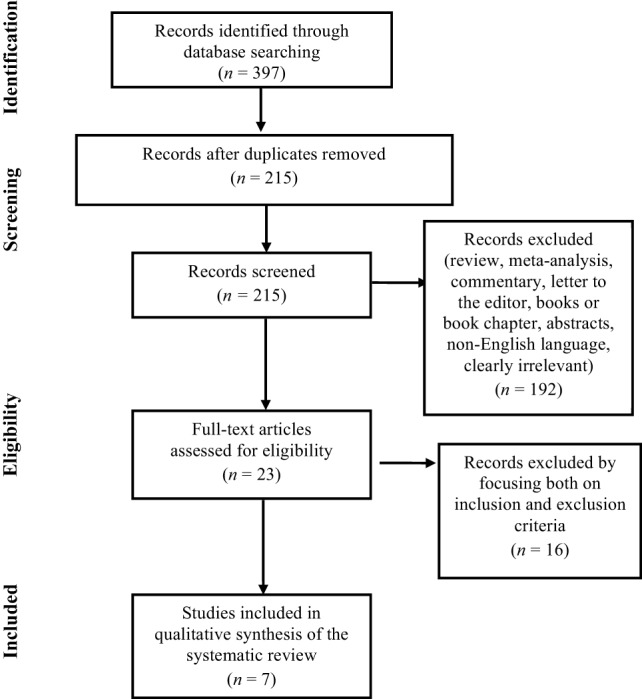
When focusing on PRISMA guidelines, we have performed a comprehensive research of the literature on PubMed, Scopus, ScienceDirect, ISI Web of Science, PsycINFO, and Google Scholar by using search terms as "distressed personality" OR (i.e., Boolean operator) "Type D personality" combined with the Boolean "AND" operator with "diabetes."
A total of seven research studies were identified and included in the review. Type D was found to be more prevalent in diabetes patients than controls. As regards the specific association with diabetes variables, Type D personality is a significant predictor of both poor medication adherence and unhealthy behaviors, by predicting negative mental health consequences also (i.e., depressed mood, anhedonia, and anxiety).
Our review emphasized for the first time that Type D personality affects clinical factors in patients with diabetes by provoking adverse outcomes. The core implication of the study comprises the clinical relevance to detect, from a clinimetric point of view, Type D personality in diabetes in order to prevent potentially negative clinical outcomes.
D型人格由高水平的消极情感和社交抑制混合而成,通过抑制这些情绪的表达,导致个体具有体验负面情绪的稳定倾向。我们通过对数据进行定性综合分析,重新审视了有关这种人格特征在糖尿病中作用的临床相关研究。在这方面,本研究的目的是通过评估D型人格与糖尿病之间的临床联系来进行系统综述。
依据PRISMA指南,我们在PubMed、Scopus、ScienceDirect、ISI Web of Science、PsycINFO和谷歌学术上对文献进行了全面检索,检索词为“苦恼人格”或(即布尔运算符)“D型人格”,并与布尔“与”运算符和“糖尿病”相结合。
共识别出七项研究并纳入综述。研究发现,D型人格在糖尿病患者中比在对照组中更为普遍。至于与糖尿病变量的具体关联,D型人格是药物依从性差和不健康行为的重要预测因素,同时也能预测负面心理健康后果(即情绪低落、快感缺失和焦虑)。
我们的综述首次强调,D型人格通过引发不良后果影响糖尿病患者的临床因素。该研究的核心意义在于,从临床测量学角度来看,检测糖尿病患者中的D型人格具有临床相关性,以便预防潜在的负面临床结果。