Pereyre Sabine, Goret Julien, Bébéar Cécile
USC EA 3671 Mycoplasmal and Chlamydial Infections in Humans, Univ. BordeauxBordeaux, France; USC EA 3671 Mycoplasmal and Chlamydial Infections in Humans, INRABordeaux, France; Laboratoire de Bactériologie, Centre Hospitalier Universitaire de BordeauxBordeaux, France.
Front Microbiol. 2016 Jun 22;7:974. doi: 10.3389/fmicb.2016.00974. eCollection 2016.
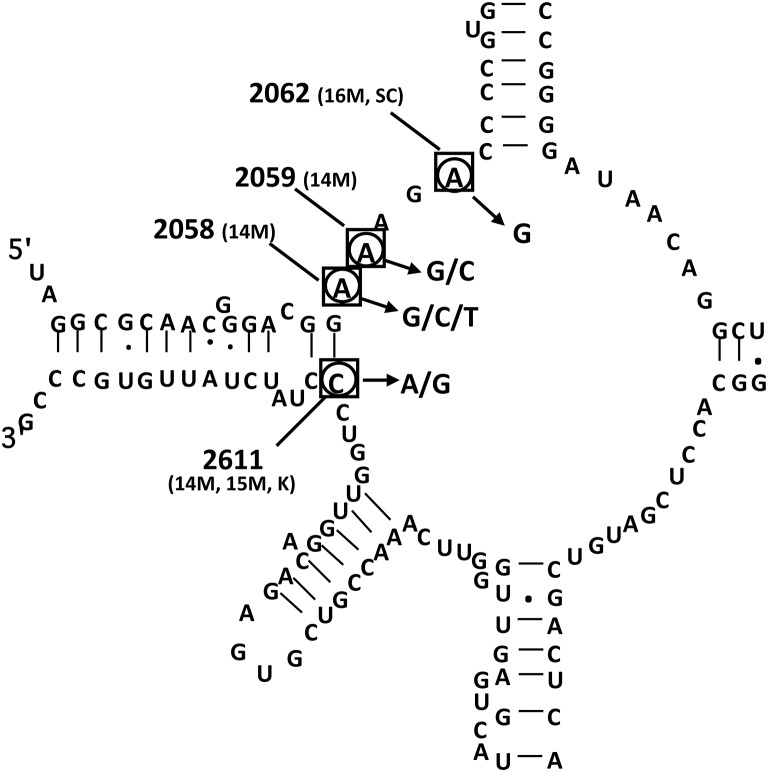
Mycoplasma pneumoniae causes community-acquired respiratory tract infections, particularly in school-aged children and young adults. These infections occur both endemically and epidemically worldwide. M. pneumoniae lacks cell wall and is subsequently resistant to beta-lactams and to all antimicrobials targeting the cell wall. This mycoplasma is intrinsically susceptible to macrolides and related antibiotics, to tetracyclines and to fluoroquinolones. Macrolides and related antibiotics are the first-line treatment of M. pneumoniae respiratory tract infections mainly because of their low MIC against the bacteria, their low toxicity and the absence of contraindication in young children. The newer macrolides are now the preferred agents with a 7-to-14 day course of oral clarithromycin or a 5-day course of oral azithromycin for treatment of community-acquired pneumonia due to M. pneumoniae, according to the different guidelines worldwide. However, macrolide resistance has been spreading for 15 years worldwide, with prevalence now ranging between 0 and 15% in Europe and the USA, approximately 30% in Israel and up to 90-100% in Asia. This resistance is associated with point mutations in the peptidyl-transferase loop of the 23S rRNA and leads to high-level resistance to macrolides. Macrolide resistance-associated mutations can be detected using several molecular methods applicable directly from respiratory specimens. Because this resistance has clinical outcomes such as longer duration of fever, cough and hospital stay, alternative antibiotic treatment can be required, including tetracyclines such as doxycycline and minocycline or fluoroquinolones, primarily levofloxacin, during 7-14 days, even though fluoroquinolones and tetracyclines are contraindicated in all children and in children < 8 year-old, respectively. Acquired resistance to tetracyclines and fluoroquinolones has never been reported in M. pneumoniae clinical isolates but reduced susceptibility was reported in in vitro selected mutants. This article focuses on M. pneumoniae antibiotic susceptibility and on the development and the evolution of acquired resistance. Molecular detection of resistant mutants and therapeutic options in case of macrolide resistance will also be assessed.
肺炎支原体可引起社区获得性呼吸道感染,尤其在学龄儿童和年轻人中。这些感染在全球范围内呈地方性和流行性发生。肺炎支原体缺乏细胞壁,因此对β-内酰胺类药物以及所有针对细胞壁的抗菌药物耐药。这种支原体对大环内酯类及相关抗生素、四环素类和氟喹诺酮类药物天然敏感。大环内酯类及相关抗生素是肺炎支原体呼吸道感染的一线治疗药物,主要是因为它们对该细菌的最低抑菌浓度较低、毒性低且对幼儿无禁忌证。根据全球不同指南,新型大环内酯类药物现在是治疗肺炎支原体所致社区获得性肺炎的首选药物,口服克拉霉素疗程为7至14天,或口服阿奇霉素疗程为5天。然而,大环内酯类耐药在全球范围内已传播了15年,目前在欧洲和美国的流行率在0%至15%之间,在以色列约为30%,在亚洲高达90%至100%。这种耐药与23S rRNA肽基转移酶环中的点突变有关,并导致对大环内酯类药物的高水平耐药。可使用几种直接适用于呼吸道标本的分子方法检测大环内酯类耐药相关突变。由于这种耐药会产生诸如发热、咳嗽持续时间延长和住院时间延长等临床后果,可能需要替代抗生素治疗,包括四环素类如多西环素和米诺环素或氟喹诺酮类,主要是左氧氟沙星,疗程为7至14天,尽管氟喹诺酮类和四环素类分别对所有儿童和8岁以下儿童禁忌。肺炎支原体临床分离株中从未报告过对四环素类和氟喹诺酮类药物的获得性耐药,但在体外筛选的突变体中报告了敏感性降低。本文重点关注肺炎支原体的抗生素敏感性以及获得性耐药的发展和演变。还将评估耐药突变体的分子检测以及大环内酯类耐药情况下的治疗选择。