Alberro Ainhoa, Sáenz-Cuesta Matías, Muñoz-Culla Maider, Mateo-Abad Maider, Gonzalez Esperanza, Carrasco-Garcia Estefania, Araúzo-Bravo Marcos J, Matheu Ander, Vergara Itziar, Otaegui David
Multiple Sclerosis Unit, Biodonostia Health Research Institute-Donostia University Hospital, San Sebastian 20014, Spain.
Spanish Network of Multiple Sclerosis, Barcelona 08028, Spain.
Int J Mol Sci. 2016 Jul 20;17(7):1168. doi: 10.3390/ijms17071168.
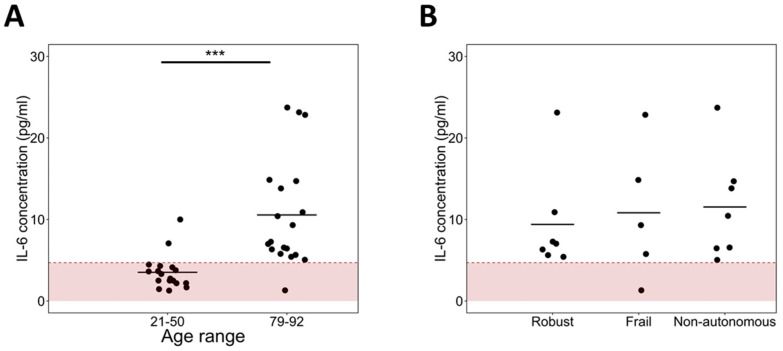
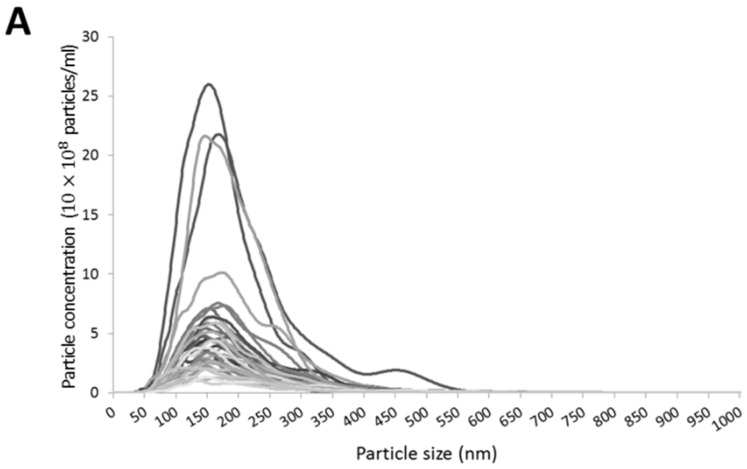
In the last decades extracellular vesicles (EVs) have emerged as key players for intercellular communication. In the case of inflammation, several studies have reported that EV levels are increased in circulation during inflammatory episodes. Based on this, we investigated whether aging results in elevated EV number, as a basal proinflammatory status termed "inflammaging" has been described in aged individuals. Moreover, we also hypothesized that frailty and dependence conditions of the elderly could affect EV concentration in plasma. Results showed that inflammaging, frailty or dependence status do not result in EV increase, at least in the total number of EVs in circulation. These results open a new perspective for investigating the role of EVs in human aging and in the inflammaging process.
在过去几十年中,细胞外囊泡(EVs)已成为细胞间通讯的关键参与者。在炎症方面,多项研究报告称,在炎症发作期间,循环中的EV水平会升高。基于此,我们研究了衰老是否会导致EV数量增加,因为在老年个体中已描述了一种称为“炎症衰老”的基础促炎状态。此外,我们还假设老年人的虚弱和依赖状况可能会影响血浆中EV的浓度。结果表明,炎症衰老、虚弱或依赖状态并不会导致EV增加,至少在循环中EV的总数方面是这样。这些结果为研究EVs在人类衰老和炎症衰老过程中的作用开辟了新的视角。