National Center for Nanoscience and Technology, Beijing 100190, China.
Department of Physics, Zhejiang Normal University, Jinhua 321004, China.
Nat Commun. 2016 Jul 27;7:12334. doi: 10.1038/ncomms12334.
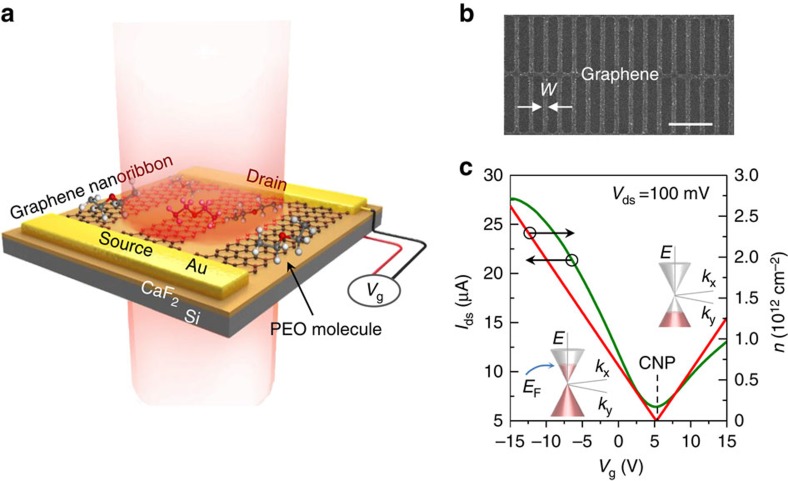
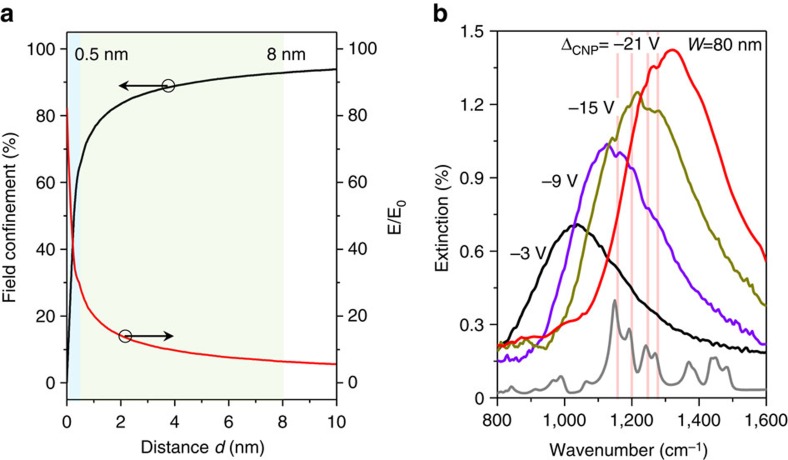
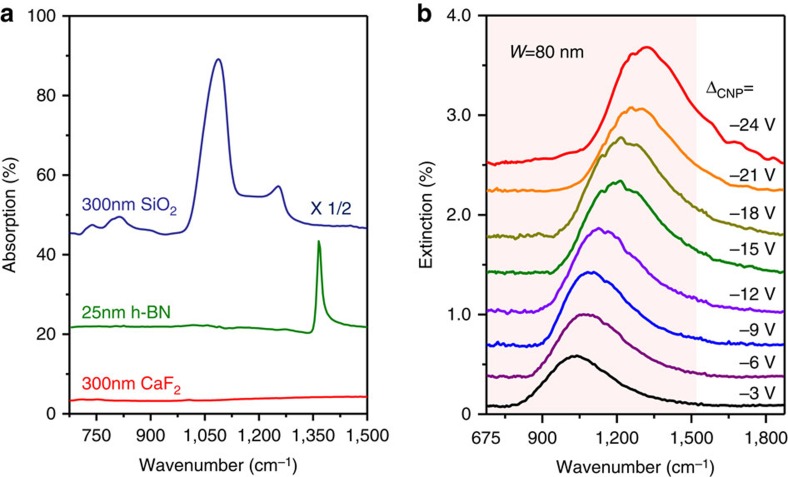
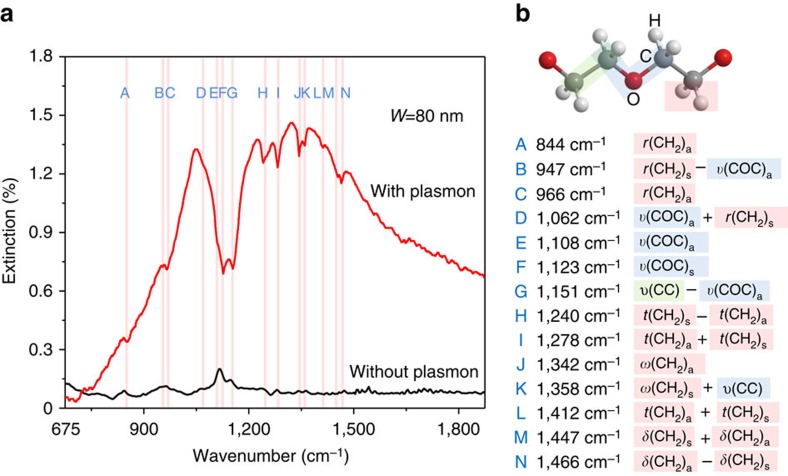
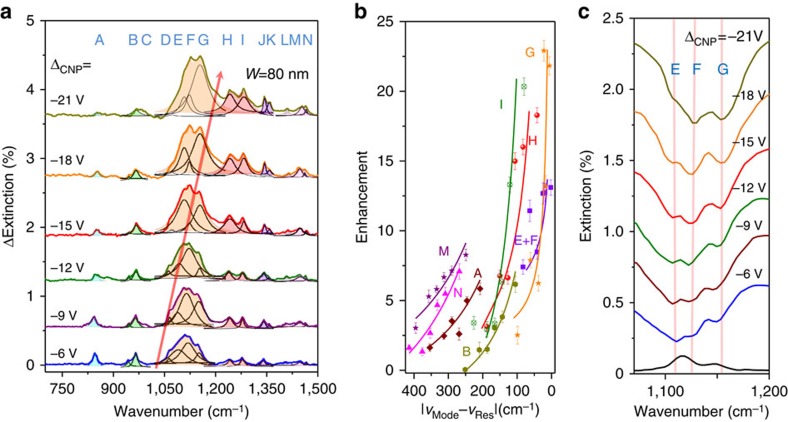
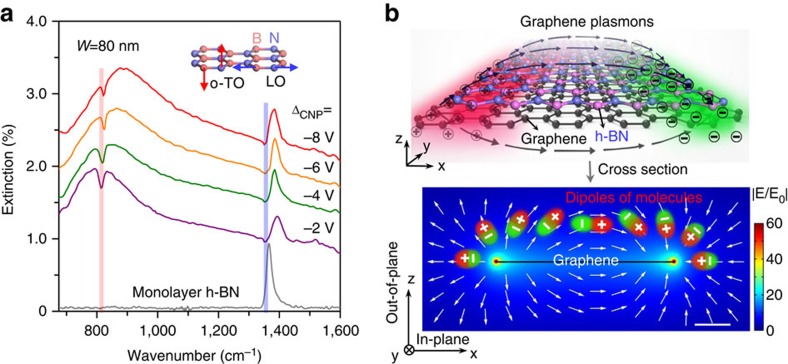
Infrared spectroscopy, especially for molecular vibrations in the fingerprint region between 600 and 1,500 cm(-1), is a powerful characterization method for bulk materials. However, molecular fingerprinting at the nanoscale level still remains a significant challenge, due to weak light-matter interaction between micron-wavelengthed infrared light and nano-sized molecules. Here we demonstrate molecular fingerprinting at the nanoscale level using our specially designed graphene plasmonic structure on CaF2 nanofilm. This structure not only avoids the plasmon-phonon hybridization, but also provides in situ electrically-tunable graphene plasmon covering the entire molecular fingerprint region, which was previously unattainable. In addition, undisturbed and highly confined graphene plasmon offers simultaneous detection of in-plane and out-of-plane vibrational modes with ultrahigh detection sensitivity down to the sub-monolayer level, significantly pushing the current detection limit of far-field mid-infrared spectroscopies. Our results provide a platform, fulfilling the long-awaited expectation of high sensitivity and selectivity far-field fingerprint detection of nano-scale molecules for numerous applications.
红外光谱,特别是在 600 到 1500 厘米-1 之间的指纹区域的分子振动,是一种用于块状材料的强大的特性描述方法。然而,由于微米波长的红外光与纳米尺寸的分子之间的弱光物质相互作用,纳米尺度的分子指纹识别仍然是一个重大挑战。在这里,我们使用我们专门设计的在 CaF2 纳米薄膜上的石墨烯等离子体结构来演示纳米尺度的分子指纹识别。这种结构不仅避免了等离子体-声子杂化,而且提供了原位电可调谐的石墨烯等离子体,覆盖了整个分子指纹区域,这在以前是无法实现的。此外,未被干扰的、高度限制的石墨烯等离子体提供了对平面内和平面外振动模式的同时检测,具有超灵敏检测的超高检测灵敏度,可达到亚单层水平,显著推动了远场中红外光谱学的当前检测极限。我们的结果提供了一个平台,满足了人们对纳米尺度分子的远场指纹高灵敏度和选择性检测的长期期望,为众多应用提供了可能。