Ernst Madeleine, Saslis-Lagoudakis C Haris, Grace Olwen M, Nilsson Niclas, Simonsen Henrik Toft, Horn James W, Rønsted Nina
Natural History Museum of Denmark, Faculty of Science, University of Copenhagen, Sølvgade 83S, DK-1307 Copenhagen K, Denmark.
Comparative Plant &Fungal Biology, Royal Botanic Gardens, Kew, Surrey TW9 3AB, United Kingdom.
Sci Rep. 2016 Jul 28;6:30531. doi: 10.1038/srep30531.
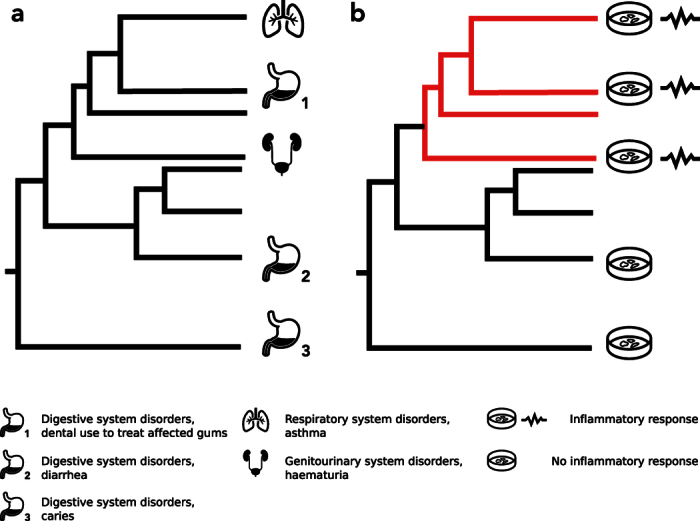
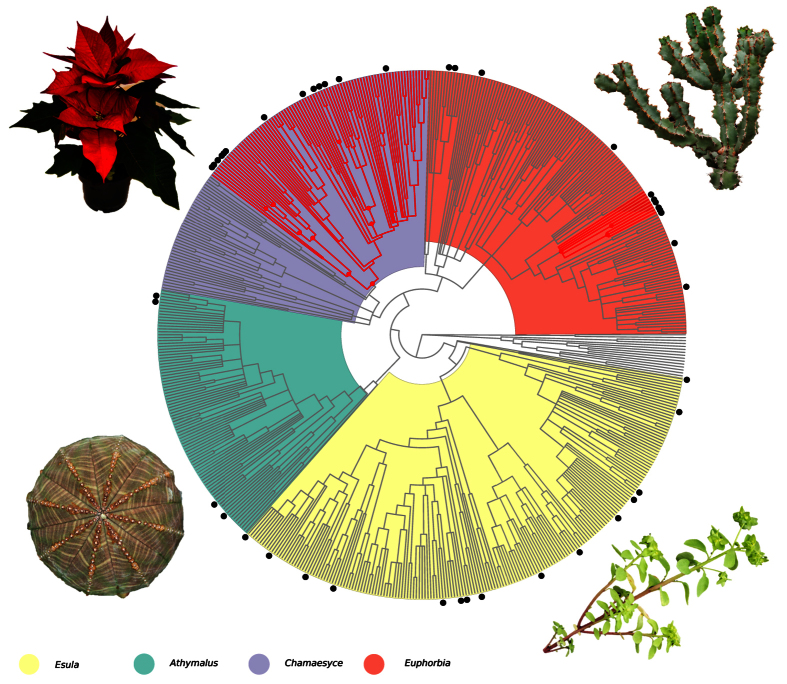
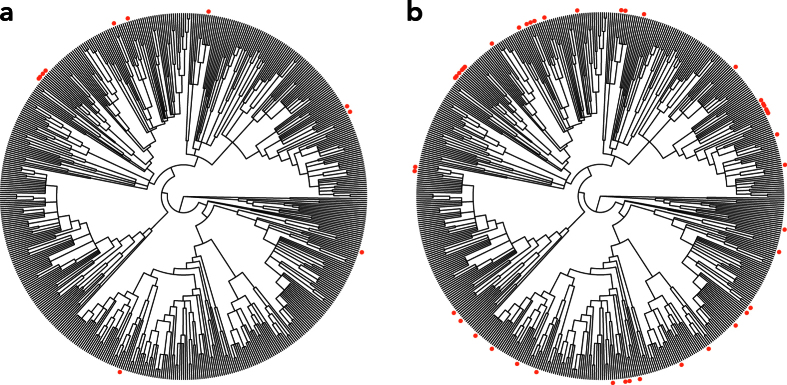
The current decrease of new drugs brought to the market has fostered renewed interest in plant-based drug discovery. Given the alarming rate of biodiversity loss, systematic methodologies in finding new plant-derived drugs are urgently needed. Medicinal uses of plants were proposed as proxy for bioactivity, and phylogenetic patterns in medicinal plant uses have suggested that phylogeny can be used as predictive tool. However, the common practice of grouping medicinal plant uses into standardised categories may restrict the relevance of phylogenetic predictions. Standardised categories are mostly associated to systems of the human body and only poorly reflect biological responses to the treatment. Here we show that medicinal plant uses interpreted from a perspective of a biological response can reveal different phylogenetic patterns of presumed underlying bioactivity compared to standardised methods of medicinal plant use classification. In the cosmopolitan and pharmaceutically highly relevant genus Euphorbia L., identifying plant uses modulating the inflammatory response highlighted a greater phylogenetic diversity and number of potentially promising species than standardised categories. Our interpretation of medicinal plant uses may therefore allow for a more targeted approach for future phylogeny-guided drug discovery at an early screening stage, which will likely result in higher discovery rates of novel chemistry with functional biological activity.
目前上市新药数量的减少引发了人们对基于植物的药物发现的新兴趣。鉴于生物多样性丧失的惊人速度,迫切需要寻找新的植物源药物的系统方法。植物的药用价值被提议作为生物活性的替代指标,药用植物用途的系统发育模式表明系统发育可以用作预测工具。然而,将药用植物用途归类为标准化类别的常见做法可能会限制系统发育预测的相关性。标准化类别大多与人体系统相关,只能很差地反映对治疗的生物学反应。在这里,我们表明,与药用植物用途分类的标准化方法相比,从生物学反应角度解释的药用植物用途可以揭示假定潜在生物活性的不同系统发育模式。在世界性且在药学上高度相关的大戟属中,识别调节炎症反应的植物用途突出了比标准化类别更大的系统发育多样性和潜在有前景的物种数量。因此,我们对药用植物用途的解释可能允许在早期筛选阶段采用更有针对性的方法进行未来系统发育导向的药物发现,这可能会提高具有功能性生物活性的新化学物质的发现率。