Scheiman Mitchell M, Talasan Henry, Mitchell G Lynn, Alvarez Tara L
*OD, PhD, FAAO †MS ‡MAS, FAAO §PhD Pennsylvania College of Optometry at Salus University, Elkins Park, Pennsylvania (MS); Department of Biomedical Engineering, New Jersey Institute of Technology, Newark, New Jersey (HT, TA); and The Ohio State University, College of Optometry, Columbus, Ohio (GLM).
Optom Vis Sci. 2017 Jan;94(1):74-88. doi: 10.1097/OPX.0000000000000936.
To evaluate changes in objective measures of disparity vergence after office-based vision therapy (OBVT) for concussion-related convergence insufficiency (CI) and determine the feasibility of using this objective assessment as an outcome measure in a clinical trial.
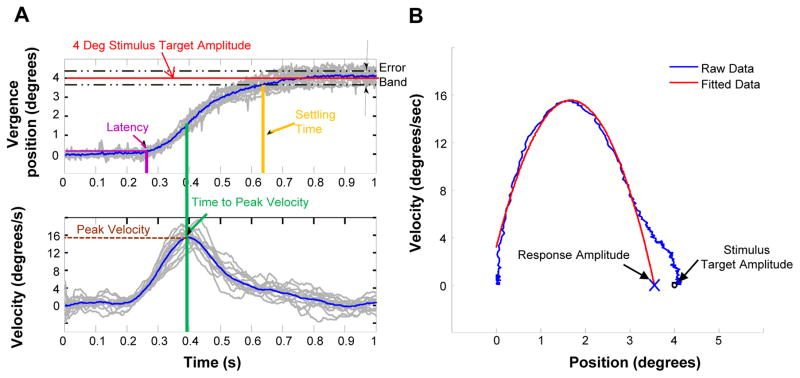
This was a prospective, observational trial. All participants were treated with weekly OBVT with home reinforcement. Participants included two adolescents and three young adults with concussion-related, symptomatic CI. The primary outcome measure was average peak velocity for 4° symmetrical convergence steps. Other objective outcome measures of disparity vergence included time to peak velocity, latency, accuracy, settling time, and main sequence. We also evaluated saccadic eye movements using the same outcome measures. Changes in clinical measures (near point of convergence, positive fusional vergence at near, Convergence Insufficiency Symptom Survey [CISS] score) were evaluated.
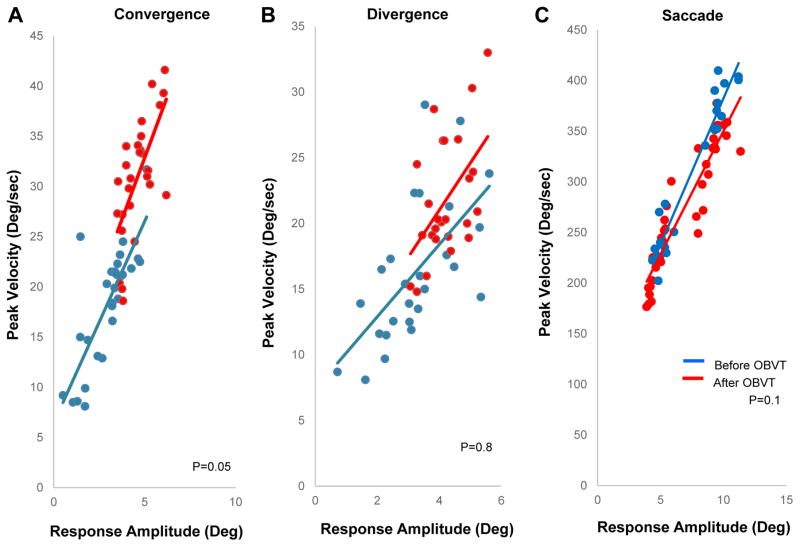
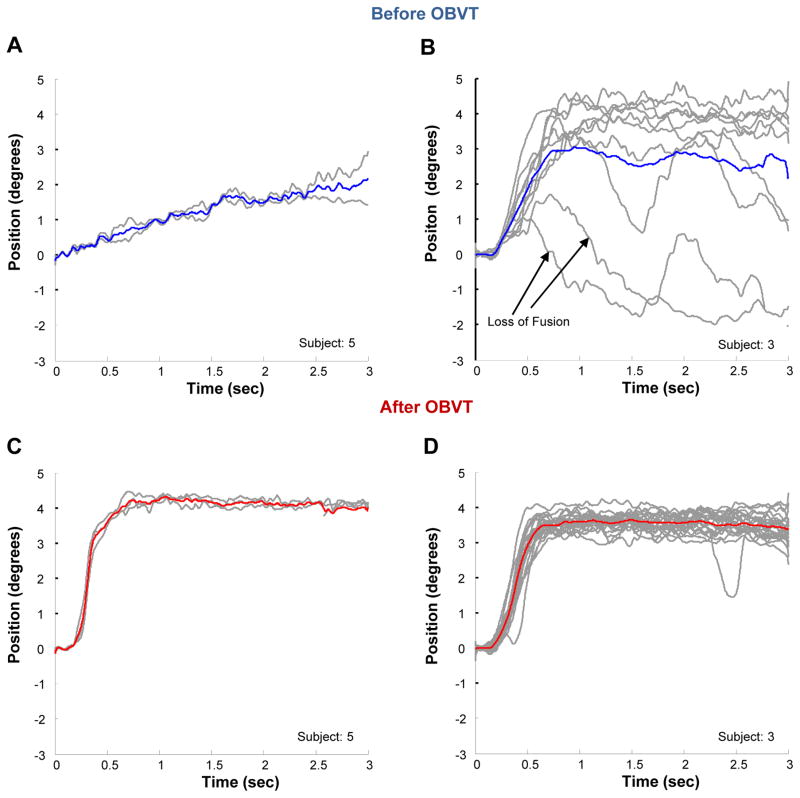
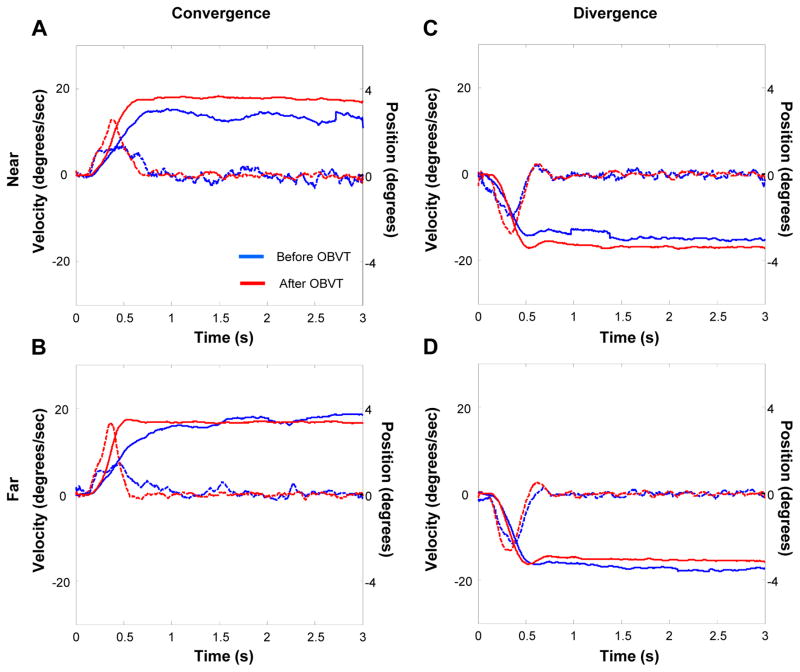
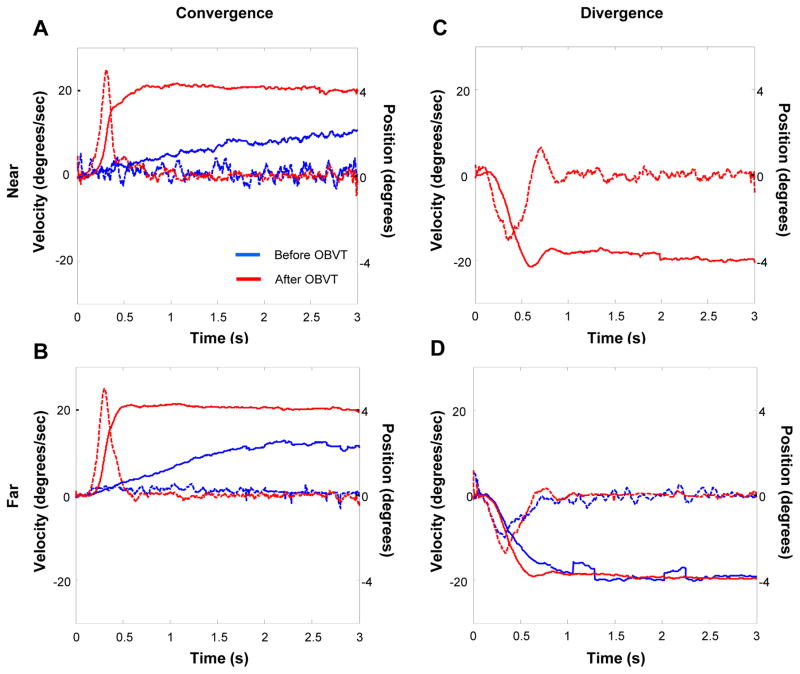
There were statistically significant and clinically meaningful changes in all clinical measures for convergence. Four of the five subjects met clinical success criteria. For the objective measures, we found a statistically significant increase in peak velocity, response accuracy to 4° symmetrical convergence and divergence step stimuli, and the main sequence ratio for convergence step stimuli. Objective saccadic eye movements (5 and 10°) appeared normal pre-OBVT and did not show any significant change after treatment.
This is the first report of the use of objective measures of disparity vergence as outcome measures for concussion-related convergence insufficiency. These measures provide additional information that is not accessible with clinical tests about underlying physiological mechanisms leading to changes in clinical findings and symptoms. The study results also demonstrate that patients with concussion can tolerate the visual demands (over 200 vergence and versional eye movements) during the 25-minute testing time and suggest that these measures could be used in a large-scale randomized clinical trial of concussion-related CI as outcome measures.
评估基于办公室的视觉疗法(OBVT)治疗脑震荡相关集合不足(CI)后视差性集合的客观测量指标的变化,并确定在临床试验中使用这种客观评估作为结果指标的可行性。
这是一项前瞻性观察性试验。所有参与者均接受每周一次的OBVT治疗,并在家中进行强化训练。参与者包括两名青少年和三名患有脑震荡相关症状性CI的年轻人。主要结果指标是4°对称集合步骤的平均峰值速度。视差性集合的其他客观结果指标包括达到峰值速度的时间、潜伏期、准确性、稳定时间和主序列。我们还使用相同的结果指标评估了眼球扫视运动。评估了临床指标(集合近点、近距离正融合性集合、集合不足症状调查[CISS]评分)的变化。
所有集合的临床指标均有统计学上显著且具有临床意义的变化。五名受试者中有四名达到了临床成功标准。对于客观测量指标,我们发现峰值速度、对4°对称集合和发散步骤刺激的反应准确性以及集合步骤刺激的主序列比率有统计学上的显著增加。客观眼球扫视运动(5°和10°)在OBVT前看起来正常,治疗后未显示任何显著变化。
这是首次报告将视差性集合的客观测量指标用作脑震荡相关集合不足的结果指标。这些指标提供了临床测试无法获得的额外信息,有助于了解导致临床发现和症状变化的潜在生理机制。研究结果还表明,脑震荡患者在25分钟的测试时间内能够耐受视觉需求(超过200次集合和旋转眼球运动),并表明这些指标可用于脑震荡相关CI的大规模随机临床试验作为结果指标。