Devani Kavya, Kapoor Neera, Ganti Latha
Vista Ridge High School, Cedar Park, TX, 78613, USA.
New York University's Grossman School of Medicine, New York, NY, 10016, USA.
Int J Emerg Med. 2024 Nov 1;17(1):166. doi: 10.1186/s12245-024-00747-6.
Mild traumatic brain injury (mTBI) is becoming a more common emergency department (ED) presentation. Towards this end, many types of testing in the acute setting are being investigated. One of these is screening for convergence insufficiency (CI) symptoms. These are common problems reported by patients with mTBI, but such oculomotor testing is rarely performed in the ED.
To assess the feasibility of convergence insufficiency screening in the ED and investigate whether CI is associated with adverse events such as post-concussive symptoms or hospital admission.
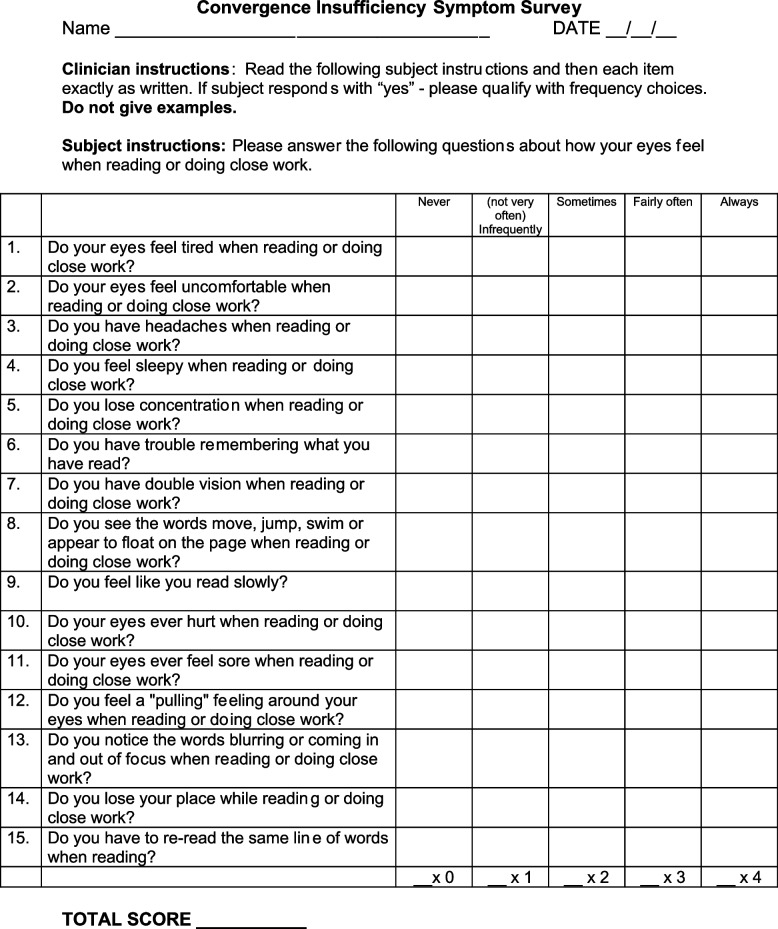
Written informed consent was obtained from patients age 18 years or older who experienced a mild head injury from any mechanism resulting in an mTBI. Patients underwent screening for CI symptoms using a standardized instrument of 15 questions, known as the convergence insufficiency symptom survey (CISS), with responses based on the Likert scale. These data were correlated to outcomes of hospital admission, occurrence of post-concussive symptoms, and 30-day hospital re-admission.
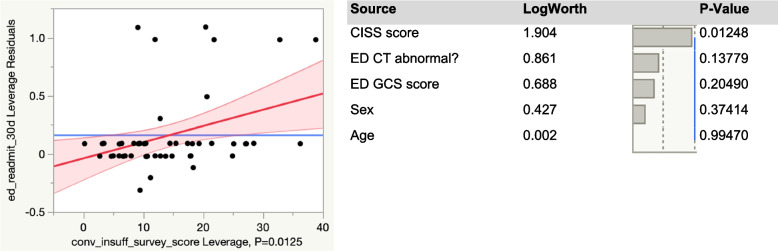
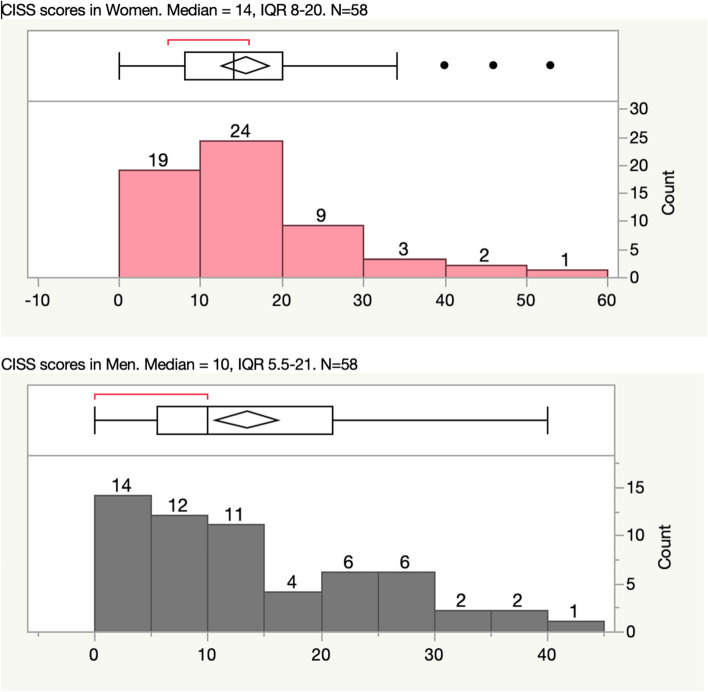
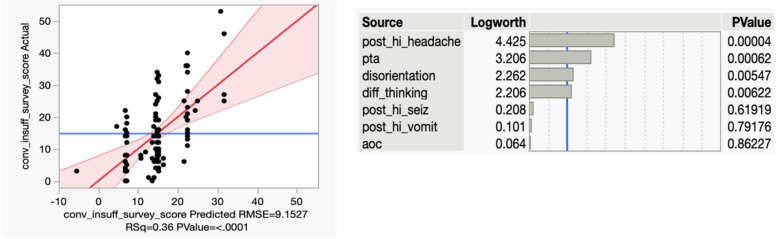
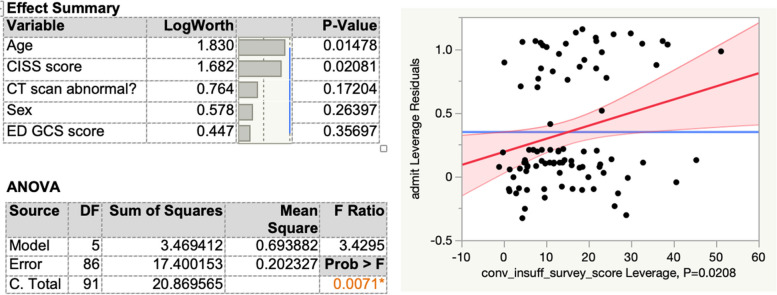
A total of 116 patients were prospectively enrolled, of which 58 were male. The median age was 31 years, with a range of 18 to 95 years of age. The median CISS score was 13, with an interquartile range (IQR) of 6 to 21 and an overall range of 0 to 53. Females presented with a median CISS score of 14, which was higher compared to the male median score of 10. The higher the CISS score, the more likely the patient was to be admitted to the hospital (p = 0.0378), develop symptoms of post-concussive syndrome at 30-day follow up (p = 0.0322), and be readmitted within 30 days (p = 0.0098).
Screening for CI symptoms using the CISS can be a solid adjunct in the evaluation of mTBI in the ED. The CISS is easy and fast to administer, and it is a useful tool to stratify patients in terms of who is at the highest risk of developing complications related to the mTBI.
轻度创伤性脑损伤(mTBI)在急诊科的就诊情况日益常见。为此,目前正在研究急性情况下的多种检测方法。其中之一是筛查集合不足(CI)症状。这些是mTBI患者报告的常见问题,但在急诊科很少进行此类眼动测试。
评估在急诊科进行集合不足筛查的可行性,并调查CI是否与不良事件相关,如脑震荡后症状或住院治疗。
从18岁及以上因任何机制导致mTBI的轻度头部受伤患者处获得书面知情同意书。患者使用一份包含15个问题的标准化问卷(称为集合不足症状调查(CISS))进行CI症状筛查,回答基于李克特量表。这些数据与住院结局、脑震荡后症状的发生情况以及30天内再次住院情况相关联。
总共前瞻性纳入了116例患者,其中58例为男性。年龄中位数为31岁,范围为18至95岁。CISS评分中位数为13,四分位间距(IQR)为6至21,总体范围为0至53。女性的CISS评分中位数为14,高于男性中位数10。CISS评分越高,患者住院的可能性越大(p = 0.0378),在30天随访时出现脑震荡后综合征症状的可能性越大(p = 0.0322),以及在30天内再次入院的可能性越大(p = 0.0098)。
使用CISS筛查CI症状可成为急诊科评估mTBI的有力辅助手段。CISS易于实施且快速,是一种根据谁发生与mTBI相关并发症风险最高来对患者进行分层的有用工具。