Lee Chae Young, Kang Seong Jun, Hong Sang-Kyoon, Ma Hyeo-Il, Lee Unjoo, Kim Yun Joong
Department of Neurology, Hallym University Sacred Heart hospital, Hallym University College of Medicine, Hallym University, Anyang, Korea.
Department of Electronic Engineering, Hallym University, Chuncheon, Korea.
PLoS One. 2016 Jul 28;11(7):e0158852. doi: 10.1371/journal.pone.0158852. eCollection 2016.
Most studies of smartphone-based assessments of motor symptoms in Parkinson's disease (PD) focused on gait, tremor or speech. Studies evaluating bradykinesia using wearable sensors are limited by a small cohort size and study design. We developed an application named smartphone tapper (SmT) to determine its applicability for clinical purposes and compared SmT parameters to current standard methods in a larger cohort.
A total of 57 PD patients and 87 controls examined with motor UPDRS underwent timed tapping tests (TT) using SmT and mechanical tappers (MeT) according to CAPSIT-PD. Subjects were asked to alternately tap each side of two rectangles with an index finger at maximum speed for ten seconds. Kinematic measurements were compared between the two groups.
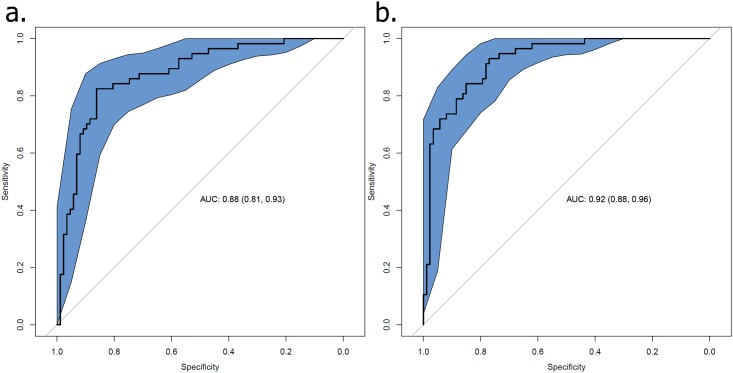
The mean number of correct tapping (MCoT), mean total distance of finger movement (T-Dist), mean inter-tap distance, and mean inter-tap dwelling time (IT-DwT) were significantly different between PD patients and controls. MCoT, as assessed using SmT, significantly correlated with motor UPDRS scores, bradykinesia subscores and MCoT using MeT. Multivariate analysis using the SmT parameters, such as T-Dist or IT-DwT, as predictive variables and age and gender as covariates demonstrated that PD patients were discriminated from controls. ROC curve analysis of a regression model demonstrated that the AUC for T-Dist was 0.92 (95% CI 0.88-0.96).
Our results suggest that a smartphone tapping application is comparable to conventional methods for the assessment of motor dysfunction in PD and may be useful in clinical practice.
大多数基于智能手机评估帕金森病(PD)运动症状的研究都集中在步态、震颤或言语方面。使用可穿戴传感器评估运动迟缓的研究因样本量小和研究设计而受到限制。我们开发了一款名为智能手机敲击器(SmT)的应用程序,以确定其在临床中的适用性,并在更大的样本队列中将SmT参数与当前标准方法进行比较。
共有57例PD患者和87名对照者接受了运动性统一帕金森病评定量表(UPDRS)检查,并根据帕金森病综合评分量表(CAPSIT-PD)使用SmT和机械敲击器(MeT)进行定时敲击测试(TT)。受试者被要求用食指以最大速度交替敲击两个矩形的每一侧,持续10秒。比较两组的运动学测量结果。
PD患者和对照者之间的正确敲击平均数(MCoT)、手指运动的平均总距离(T-Dist)、平均敲击间隔距离和平均敲击间隔停留时间(IT-DwT)存在显著差异。使用SmT评估的MCoT与运动性UPDRS评分、运动迟缓子评分以及使用MeT评估的MCoT显著相关。以SmT参数(如T-Dist或IT-DwT)作为预测变量,年龄和性别作为协变量进行多变量分析,结果表明可以区分PD患者和对照者。回归模型的ROC曲线分析表明,T-Dist的AUC为0.92(95%CI 0.88-0.96)。
我们的结果表明,智能手机敲击应用程序在评估PD运动功能障碍方面与传统方法相当,可能在临床实践中有用。