Appiah Duke, Schreiner Pamela J, Demerath Ellen W, Loehr Laura R, Chang Patricia P, Folsom Aaron R
Division of Epidemiology and Community Health, School of Public Health, University of Minnesota, Minneapolis, MN
Division of Epidemiology and Community Health, School of Public Health, University of Minnesota, Minneapolis, MN.
J Am Heart Assoc. 2016 Jul 28;5(8):e003769. doi: 10.1161/JAHA.116.003769.
Early age (<45 years) at menopause has been postulated to be associated with increased cardiovascular disease risk; however, evidence of its relation with heart failure (HF) incidence is limited. We examined whether age at menopause is associated inversely with HF incidence in the Atherosclerosis Risk In Communities (ARIC) study and summarized all existing data in a meta-analysis.
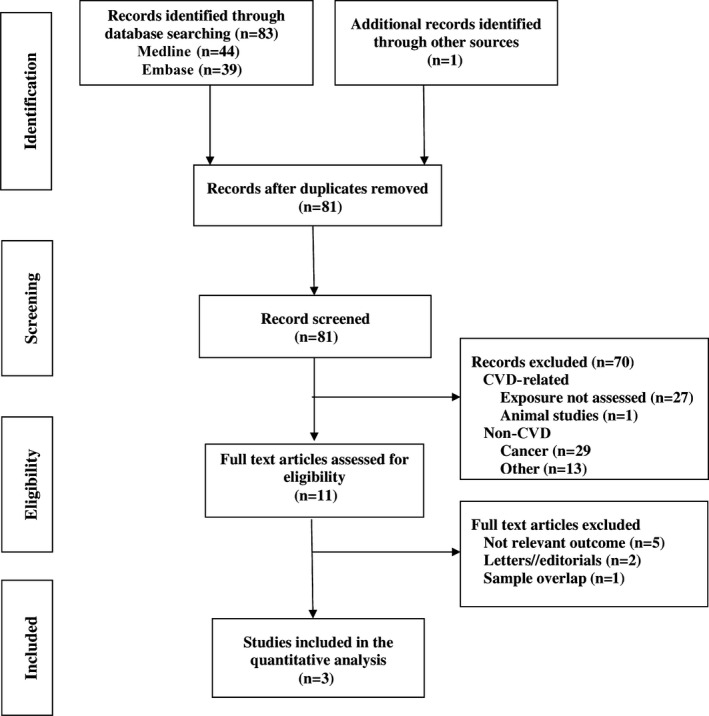
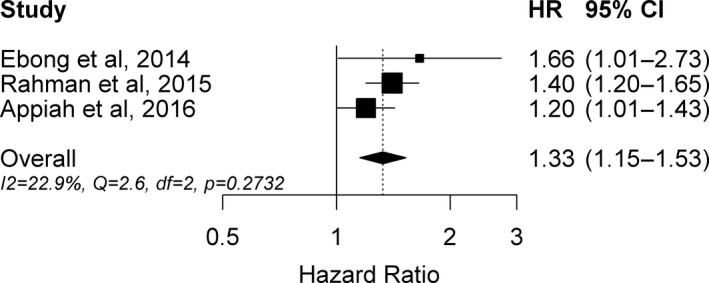
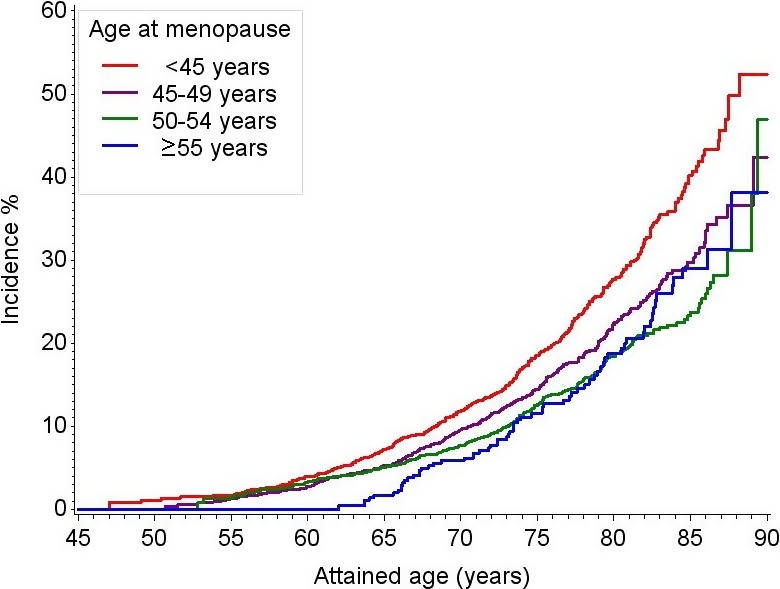
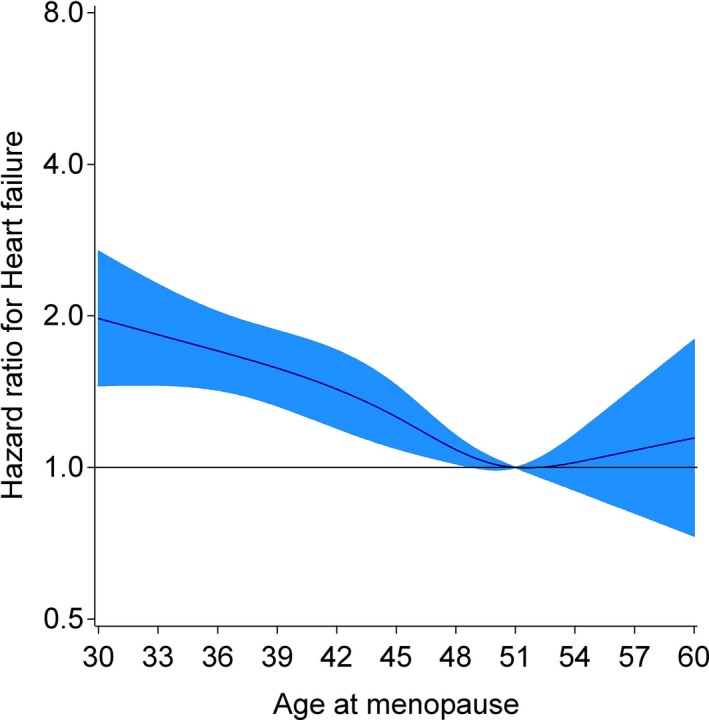
In ARIC, data were obtained from 5629 postmenopausal women (mean age 56 years, 26% with bilateral oophorectomy) without HF. During a median follow-up of 21.4 years, 965 incident HF events occurred. In a Cox regression model adjusted for reproductive health and HF risk factors, the hazard ratios for incident HF across categories of age at menopause (<45, 45-49, 50-54, and ≥55 years) were 1.32, 1.17, 1.00 (referent), and 1.12, respectively. Compared with women with later onset of menopause (aged ≥45 years), those with early menopause had elevated HF risk (hazard ratio 1.20, 95% CI 1.01-1.43). For the meta-analysis, we searched Medline and Embase for articles published through December 2015 that prospectively evaluated age at menopause and HF risk. Summarized estimates from the 3 included studies (3568 events) showed higher HF risk among women with early menopause compared with those with later menopause (hazard ratio 1.33, 95% CI 1.15-1.53).
These results provided evidence that early age at menopause is associated with a modestly greater risk of HF. Identification of women with early menopause offers a window of opportunity to implement interventions that will improve overall cardiovascular health during the postmenopausal years.
绝经年龄较早(<45岁)被认为与心血管疾病风险增加有关;然而,其与心力衰竭(HF)发病率关系的证据有限。我们在社区动脉粥样硬化风险(ARIC)研究中检验了绝经年龄是否与HF发病率呈负相关,并在一项荟萃分析中总结了所有现有数据。
在ARIC研究中,数据来自5629名无HF的绝经后女性(平均年龄56岁,26%行双侧卵巢切除术)。在中位随访21.4年期间,发生了965例HF事件。在调整了生殖健康和HF危险因素的Cox回归模型中,绝经年龄各分类(<45、45 - 49、50 - 54和≥55岁)的HF发病风险比分别为1.32、1.17、1.00(参照)和1.12。与绝经较晚(年龄≥45岁)的女性相比,绝经较早的女性HF风险升高(风险比1.20,95%置信区间1.01 - 1.43)。对于荟萃分析,我们检索了截至2015年12月发表的Medline和Embase上前瞻性评估绝经年龄与HF风险的文章。纳入的3项研究(3568例事件)的汇总估计显示,绝经较早的女性与绝经较晚的女性相比HF风险更高(风险比1.33,95%置信区间1.15 - 1.53)。
这些结果提供了证据,表明绝经年龄较早与HF风险适度增加有关。识别绝经较早的女性为实施干预措施提供了一个机会窗口,这些干预措施将在绝经后改善整体心血管健康。