Gaboyard-Niay Sophie, Travo Cécile, Saleur Aurélie, Broussy Audrey, Brugeaud Aurore, Chabbert Christian
INSERM U1051, Montpellier 34090, France Sensorion, Montpellier 34000, France
INSERM U1051, Montpellier 34090, France.
Dis Model Mech. 2016 Oct 1;9(10):1181-1192. doi: 10.1242/dmm.024521. Epub 2016 Jun 29.
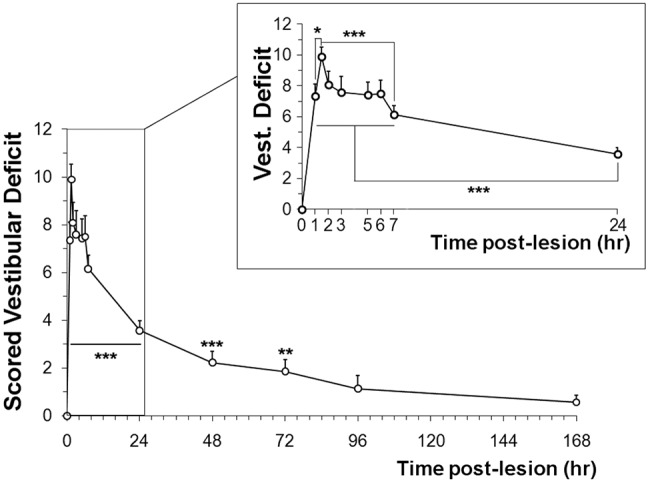
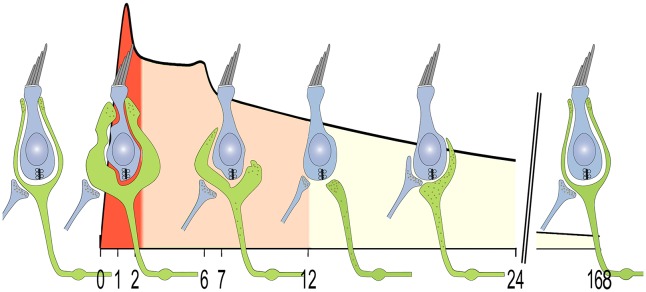
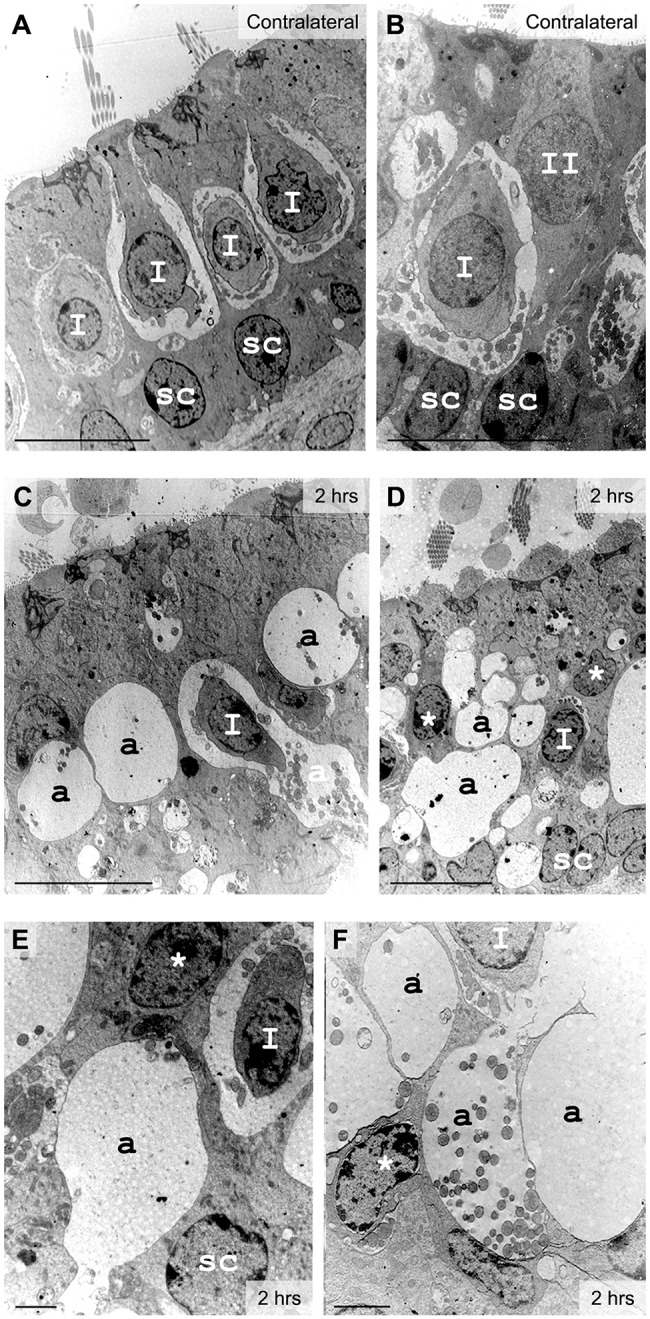
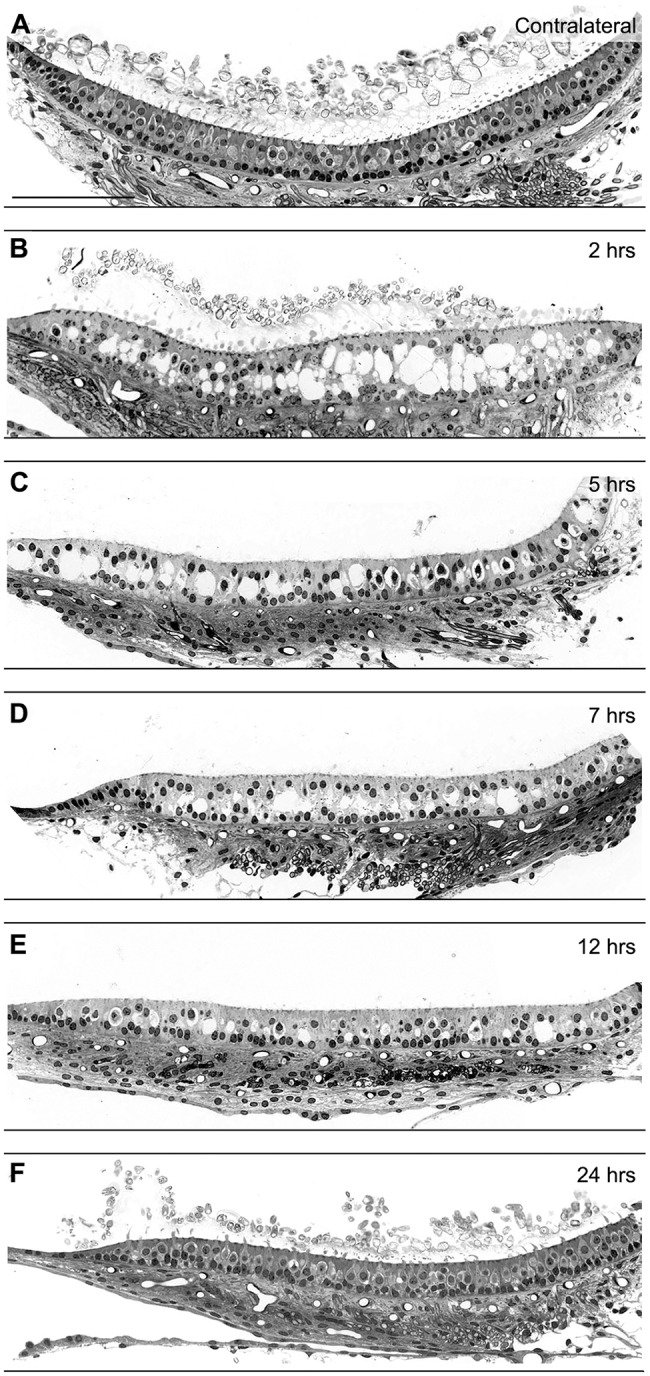
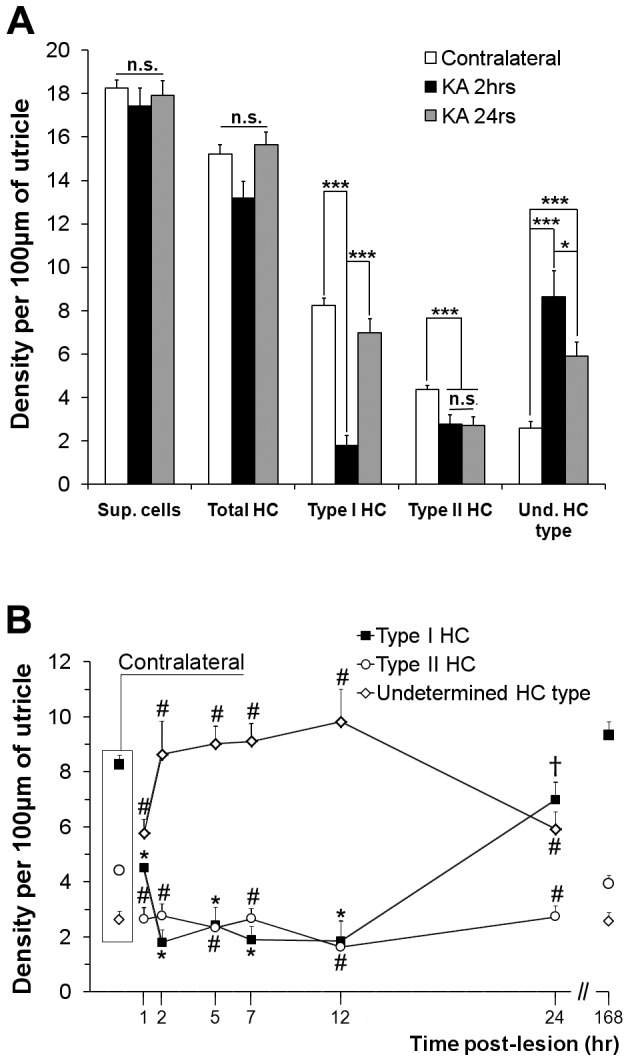
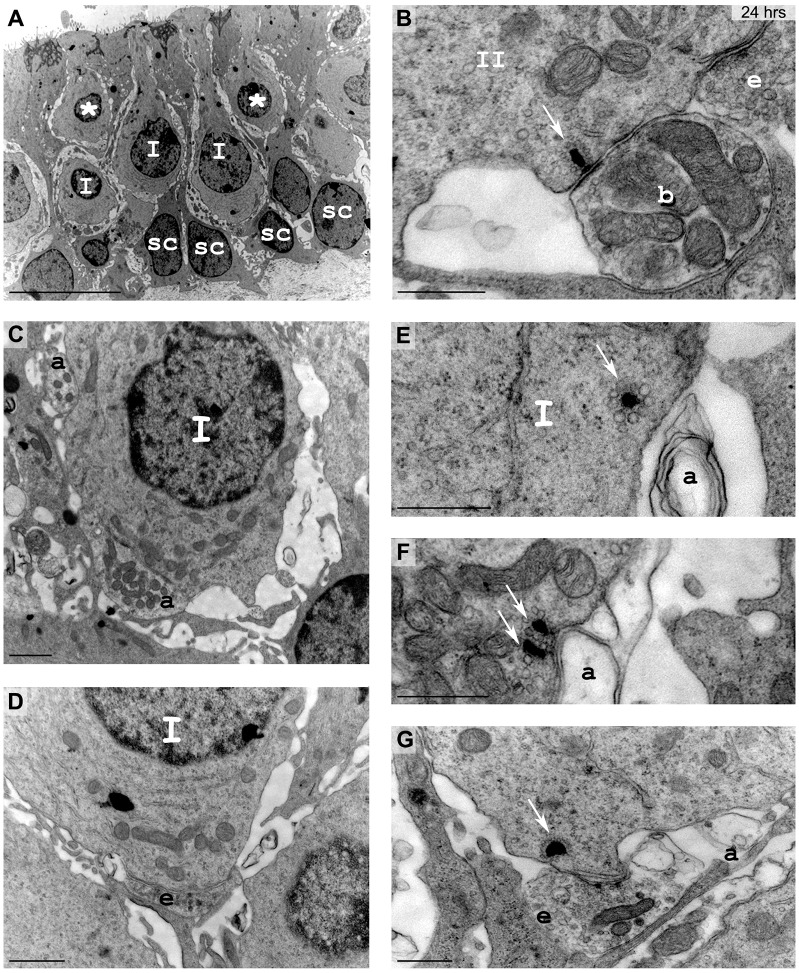
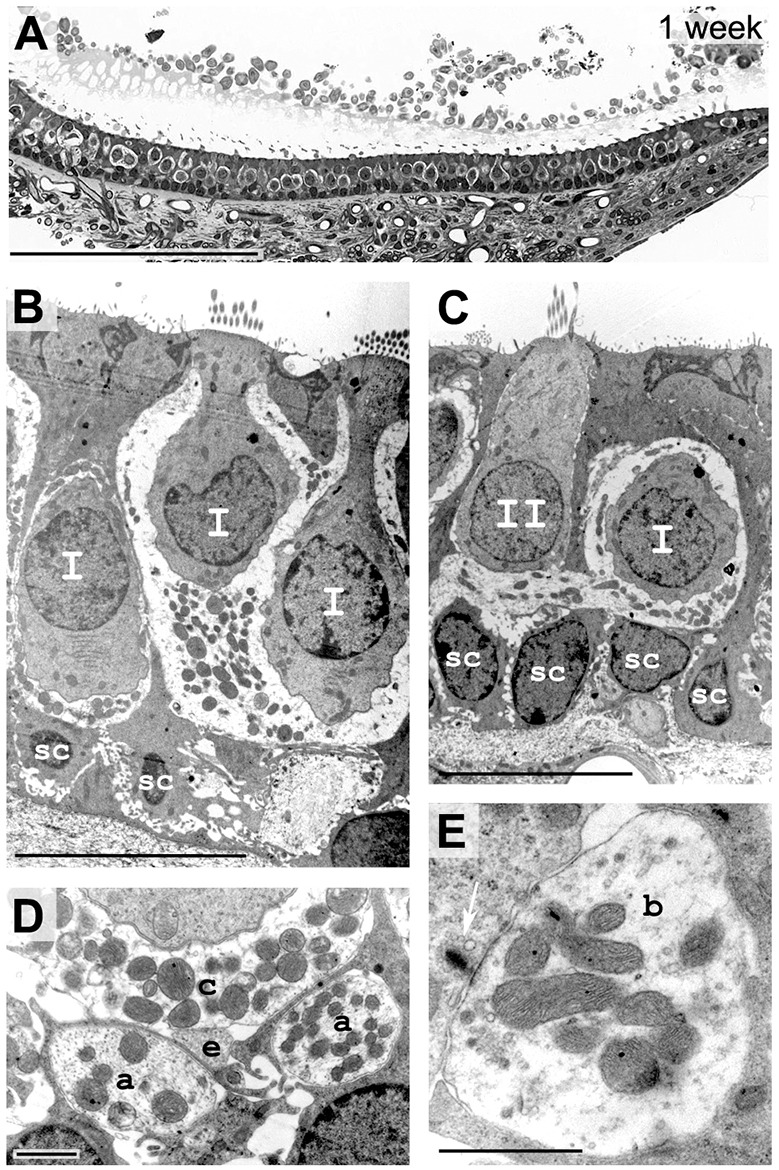
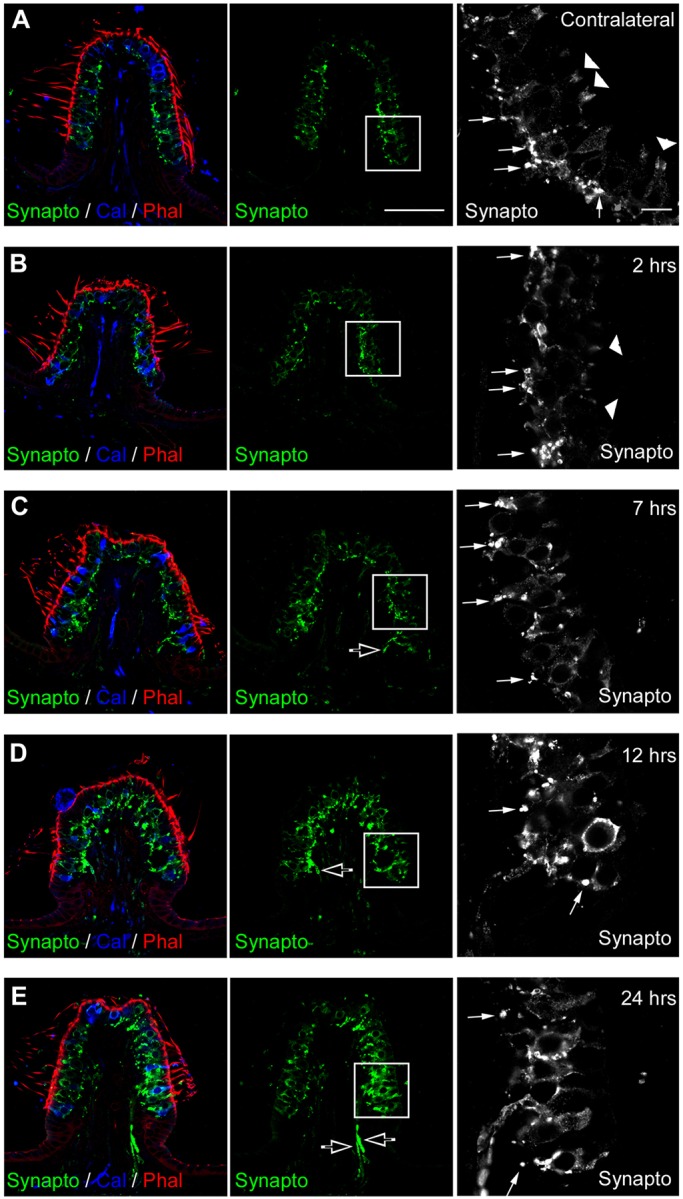
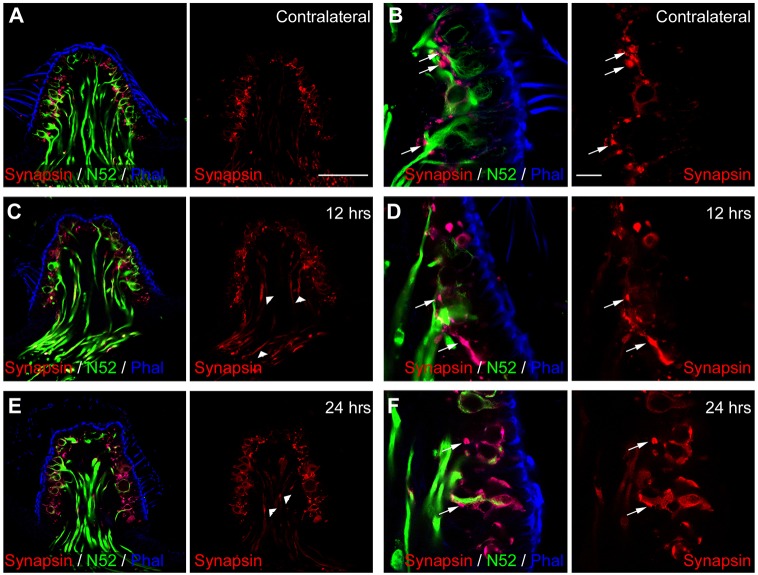
Damage to inner ear afferent terminals is believed to result in many auditory and vestibular dysfunctions. The sequence of afferent injuries and repair, as well as their correlation with vertigo symptoms, remains poorly documented. In particular, information on the changes that take place at the primary vestibular endings during the first hours following a selective insult is lacking. In the present study, we combined histological analysis with behavioral assessments of vestibular function in a rat model of unilateral vestibular excitotoxic insult. Excitotoxicity resulted in an immediate but transient alteration of the balance function that was resolved within a week. Concomitantly, vestibular primary afferents underwent a sequence of structural changes followed by spontaneous repair. Within the first two hours after the insult, a first phase of pronounced vestibular dysfunction coincided with extensive swelling of afferent terminals. In the next 24 h, a second phase of significant but incomplete reduction of the vestibular dysfunction was accompanied by a resorption of swollen terminals and fiber retraction. Eventually, within 1 week, a third phase of complete balance restoration occurred. The slow and progressive withdrawal of the balance dysfunction correlated with full reconstitution of nerve terminals. Competitive re-innervation by afferent and efferent terminals that mimicked developmental synaptogenesis resulted in full re-afferentation of the sensory epithelia. By deciphering the sequence of structural alterations that occur in the vestibule during selective excitotoxic impairment, this study offers new understanding of how a vestibular insult develops in the vestibule and how it governs the heterogeneity of vertigo symptoms.
内耳传入神经末梢受损被认为会导致多种听觉和前庭功能障碍。传入神经损伤和修复的顺序,以及它们与眩晕症状的相关性,目前仍缺乏充分的文献记载。特别是,关于在选择性损伤后的最初几个小时内初级前庭末梢所发生变化的信息尚付阙如。在本研究中,我们在单侧前庭兴奋性毒性损伤的大鼠模型中,将组织学分析与前庭功能的行为评估相结合。兴奋性毒性导致平衡功能立即但短暂的改变,这种改变在一周内得到解决。与此同时,前庭初级传入神经经历了一系列结构变化,随后进行自发修复。在损伤后的最初两小时内,前庭功能障碍的第一阶段表现为传入神经末梢广泛肿胀。在接下来的24小时内,前庭功能障碍显著但不完全减轻的第二阶段伴随着肿胀末梢的吸收和纤维回缩。最终,在1周内,出现了平衡完全恢复的第三阶段。平衡功能障碍的缓慢而渐进的消退与神经末梢的完全重建相关。传入和传出神经末梢的竞争性重新支配,类似于发育过程中的突触形成,导致感觉上皮完全重新传入神经支配。通过解读在选择性兴奋性毒性损伤过程中前庭发生的结构改变序列,本研究为前庭损伤在前庭中的发展方式以及它如何控制眩晕症状的异质性提供了新的认识。