Nair K Saidas, Cosma Mihai, Raghupathy Narayanan, Sellarole Michael A, Tolman Nicholas G, de Vries Wilhelmine, Smith Richard S, John Simon W M
Department of Ophthalmology, University of California, San Francisco, USA The Jackson Laboratory, Bar Harbor, ME, USA.
The Jackson Laboratory, Bar Harbor, ME, USA.
Dis Model Mech. 2016 Aug 1;9(8):863-71. doi: 10.1242/dmm.024307. Epub 2016 Jun 9.
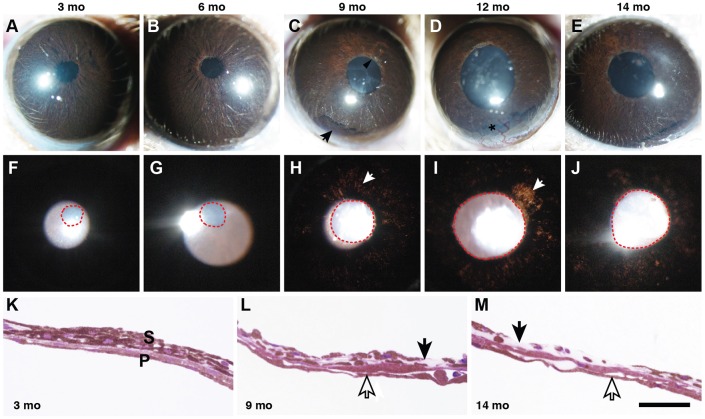
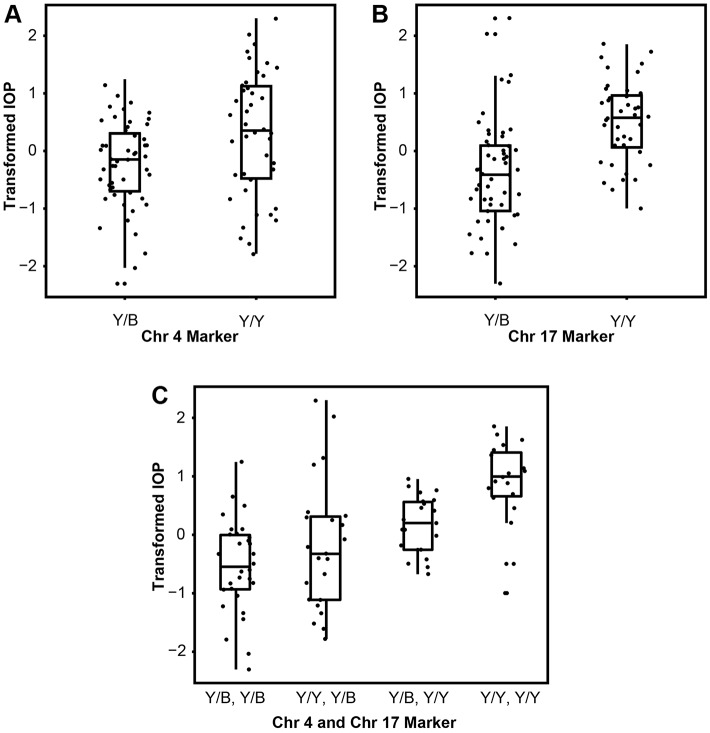
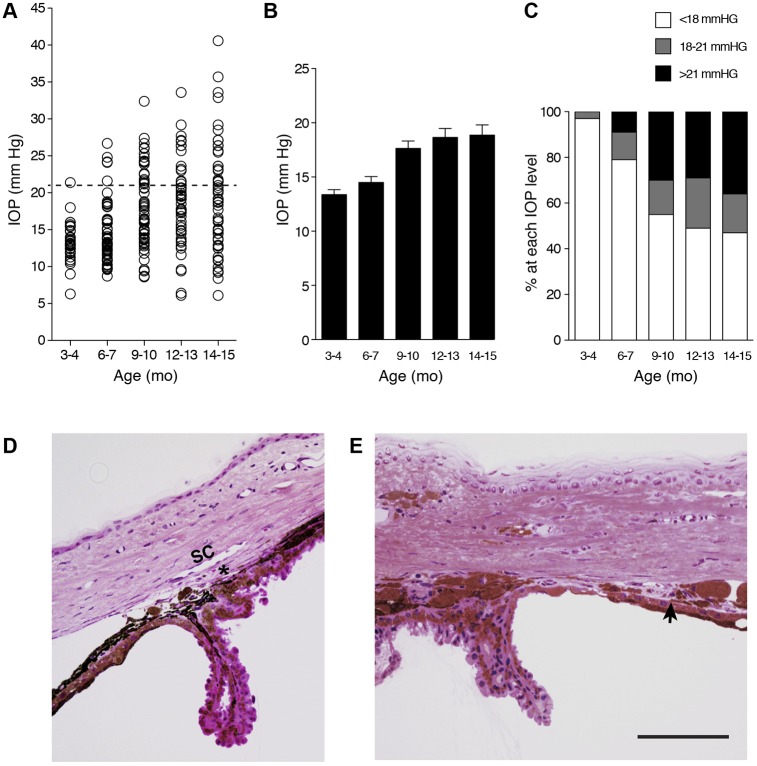
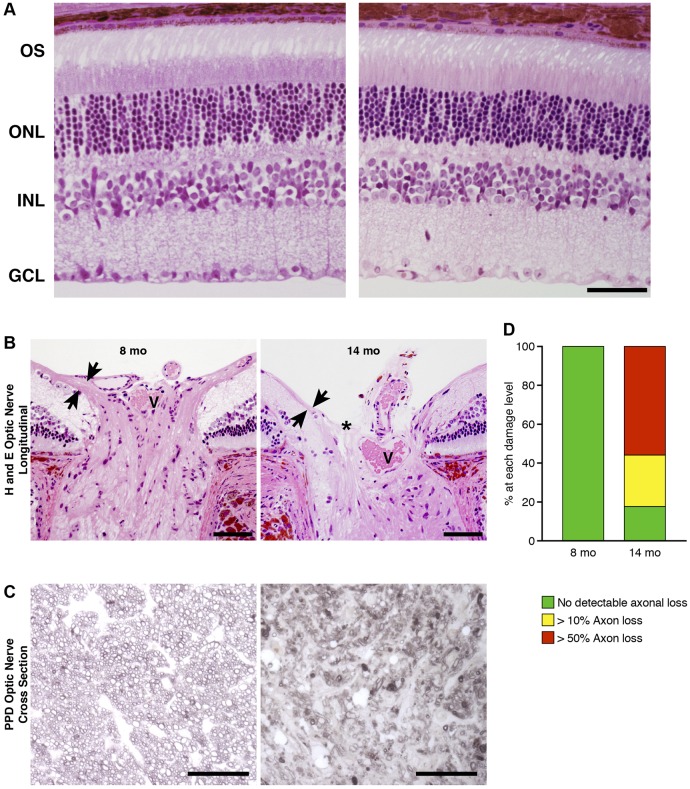
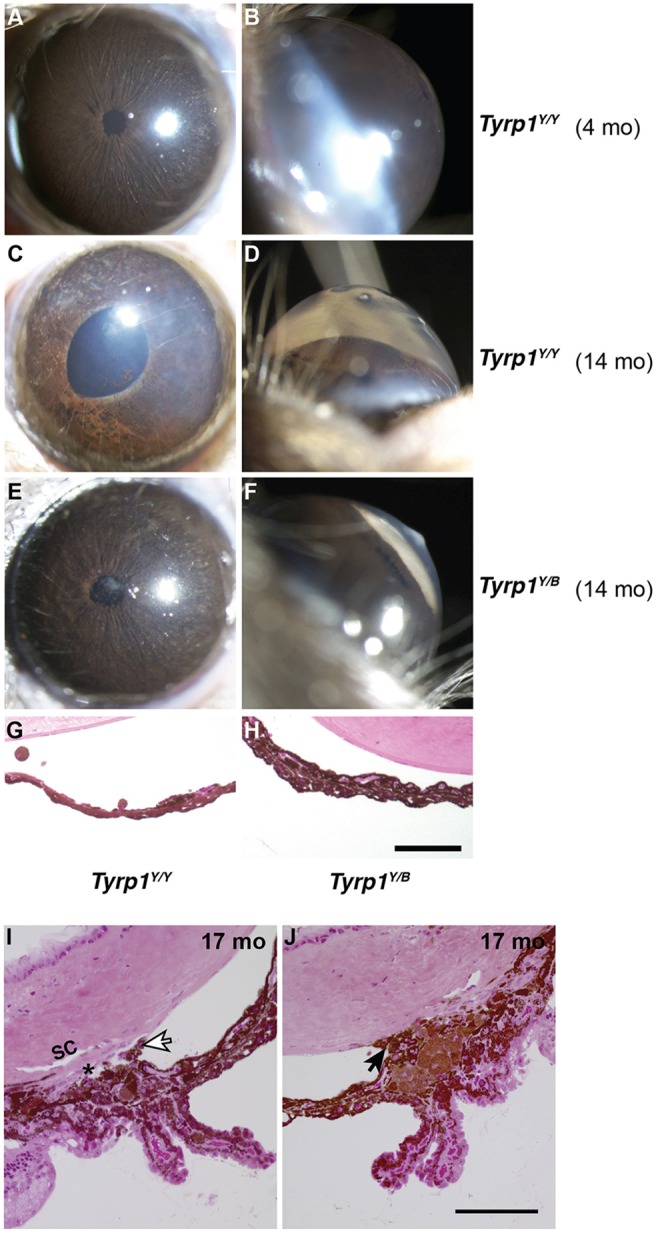
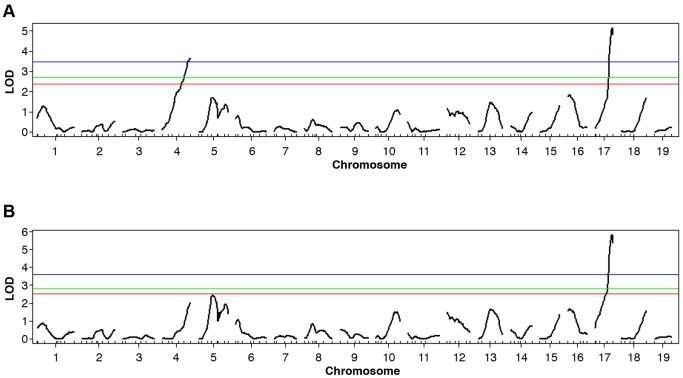
A variety of inherited animal models with different genetic causes and distinct genetic backgrounds are needed to help dissect the complex genetic etiology of glaucoma. The scarcity of such animal models has hampered progress in glaucoma research. Here, we introduce a new inherited glaucoma model: the inbred mouse strain YBR/EiJ (YBR). YBR mice develop a form of pigmentary glaucoma. They exhibit a progressive age-related pigment-dispersing iris disease characterized by iris stromal atrophy. Subsequently, these mice develop elevated intraocular pressure (IOP) and glaucoma. Genetic mapping studies utilizing YBR as a glaucoma-susceptible strain and C57BL/6J as a glaucoma-resistant strain were performed to identify genetic loci responsible for the iris disease and high IOP. A recessive locus linked to Tyrp1(b) on chromosome 4 contributes to iris stromal atrophy and high IOP. However, this is not the only important locus. A recessive locus on YBR chromosome 17 causes high IOP independent of the iris stromal atrophy. In specific eyes with high IOP caused by YBR chromosome 17, the drainage angle (through which ocular fluid leaves the eye) is largely open. The YBR alleles of genes on chromosomes 4 and 17 underlie the development of high IOP and glaucoma but do so through independent mechanisms. Together, these two loci act in an additive manner to increase the susceptibility of YBR mice to the development of high IOP. The chromosome 17 locus is important not only because it causes IOP elevation in mice with largely open drainage angles but also because it exacerbates IOP elevation and glaucoma induced by pigment dispersion. Therefore, YBR mice are a valuable resource for studying the genetic etiology of IOP elevation and glaucoma, as well as for testing new treatments.
需要多种具有不同遗传原因和独特遗传背景的遗传性动物模型,以帮助剖析青光眼复杂的遗传病因。此类动物模型的稀缺阻碍了青光眼研究的进展。在此,我们引入一种新的遗传性青光眼模型:近交系小鼠品系YBR/EiJ(YBR)。YBR小鼠会患上一种色素性青光眼。它们表现出一种与年龄相关的进行性色素分散性虹膜疾病,其特征为虹膜基质萎缩。随后,这些小鼠会出现眼压升高和青光眼。利用YBR作为青光眼易感品系、C57BL/6J作为青光眼抗性品系进行了基因定位研究,以确定导致虹膜疾病和高眼压的基因位点。与4号染色体上的Tyrp1(b)相关的一个隐性位点导致虹膜基质萎缩和高眼压。然而,这并非唯一重要的位点。YBR 17号染色体上的一个隐性位点独立于虹膜基质萎缩导致高眼压。在由YBR 17号染色体导致高眼压的特定眼睛中,引流角(眼内液体流出眼睛的通道)基本是开放的。4号和17号染色体上基因的YBR等位基因是高眼压和青光眼发生的基础,但通过独立的机制起作用。这两个位点共同以累加方式增加YBR小鼠发生高眼压的易感性。17号染色体位点很重要,不仅因为它在引流角基本开放的小鼠中导致眼压升高,还因为它加剧了色素分散引起的眼压升高和青光眼。因此,YBR小鼠是研究眼压升高和青光眼遗传病因以及测试新疗法的宝贵资源。