Angelis Aris, Kanavos Panos, López-Bastida Julio, Linertová Renata, Serrano-Aguilar Pedro
Medical Technology Research Group, LSE Health, London School of Economics and Political Science, London, UK.
University of Catilla-La Mancha, Talavera de la Reina, Toledo, Spain.
BMC Musculoskelet Disord. 2016 Aug 2;17:321. doi: 10.1186/s12891-016-1129-1.
Juvenile idiopathic arthritis (JIA) refers to a number of rare chronic inflammatory diseases. Although JIA imposes a significant societal burden, limited data are available on the cost of JIA. The study's objective is to quantify the socioeconomic burden of JIA patients in the United Kingdom (UK), along with their health-related quality of life (HRQoL).
A bottom-up, cross-sectional, cost-of-illness analysis of 23 patients was carried out. To collect data on demographic characteristics, health resource utilization, informal care, productivity losses and HRQoL, questionnaires were administered to and completed by patients or their caregivers. The EuroQol five dimensions (EQ-5D) instrument was used to measure HRQoL.
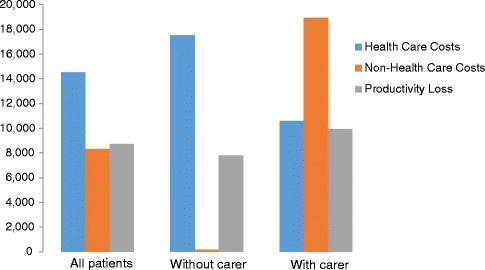
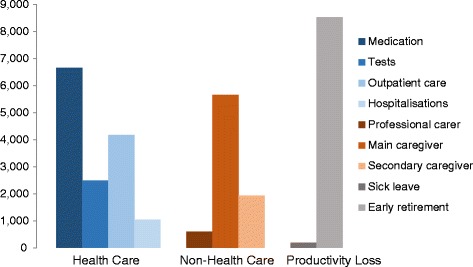
This study found that the average annual cost for a JIA patient was €31,546, with direct health care costs equalling €14,509 (46.0 % of total costs), direct non-health care costs amounting to €8,323 (26.4 %) and productivity losses being €8,715 (27.6 %). This was calculated using unit costs for 2012. The largest expenditures on average were accounted for by early retirement (27.0 %), followed by informal care (24.1 %), medications (21.1 %), outpatient and primary health care visits (13.2 %) and diagnostic tests (7.9 %). Important differences existed between JIA patients in need of caregiver assistance and those with no need (€39,469 vs. €25,452 respectively). Among adult JIA patients, mean EQ-5D index scores and visual analogue scale (VAS) scores were found to be 0.26 and 49.00 respectively; the same scores among caregivers were 0.66 and 67.14 respectively.
JIA poses a significant cost burden on the UK society. Over half of the total average costs (54 %) are related to non-health care and productivity losses. HRQoL of JIA patients is considerably worse than the UK general population.
青少年特发性关节炎(JIA)是指一些罕见的慢性炎症性疾病。尽管JIA给社会带来了沉重负担,但关于JIA成本的数据有限。该研究的目的是量化英国JIA患者的社会经济负担及其健康相关生活质量(HRQoL)。
对23例患者进行了自下而上的横断面疾病成本分析。为收集有关人口统计学特征、卫生资源利用、非正式护理、生产力损失和HRQoL的数据,向患者或其护理人员发放并由他们完成问卷。使用欧洲五维健康量表(EQ-5D)工具来测量HRQoL。
本研究发现,一名JIA患者的平均年度成本为31,546欧元,其中直接医疗保健成本为14,509欧元(占总成本的46.0%),直接非医疗保健成本为8,323欧元(26.4%),生产力损失为8,715欧元(27.6%)。这是使用2012年的单位成本计算得出的。平均而言,最大的支出是提前退休(27.0%),其次是非正式护理(24.1%)、药物(21.1%)、门诊和初级医疗保健就诊(13.2%)以及诊断测试(7.9%)。需要护理人员协助的JIA患者与不需要的患者之间存在重要差异(分别为39,469欧元和25,452欧元)。在成年JIA患者中,平均EQ-5D指数得分和视觉模拟量表(VAS)得分分别为0.26和49.00;护理人员的相同得分分别为0.66和67.14。
JIA给英国社会带来了巨大的成本负担。总平均成本的一半以上(54%)与非医疗保健和生产力损失有关。JIA患者的HRQoL明显低于英国普通人群。