Young Michael R, Craft David L
Department of Radiation Oncology, Massachusetts General Hospital, Harvard Medical School, Boston, MA, USA.; Department of Biomedical Engineering and Biotechnology, University of Massachusetts, Intercampus, MA, USA.
Department of Radiation Oncology, Massachusetts General Hospital, Harvard Medical School, Boston, MA, USA.
Cancer Inform. 2016 Jul 27;15:151-61. doi: 10.4137/CIN.S40088. eCollection 2016.
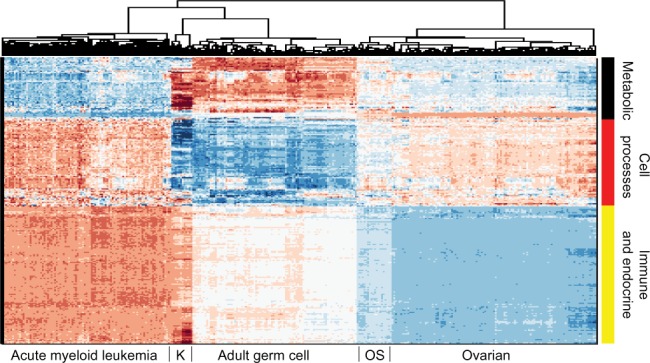
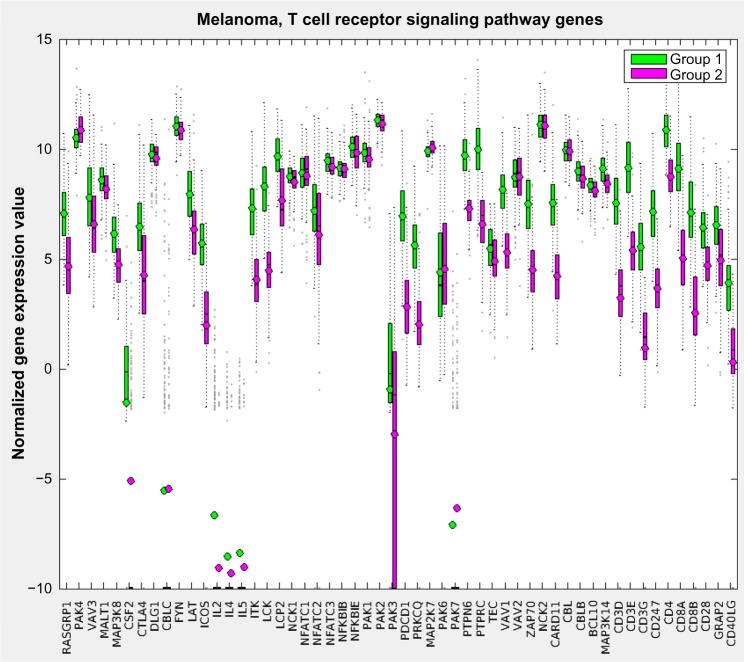
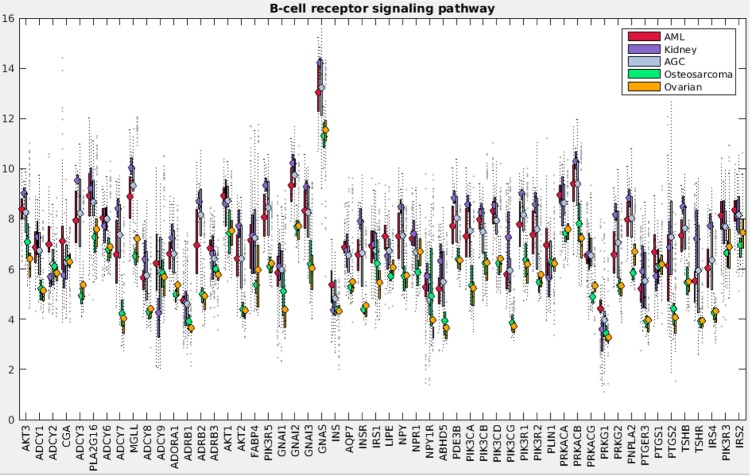
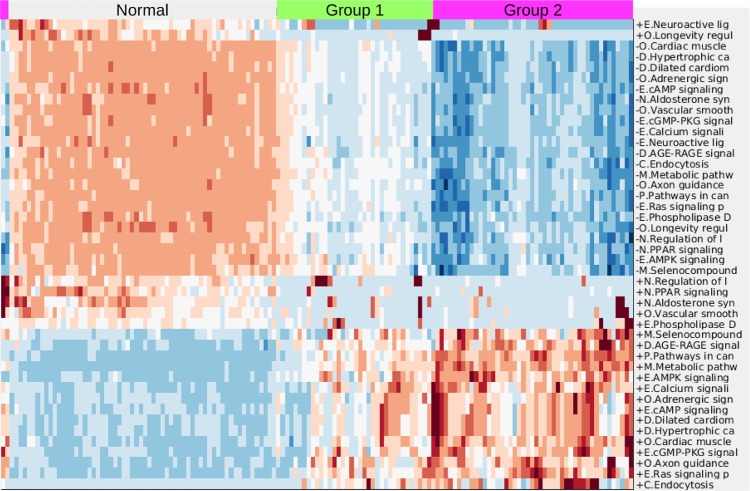
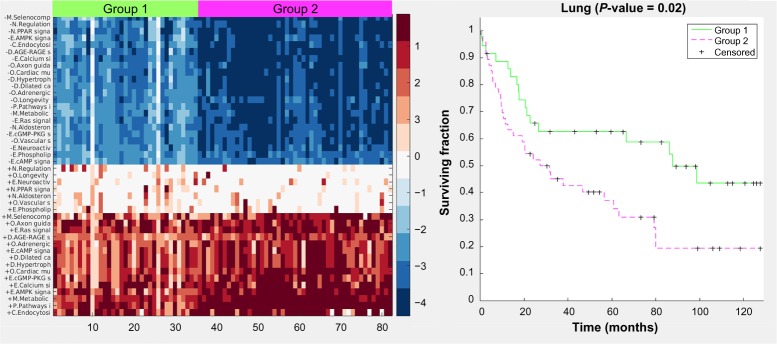
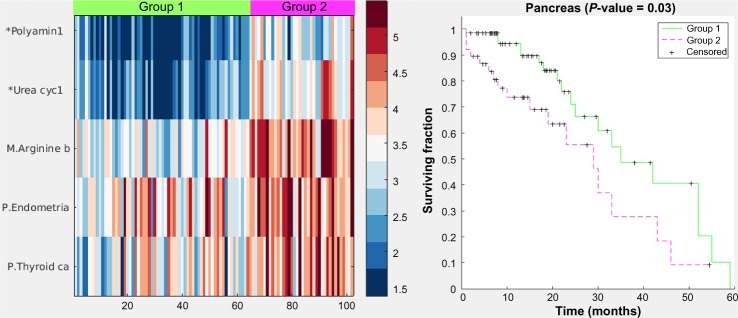
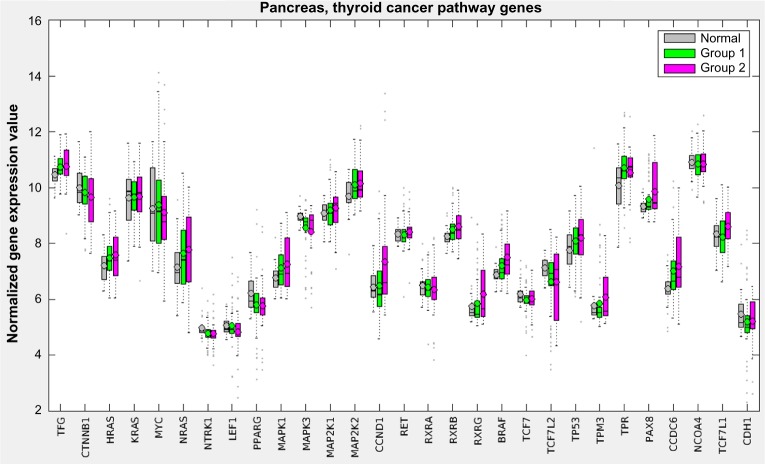
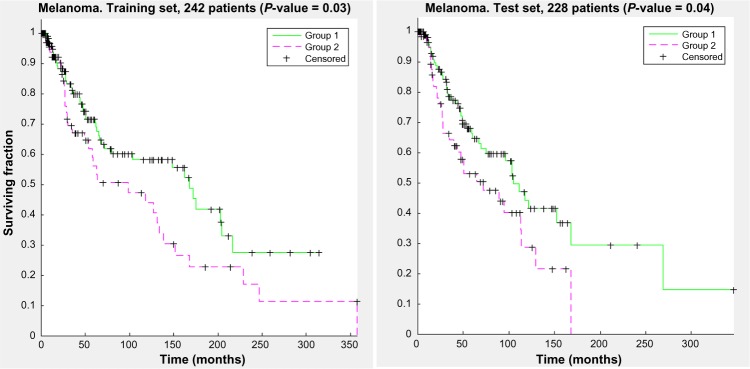
We introduce Pathway-Informed Classification System (PICS) for classifying cancers based on tumor sample gene expression levels. PICS is a computational method capable of expeditiously elucidating both known and novel biological pathway involvement specific to various cancers and uses that learned pathway information to separate patients into distinct classes. The method clearly separates a pan-cancer dataset by tissue of origin and also sub-classifies individual cancer datasets into distinct survival classes. Gene expression values are collapsed into pathway scores that reveal which biological activities are most useful for clustering cancer cohorts into subtypes. Variants of the method allow it to be used on datasets that do and do not contain noncancerous samples. Activity levels of all types of pathways, broadly grouped into metabolic, cellular processes and signaling, and immune system, are useful for separating the pan-cancer cohort. In the clustering of specific cancer types, certain pathway types become more valuable depending on the site being studied. For lung cancer, signaling pathways dominate; for pancreatic cancer, signaling and metabolic pathways dominate; and for melanoma, immune system pathways are the most useful. This work suggests the utility of pathway-level genomic analysis and points in the direction of using pathway classification for predicting the efficacy and side effects of drugs and radiation.
我们引入了基于肿瘤样本基因表达水平对癌症进行分类的通路信息分类系统(PICS)。PICS是一种计算方法,能够迅速阐明各种癌症特有的已知和新的生物学通路参与情况,并利用所学到的通路信息将患者分为不同类别。该方法按起源组织清晰地分离泛癌数据集,还将各个癌症数据集进一步细分为不同的生存类别。基因表达值被整合为通路分数,揭示哪些生物学活性对于将癌症队列聚类为亚型最为有用。该方法的变体使其能够用于包含和不包含非癌样本的数据集。广泛分为代谢、细胞过程与信号传导以及免疫系统的所有类型通路的活性水平,对于分离泛癌队列很有用。在特定癌症类型的聚类中,某些通路类型根据所研究的部位变得更有价值。对于肺癌,信号通路占主导;对于胰腺癌,信号传导和代谢通路占主导;对于黑色素瘤,免疫系统通路最有用。这项工作表明了通路水平基因组分析的实用性,并指出了利用通路分类预测药物和放疗疗效及副作用的方向。