Samarghandian Saeed, Azimi-Nezhad Mohsen, Shabestari Mahmoud M, Azad Farahzad Jabbari, Farkhondeh Tahereh, Bafandeh Fereshteh
Department of Basic Medical Sciences, Neyshabur University of Medical Sciences, Neyshabur, Iran.
Department of Basic Medical Sciences, Neyshabur University of Medical Sciences, Neyshabur, Iran; Department of Medical Genetics, Faculty of Medicine, Mashhad University of Medical Sciences, Mashhad, Iran.
Interdiscip Toxicol. 2015 Sep;8(3):151-4. doi: 10.1515/intox-2015-0023.
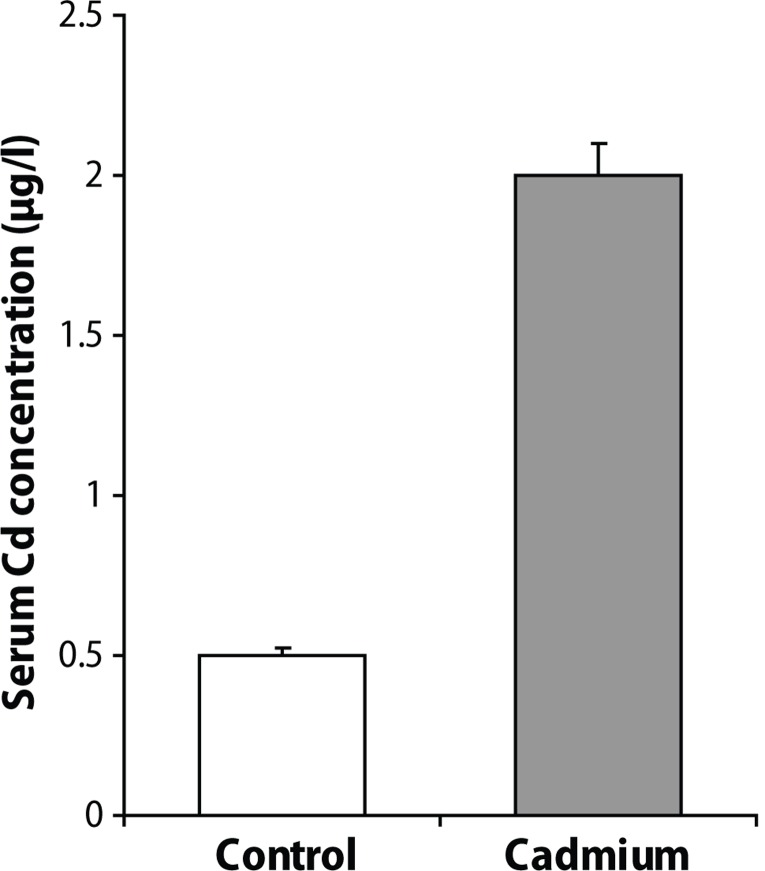
Cadmium (Cd) is an environmental toxic metal implicated in lipid abnormalities. The present study was designed to elucidate the possible association between chronic exposure to Cd concentration and alterations in plasma lipid, lipoprotein, and oxidative stress indices in rats. Sixteen male rats were assigned to 2 groups of 8 rats each (test and control). The Cd-exposed group obtained drinking water containing cadmium chloride (CdCl2) in the concentration of 2.0 mg Cd/L in drinking water for 3 months. At the end of the experimental period, blood samples were obtained to determine the changes of serum triglycerides (TG), total cholesterol (TC), highdensity lipoprotein cholesterol (HDL-C), low-density lipoprotein cholesterol (LDL-C), reduced glutathione (GSH), malondialdehyde (MDA) and also serum Cd contents. The results of the present study indicated that Cd administration significantly increased the serum levels of TG, TC, LDL-C, MDA and Cd with reduction in the HDL-C and GSH levels. In conclusion, evidence is presented that chronic exposure to low Cd concentration can adversely affect the lipid and lipoprotein profile via lipid peroxidation.
镉(Cd)是一种与脂质异常有关的环境有毒金属。本研究旨在阐明长期暴露于镉浓度与大鼠血浆脂质、脂蛋白及氧化应激指标变化之间的可能关联。16只雄性大鼠被分为2组,每组8只(试验组和对照组)。镉暴露组饮用含2.0毫克镉/升氯化镉(CdCl2)的饮用水,持续3个月。实验期结束时,采集血样以测定血清甘油三酯(TG)、总胆固醇(TC)、高密度脂蛋白胆固醇(HDL-C)、低密度脂蛋白胆固醇(LDL-C)、还原型谷胱甘肽(GSH)、丙二醛(MDA)的变化以及血清镉含量。本研究结果表明,给予镉显著增加了血清TG、TC、LDL-C、MDA和镉的水平,同时HDL-C和GSH水平降低。总之,有证据表明长期暴露于低镉浓度可通过脂质过氧化对脂质和脂蛋白谱产生不利影响。