Asiedu-Gyekye Isaac J, Mahmood Abdulai Seidu, Awortwe Charles, Nyarko Alexander K
Department of Pharmacology and Toxicology, University of Ghana School of Pharmacy, College of Health Sciences, Legon, Ghana.
Department of Pathology, School of Biomedical and Allied Health Sciences, College of Health Sciences, Korle-Bu, Ghana.
Interdiscip Toxicol. 2015 Dec;8(4):193-202. doi: 10.1515/intox-2015-0029.
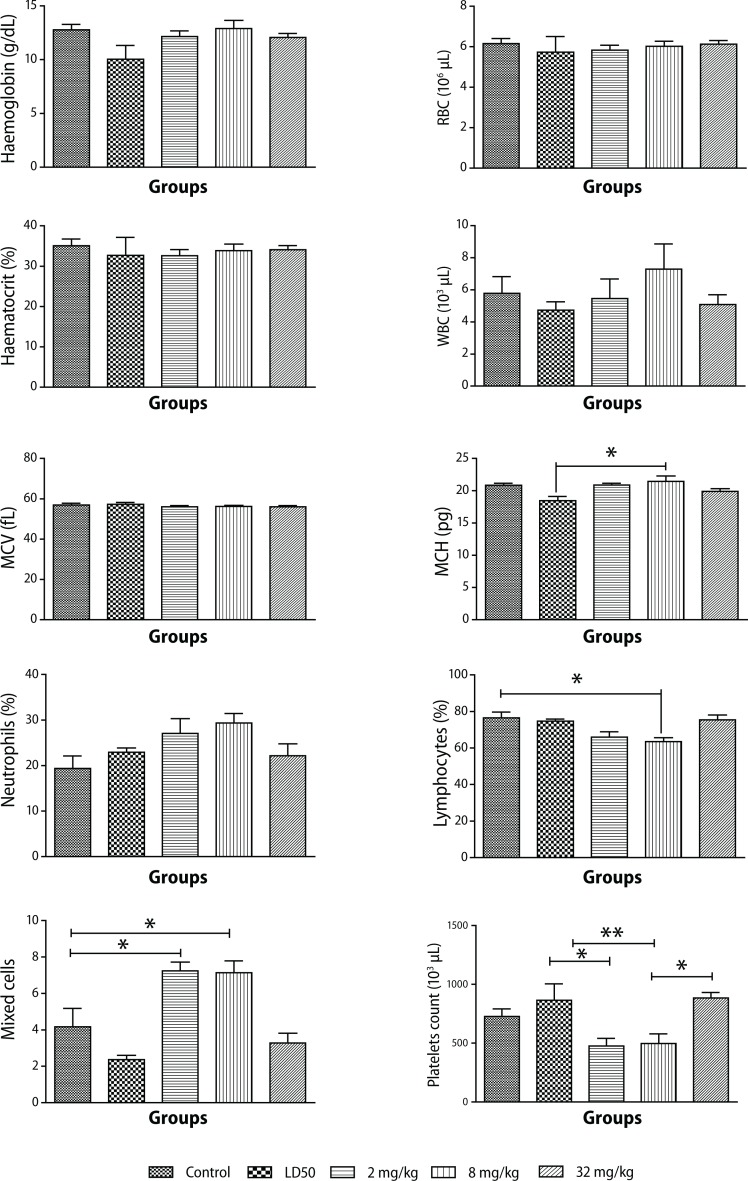
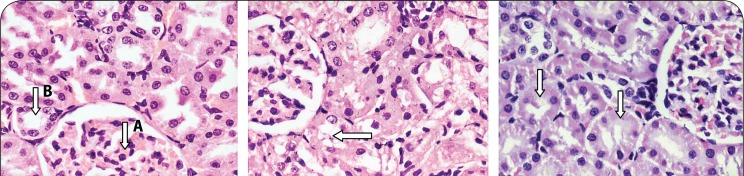
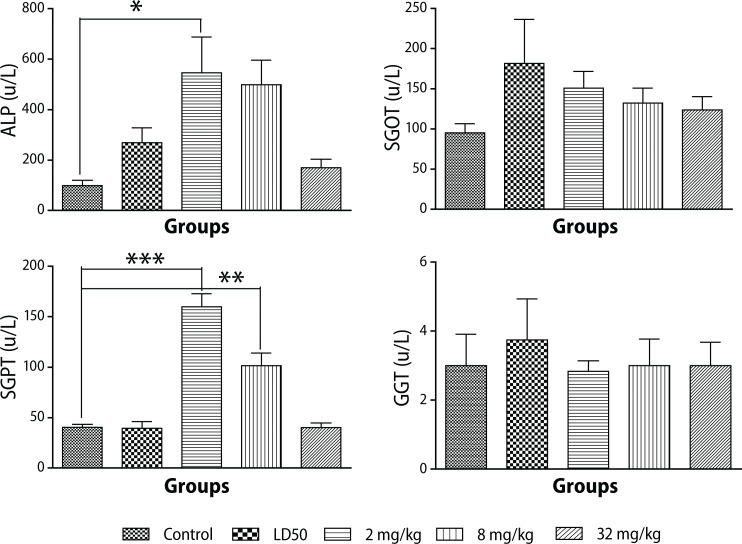
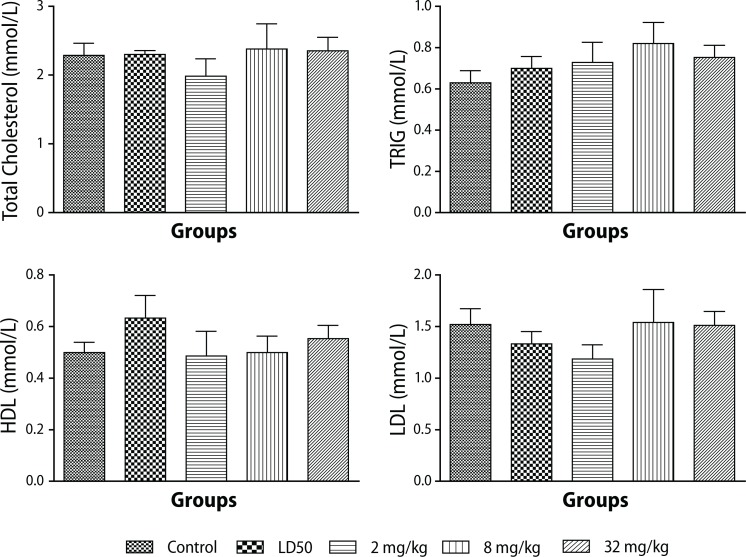
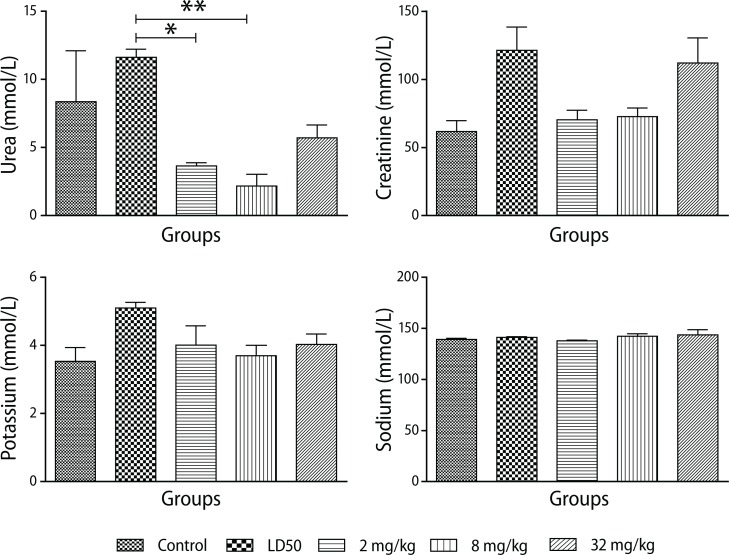
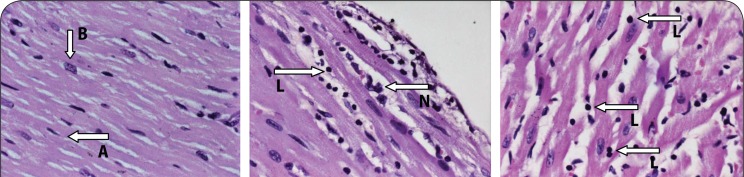
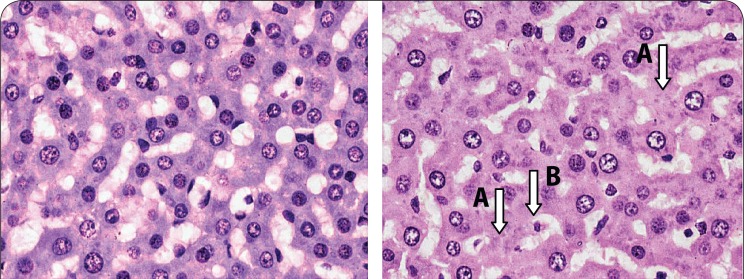
Polyhexamethylene biguanide (PHMB) is an antiseptic with antiviral and antibacterial properties used in a variety of products including wound care dressings, contact lens cleaning solutions, perioperative cleansing products, and swimming pool cleaners. There are regulatory concerns with regard to its safety in humans for water treatment. We decided to assess the safety of this chemical in Sprague-Dawley rats. PHMB was administered in a single dose by gavage via a stomach tube as per the manufacturer's instruction within a dose range of 2 mg/kg to 40 mg/kg. Subchronic toxicity studies were also conducted at doses of 2 mg/kg, 8 mg/kg and 32 mg/kg body weight and hematological, biochemical and histopathological findings of the major organs were assessed. Administration of a dose of 25.6 mg/kg, i.e. 1.6 mL of 0.4% PHMB solution (equivalent to 6.4x10(3) mg/L of 0.1% solution) resulted in 50% mortality. Histopathological analysis in the acute toxicity studies showed that no histopathological lesions were observed in the heart and kidney samples but 30% of the animals had mild hydropic changes in zone 1 of their liver samples, while at a dosage of 32 mg/kg in the subchronic toxicity studies, 50% of the animals showed either mild hepatocyte cytolysis with or without lymphocyte infiltration and feathery degeneration. Lymphocyte infiltration was, for the first time, observed in one heart sample, whereas one kidney sample showed mild tubular damage. The acute studies showed that the median lethal dose (LD50) is 25.6 mg/kg (LC50 of 1.6 mL of 0.4% PHMB. Subchronic toxicological studies also revealed few deleterious effects on the internal organs examined, as seen from the results of the biochemical parameters evaluated. These results have implications for the use of PHMB to make water potable.
聚六亚甲基双胍(PHMB)是一种具有抗病毒和抗菌特性的防腐剂,用于多种产品,包括伤口护理敷料、隐形眼镜清洁液、围手术期清洁产品和游泳池清洁剂。对于其在水处理中对人体的安全性存在监管方面的担忧。我们决定评估这种化学物质在Sprague-Dawley大鼠中的安全性。按照制造商的说明,通过胃管以单剂量灌胃的方式给予大鼠PHMB,剂量范围为2mg/kg至40mg/kg。还在2mg/kg、8mg/kg和32mg/kg体重的剂量下进行了亚慢性毒性研究,并评估了主要器官的血液学、生化和组织病理学结果。给予25.6mg/kg的剂量,即1.6mL的0.4%PHMB溶液(相当于0.1%溶液的6.4x10(3)mg/L)导致50%的死亡率。急性毒性研究中的组织病理学分析表明,心脏和肾脏样本中未观察到组织病理学病变,但30%的动物肝脏样本的1区有轻度水样变性,而在亚慢性毒性研究中,剂量为32mg/kg时,50%的动物表现出轻度肝细胞溶解,伴有或不伴有淋巴细胞浸润和羽毛状变性。首次在一个心脏样本中观察到淋巴细胞浸润,而一个肾脏样本显示轻度肾小管损伤。急性研究表明,半数致死剂量(LD50)为25.6mg/kg(0.4%PHMB的1.6mL的LC50)。亚慢性毒理学研究还表明,从所评估的生化参数结果来看,对所检查的内部器官几乎没有有害影响。这些结果对使用PHMB使水可饮用具有启示意义。