Tong Yubing, Udupa Jayaram K, Sin Sanghun, Liu Zhengbing, Wileyto E Paul, Torigian Drew A, Arens Raanan
Medical Image Processing Group, Department of Radiology, University of Pennsylvania, Philadelphia, Pennsylvania, United States of America.
Division of Respiratory and Sleep Medicine, Children's Hospital at Montefiore, Bronx, New York, United States of America.
PLoS One. 2016 Aug 3;11(8):e0159327. doi: 10.1371/journal.pone.0159327. eCollection 2016.
Quantitative image analysis in previous research in obstructive sleep apnea syndrome (OSAS) has focused on the upper airway or several objects in its immediate vicinity and measures of object size. In this paper, we take a more general approach of considering all major objects in the upper airway region and measures pertaining to their individual morphological properties, their tissue characteristics revealed by image intensities, and the 3D architecture of the object assembly. We propose a novel methodology to select a small set of salient features from this large collection of measures and demonstrate the ability of these features to discriminate with very high prediction accuracy between obese OSAS and obese non-OSAS groups.
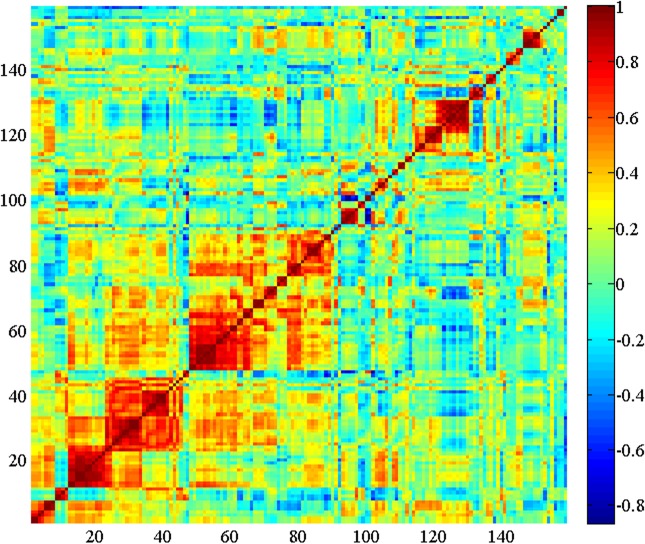
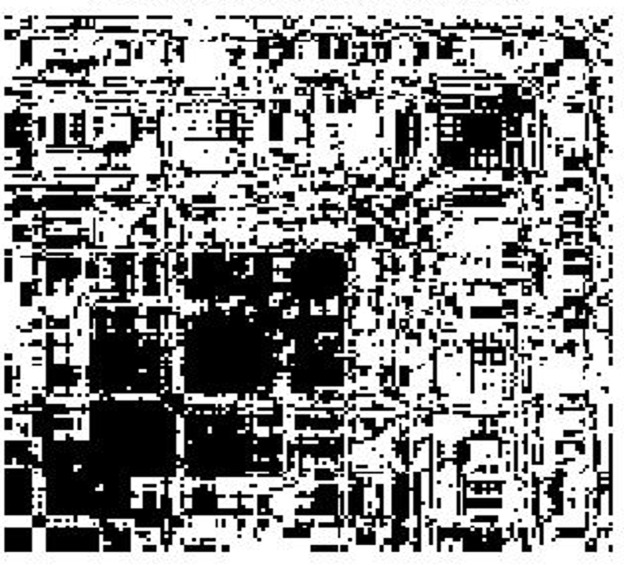
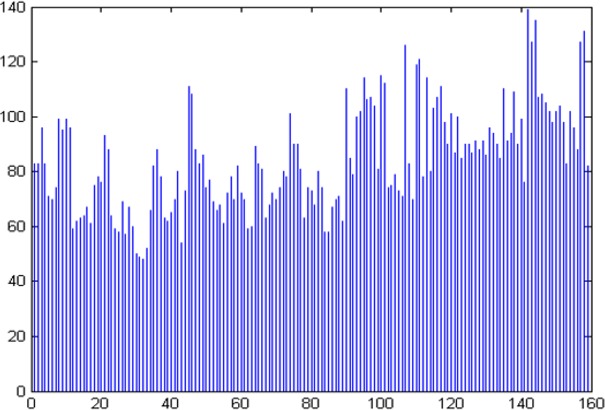
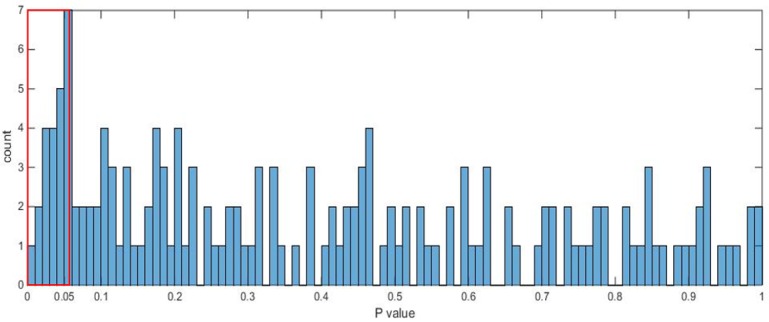
Thirty children were involved in this study with 15 in the obese OSAS group with an apnea-hypopnea index (AHI) = 14.4 ± 10.7) and 15 in the obese non-OSAS group with an AHI = 1.0 ± 1.0 (p<0.001). Subjects were between 8-17 years and underwent T1- and T2-weighted magnetic resonance imaging (MRI) of the upper airway during wakefulness. Fourteen objects in the vicinity of the upper airways were segmented in these images and a total of 159 measurements were derived from each subject image which included object size, surface area, volume, sphericity, standardized T2-weighted image intensity value, and inter-object distances. A small set of discriminating features was identified from this set in several steps. First, a subset of measures that have a low level of correlation among the measures was determined. A heat map visualization technique that allows grouping of parameters based on correlations among them was used for this purpose. Then, through T-tests, another subset of measures which are capable of separating the two groups was identified. The intersection of these subsets yielded the final feature set. The accuracy of these features to perform classification of unseen images into the two patient groups was tested by using logistic regression and multi-fold cross validation.
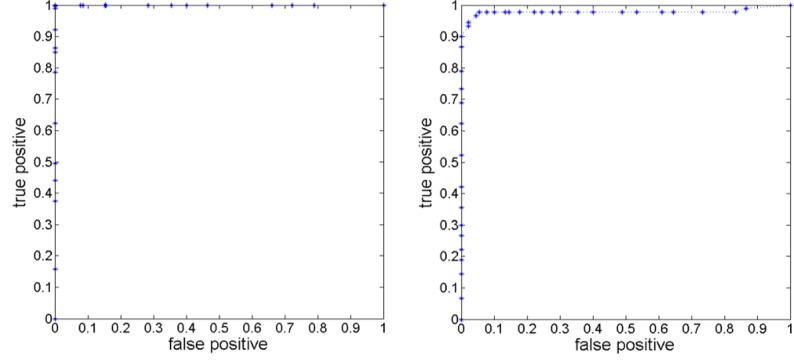
A set of 16 features identified with low inter-feature correlation (< 0.36) yielded a high classification accuracy of 96% with sensitivity and specificity of 97.8% and 94.4%, respectively. In addition to the previously observed increase in linear size, surface area, and volume of adenoid, tonsils, and fat pad in OSAS, the following new markers have been found. Standardized T2-weighted image intensities differed between the two groups for the entire neck body region, pharynx, and nasopharynx, possibly indicating changes in object tissue characteristics. Fat pad and oropharynx become less round or more complex in shape in OSAS. Fat pad and tongue move closer in OSAS, and so also oropharynx and tonsils and fat pad and tonsils. In contrast, fat pad and oropharynx move farther apart from the skin object.
The study has found several new anatomic bio-markers of OSAS. Changes in standardized T2-weighted image intensities in objects may imply that intrinsic tissue composition undergoes changes in OSAS. The results on inter-object distances imply that treatment methods should respect the relationships that exist among objects and not just their size. The proposed method of analysis may lead to an improved understanding of the mechanisms underlying OSAS.
以往关于阻塞性睡眠呼吸暂停综合征(OSAS)的研究中的定量图像分析主要集中在上气道或其紧邻区域的几个对象以及对象大小的测量。在本文中,我们采用一种更通用的方法,考虑上气道区域中的所有主要对象以及与其各自形态特性、图像强度揭示的组织特征和对象集合的三维结构相关的测量。我们提出了一种新颖的方法,从这大量的测量中选择一小部分显著特征,并证明这些特征能够以非常高的预测准确率区分肥胖OSAS组和肥胖非OSAS组。
本研究纳入30名儿童,其中肥胖OSAS组15名,呼吸暂停低通气指数(AHI)为14.4±10.7,肥胖非OSAS组15名,AHI为1.0±1.0(p<0.001)。受试者年龄在8至17岁之间,清醒状态下接受上气道的T1加权和T2加权磁共振成像(MRI)检查。在这些图像中对上气道附近的14个对象进行分割,从每个受试者图像中总共获得159项测量值,包括对象大小、表面积、体积、球形度、标准化T2加权图像强度值以及对象间距离。通过几个步骤从这组测量值中确定一小部分有区分力的特征。首先,确定一组测量值之间相关性较低的子集。为此使用了一种热图可视化技术,该技术允许根据参数之间的相关性对参数进行分组。然后,通过T检验,确定另一组能够区分两组的测量值子集。这些子集的交集产生最终的特征集。通过逻辑回归和多折交叉验证测试这些特征将未见过的图像分类到两个患者组的准确性。
一组16个特征,其特征间相关性较低(<0.36),分类准确率高达96%,敏感性和特异性分别为97.8%和94.4%。除了之前观察到的OSAS患者腺样体、扁桃体和脂肪垫的线性大小、表面积和体积增加外,还发现了以下新的标志物。两组在整个颈部身体区域、咽部和鼻咽部的标准化T2加权图像强度不同,这可能表明对象组织特征发生了变化。OSAS患者的脂肪垫和口咽形状变得不那么圆润或更复杂。OSAS患者中脂肪垫和舌靠近,口咽和扁桃体以及脂肪垫和扁桃体也靠近。相反,脂肪垫和口咽与皮肤对象的距离更远。
该研究发现了几种新的OSAS解剖生物标志物。对象中标准化T2加权图像强度的变化可能意味着OSAS患者内在组织成分发生了变化。对象间距离的结果表明,治疗方法应考虑对象之间存在的关系,而不仅仅是它们的大小。所提出的分析方法可能有助于更好地理解OSAS的潜在机制。