Boelaarts Leo, Scheltens Philip, de Jonghe Jos
Department of Geriatric Medicine, Medical Center Alkmaar, Alkmaar, Amsterdam, The Netherlands.
Department of Neurology and Alzheimer Center, VU University Medical Center, Amsterdam, The Netherlands.
Dement Geriatr Cogn Dis Extra. 2016 Jun 25;6(2):242-51. doi: 10.1159/000445711. eCollection 2016 May-Aug.
Data showing the usefulness of MRI to improve the accuracy of the diagnostic process in cognitive disorders were derived from studies in tertiary referral centers. MRI is widely used as a diagnostic tool in everyday practice, but it is unknown what the actual added value of MRI is. We studied the usefulness of MRI in the diagnostic process by measuring the change of confidence of the physician.
Physicians indicated confidence in their diagnosis before and after presentation of MR images using a visual analogue scale from 0-100%.
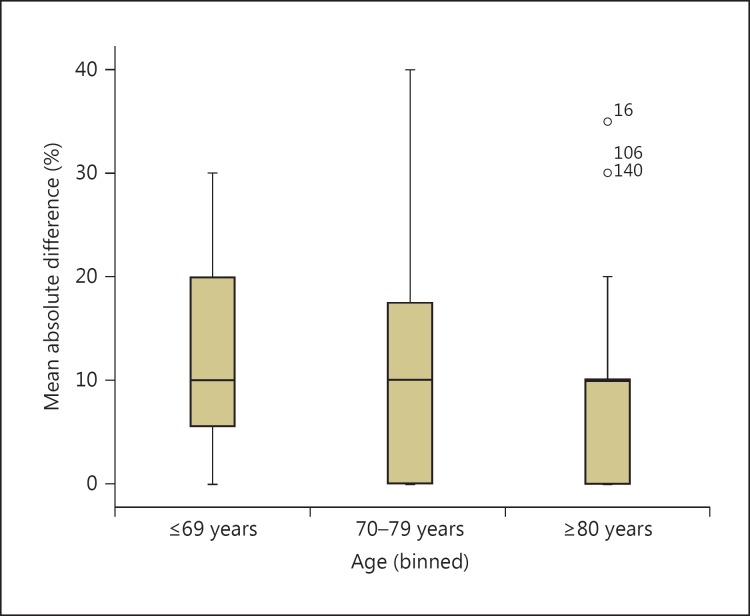
Use of MRI increased the level of confidence by 3% in experienced clinicians and by 9% in inexperienced physicians. In 2/125 cases, MRI showed an unexpected finding.
MRI is a useful diagnostic tool in everyday practice of diagnosing cognitive disorders.
显示MRI有助于提高认知障碍诊断过程准确性的数据来源于三级转诊中心的研究。MRI在日常实践中被广泛用作诊断工具,但尚不清楚MRI的实际附加值是什么。我们通过测量医生信心的变化来研究MRI在诊断过程中的有用性。
医生使用0 - 100%的视觉模拟量表表示在展示MRI图像前后对其诊断的信心。
MRI的使用使经验丰富的临床医生的信心水平提高了3%,使经验不足的医生的信心水平提高了9%。在125例病例中有2例,MRI显示出意外发现。
在认知障碍的日常诊断实践中,MRI是一种有用的诊断工具。