Habibi Assal, Cahn B Rael, Damasio Antonio, Damasio Hanna
Brain and Creativity Institute, Dornsife College of Letters, Arts and Sciences, University of Southern California, Los Angeles, CA, United States.
Brain and Creativity Institute, Dornsife College of Letters, Arts and Sciences, University of Southern California, Los Angeles, CA, United States; Department of Psychiatry, Keck School of Medicine, University of Southern California, Los Angeles, CA, United States.
Dev Cogn Neurosci. 2016 Oct;21:1-14. doi: 10.1016/j.dcn.2016.04.003. Epub 2016 Apr 16.
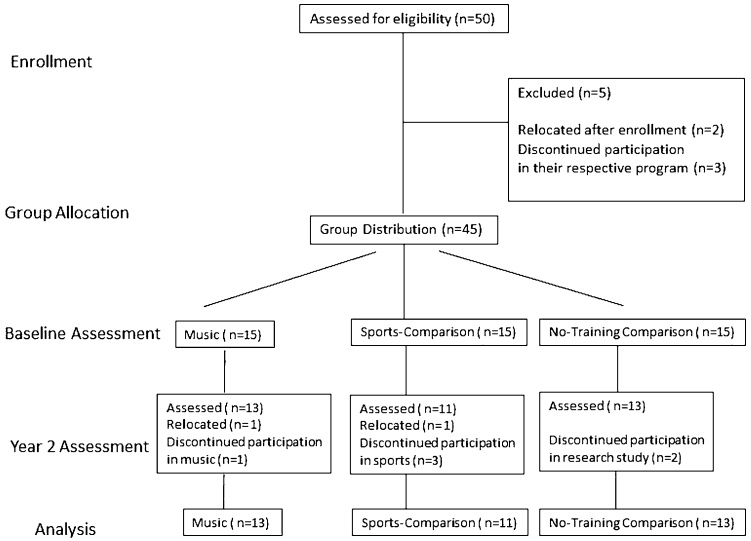
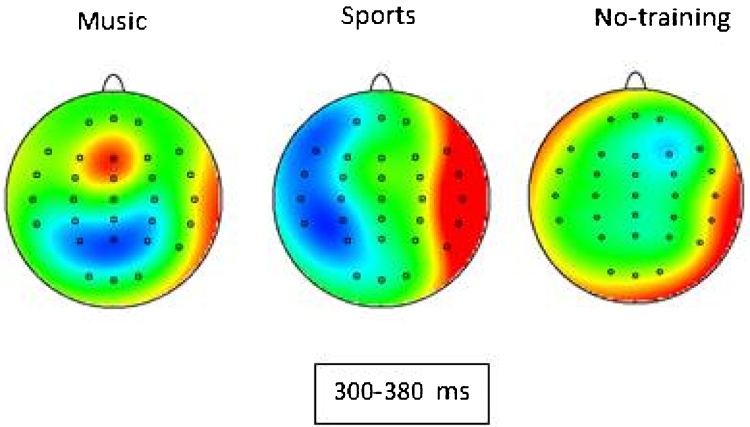
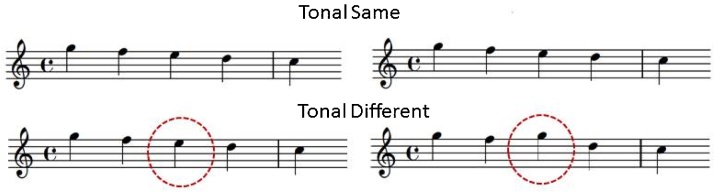
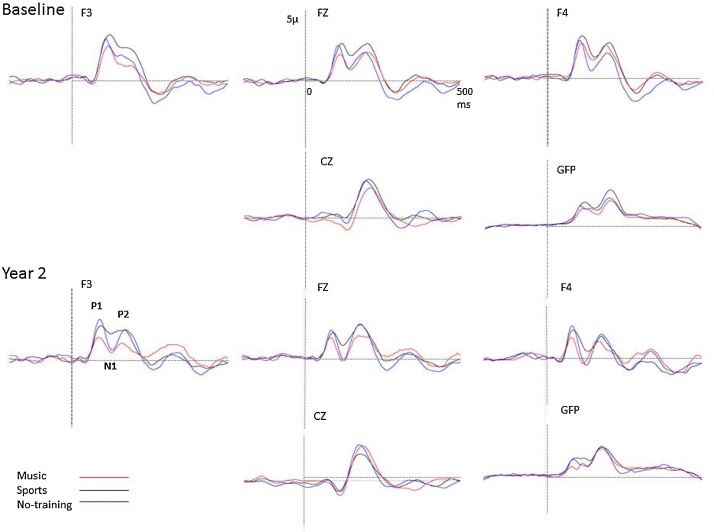
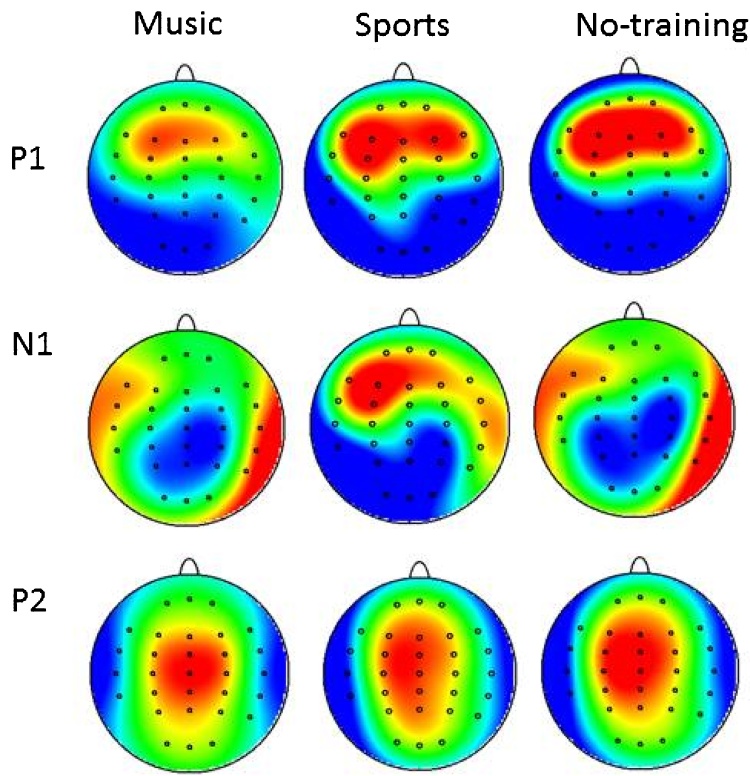
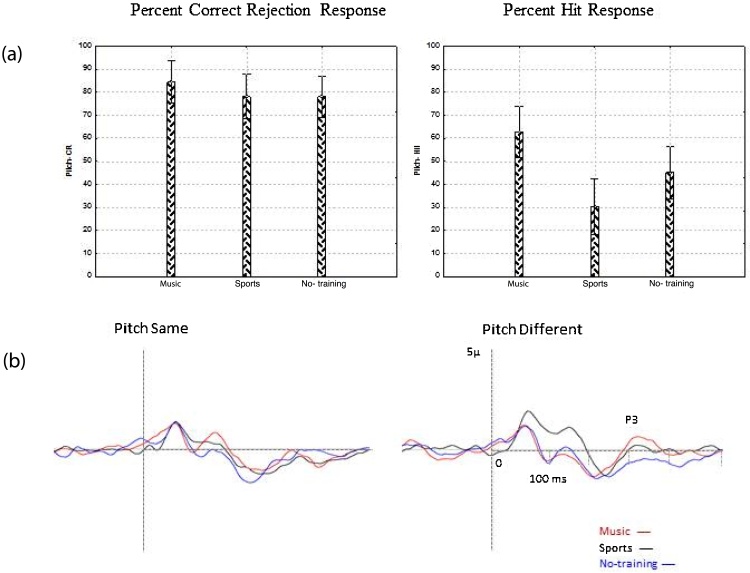
Several studies comparing adult musicians and non-musicians have shown that music training is associated with brain differences. It is unknown, however, whether these differences result from lengthy musical training, from pre-existing biological traits, or from social factors favoring musicality. As part of an ongoing 5-year longitudinal study, we investigated the effects of a music training program on the auditory development of children, over the course of two years, beginning at age 6-7. The training was group-based and inspired by El-Sistema. We compared the children in the music group with two comparison groups of children of the same socio-economic background, one involved in sports training, another not involved in any systematic training. Prior to participating, children who began training in music did not differ from those in the comparison groups in any of the assessed measures. After two years, we now observe that children in the music group, but not in the two comparison groups, show an enhanced ability to detect changes in tonal environment and an accelerated maturity of auditory processing as measured by cortical auditory evoked potentials to musical notes. Our results suggest that music training may result in stimulus specific brain changes in school aged children.
多项比较成年音乐家和非音乐家的研究表明,音乐训练与大脑差异有关。然而,尚不清楚这些差异是源于长期的音乐训练、先天的生物学特征,还是有利于音乐才能发展的社会因素。作为一项正在进行的为期5年的纵向研究的一部分,我们从6至7岁起,在两年时间里调查了一个音乐训练项目对儿童听觉发育的影响。该训练以小组为基础,灵感来自于“依利斯基玛”音乐教育体系。我们将音乐组的儿童与两个具有相同社会经济背景的对照组儿童进行了比较,一个对照组儿童参与体育训练,另一个对照组儿童不参与任何系统训练。在参与训练之前,开始接受音乐训练的儿童在任何评估指标上与对照组儿童并无差异。两年后,我们现在观察到,音乐组的儿童(而非两个对照组的儿童)表现出更强的检测音调环境变化的能力,并且通过对音符的皮质听觉诱发电位测量,其听觉处理的成熟度加快。我们的结果表明,音乐训练可能会导致学龄儿童大脑产生特定于刺激的变化。