Course Meredith M, Wang Xinnan
Department of Neurosurgery, Stanford University School of Medicine, Palo Alto, CA, USA; Neurosciences Graduate Program, Stanford University, Stanford, CA, USA.
Department of Neurosurgery, Stanford University School of Medicine, Palo Alto, CA, USA.
F1000Res. 2016 Jul 18;5. doi: 10.12688/f1000research.7864.1. eCollection 2016.
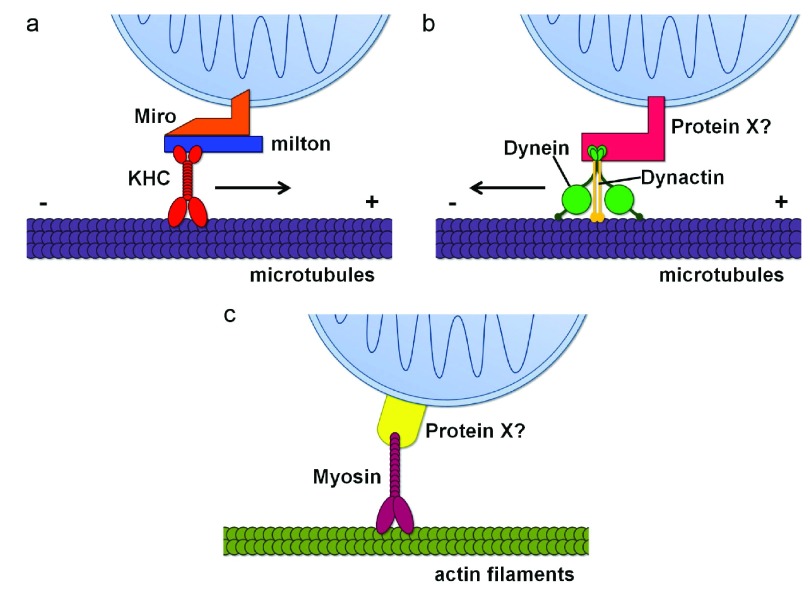
Neurons demand vast and vacillating supplies of energy. As the key contributors of this energy, as well as primary pools of calcium and signaling molecules, mitochondria must be where the neuron needs them, when the neuron needs them. The unique architecture and length of neurons, however, make them a complex system for mitochondria to navigate. To add to this difficulty, mitochondria are synthesized mainly in the soma, but must be transported as far as the distant terminals of the neuron. Similarly, damaged mitochondria-which can cause oxidative stress to the neuron-must fuse with healthy mitochondria to repair the damage, return all the way back to the soma for disposal, or be eliminated at the terminals. Increasing evidence suggests that the improper distribution of mitochondria in neurons can lead to neurodegenerative and neuropsychiatric disorders. Here, we will discuss the machinery and regulatory systems used to properly distribute mitochondria in neurons, and how this knowledge has been leveraged to better understand neurological dysfunction.
神经元需要大量且波动的能量供应。作为这种能量的关键贡献者以及钙和信号分子的主要储存库,线粒体必须在神经元需要它们的时间和地点出现。然而,神经元独特的结构和长度使其成为线粒体难以穿行的复杂系统。更麻烦的是,线粒体主要在胞体中合成,但必须被运输到神经元的远端终末。同样,受损的线粒体(可对神经元造成氧化应激)必须与健康的线粒体融合以修复损伤,然后一路返回胞体进行处理,或者在终末被清除。越来越多的证据表明,线粒体在神经元中的分布不当会导致神经退行性疾病和神经精神疾病。在此,我们将讨论用于在神经元中正确分布线粒体的机制和调节系统,以及如何利用这些知识更好地理解神经功能障碍。