Nogueira Paula M, Assis Rafael R, Torrecilhas Ana C, Saraiva Elvira M, Pessoa Natália L, Campos Marco A, Marialva Eric F, Ríos-Velasquez Cláudia M, Pessoa Felipe A, Secundino Nágila F, Rugani Jerônimo N, Nieves Elsa, Turco Salvatore J, Melo Maria N, Soares Rodrigo P
Centro de Pesquisas René Rachou/FIOCRUZ, Belo Horizonte, Minas Gerais, Brazil.
Departamento de Parasitologia, UFMG, Belo Horizonte, Minas Gerais, Brazil.
PLoS Negl Trop Dis. 2016 Aug 10;10(8):e0004848. doi: 10.1371/journal.pntd.0004848. eCollection 2016 Aug.
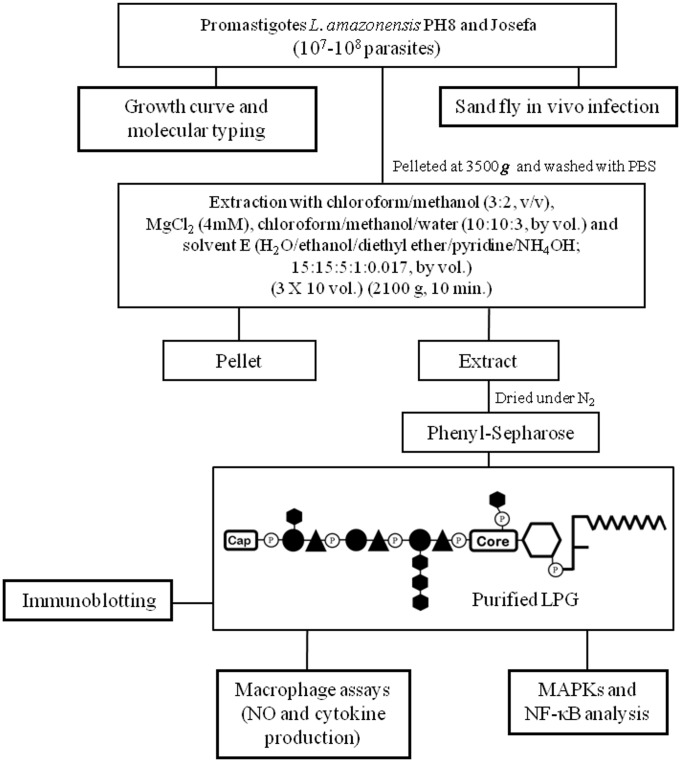
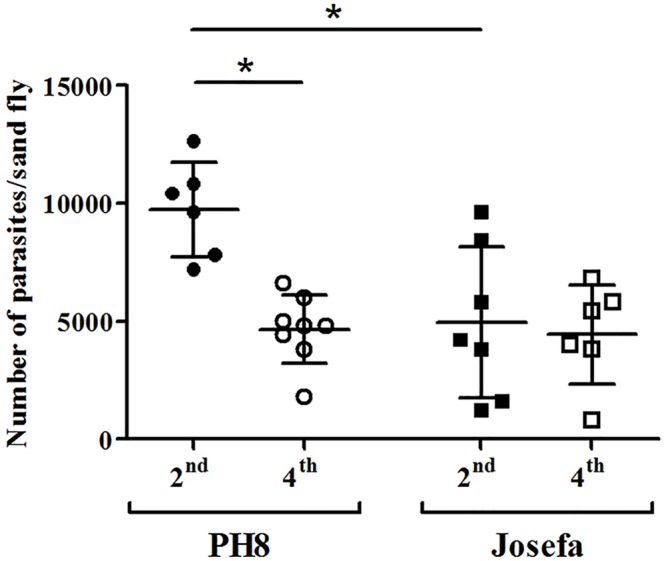
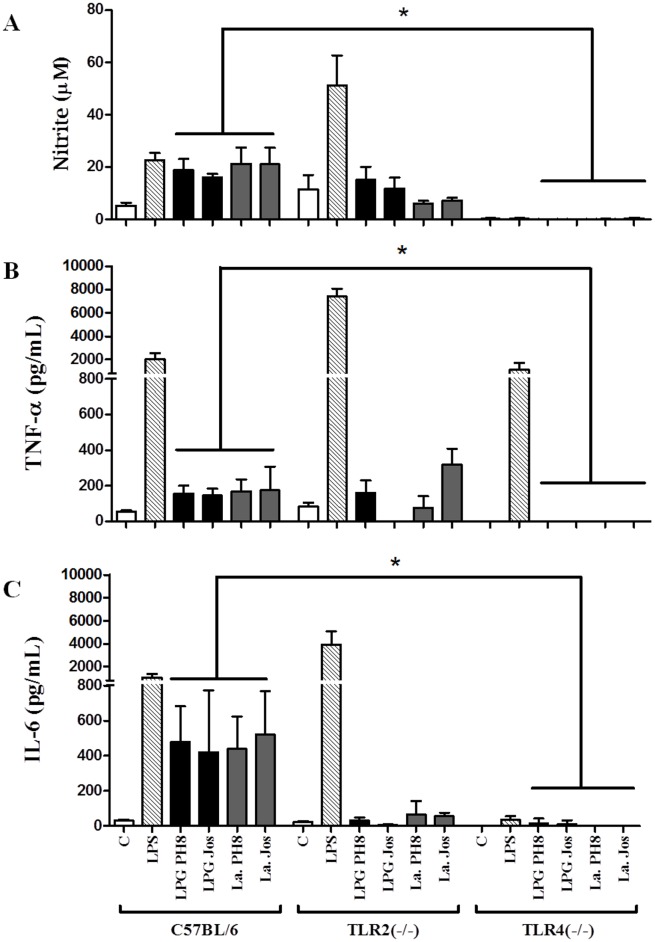
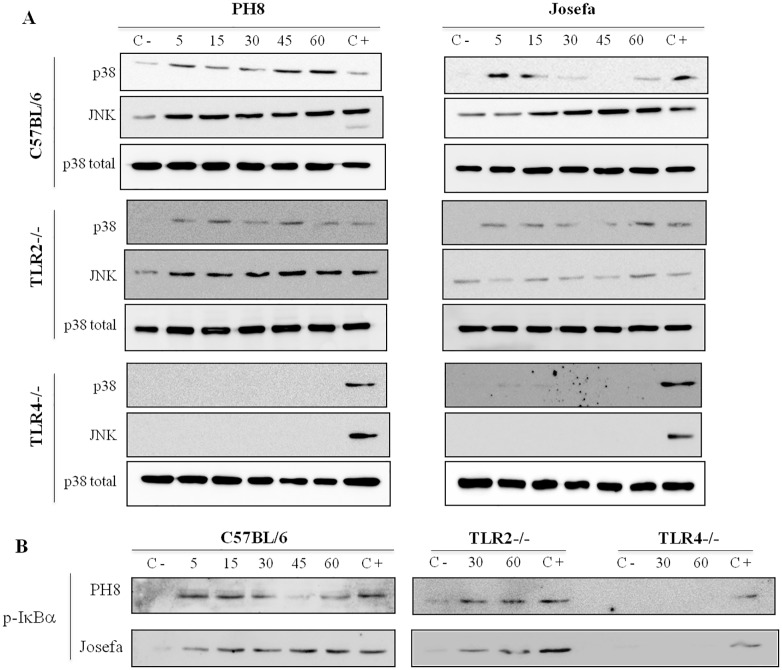
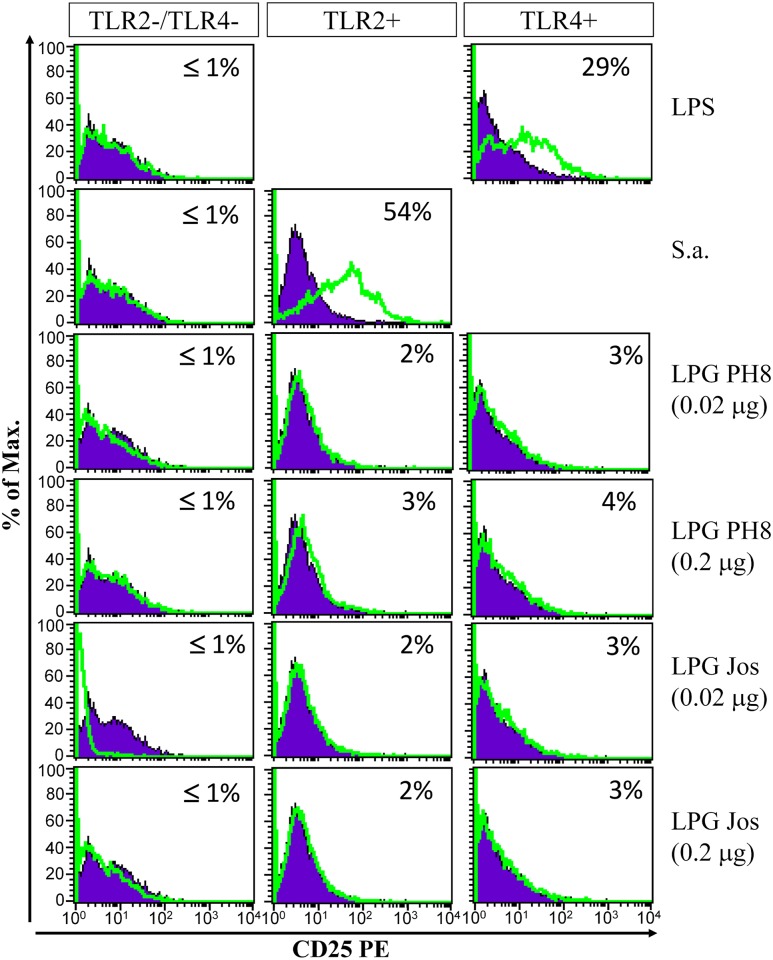
The immunomodulatory properties of lipophosphoglycans (LPG) from New World species of Leishmania have been assessed in Leishmania infantum and Leishmania braziliensis, the causative agents of visceral and cutaneous leishmaniasis, respectively. This glycoconjugate is highly polymorphic among species with variation in sugars that branch off the conserved Gal(β1,4)Man(α1)-PO4 backbone of repeat units. Here, the immunomodulatory activity of LPGs from Leishmania amazonensis, the causative agent of diffuse cutaneous leishmaniasis, was evaluated in two strains from Brazil. One strain (PH8) was originally isolated from the sand fly and the other (Josefa) was isolated from a human case. The ability of purified LPGs from both strains was investigated during in vitro interaction with peritoneal murine macrophages and CHO cells and in vivo infection with Lutzomyia migonei. In peritoneal murine macrophages, the LPGs from both strains activated TLR4. Both LPGs equally activate MAPKs and the NF-κB inhibitor p-IκBα, but were not able to translocate NF-κB. In vivo experiments with sand flies showed that both stains were able to sustain infection in L. migonei. A preliminary biochemical analysis indicates intraspecies variation in the LPG sugar moieties. However, they did not result in different activation profiles of the innate immune system. Also those polymorphisms did not affect infectivity to the sand fly.
已在分别导致内脏利什曼病和皮肤利什曼病的婴儿利什曼原虫和巴西利什曼原虫中评估了来自新大陆利什曼原虫物种的脂磷壁酸(LPG)的免疫调节特性。这种糖缀合物在物种间高度多态,其重复单元保守的Gal(β1,4)Man(α1)-PO4主链上分支的糖存在差异。在此,对来自巴西的两株引起弥漫性皮肤利什曼病的亚马逊利什曼原虫的LPG的免疫调节活性进行了评估。一株(PH8)最初从沙蝇中分离得到,另一株(Josefa)从一名人类病例中分离得到。研究了来自这两株菌的纯化LPG在体外与腹膜小鼠巨噬细胞和CHO细胞相互作用以及体内被米氏白蛉感染过程中的能力。在腹膜小鼠巨噬细胞中,来自两株菌的LPG均激活TLR4。两种LPG同等程度地激活丝裂原活化蛋白激酶(MAPK)和核因子κB抑制剂p-IκBα,但无法使核因子κB易位。用沙蝇进行的体内实验表明,两株菌都能够在米氏白蛉中维持感染。初步生化分析表明LPG糖部分存在种内变异。然而,它们并未导致先天免疫系统的不同激活模式。而且这些多态性也不影响对沙蝇的感染性。