Lopez-Iturri Peio, Aguirre Erik, Azpilicueta Leyre, Astrain José Javier, Villadangos Jesús, Falcone Francisco
Electrical and Electronic Engineering Department, Public University of Navarre, Pamplona 31006, Spain.
School of Engineering and Sciences, Tecnologico de Monterrey, Campus Monterrey, Monterrey, NL 64849, Mexico.
Sensors (Basel). 2016 Aug 6;16(8):1247. doi: 10.3390/s16081247.
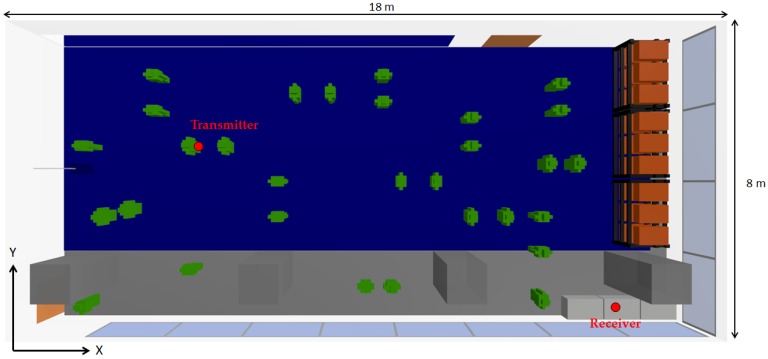
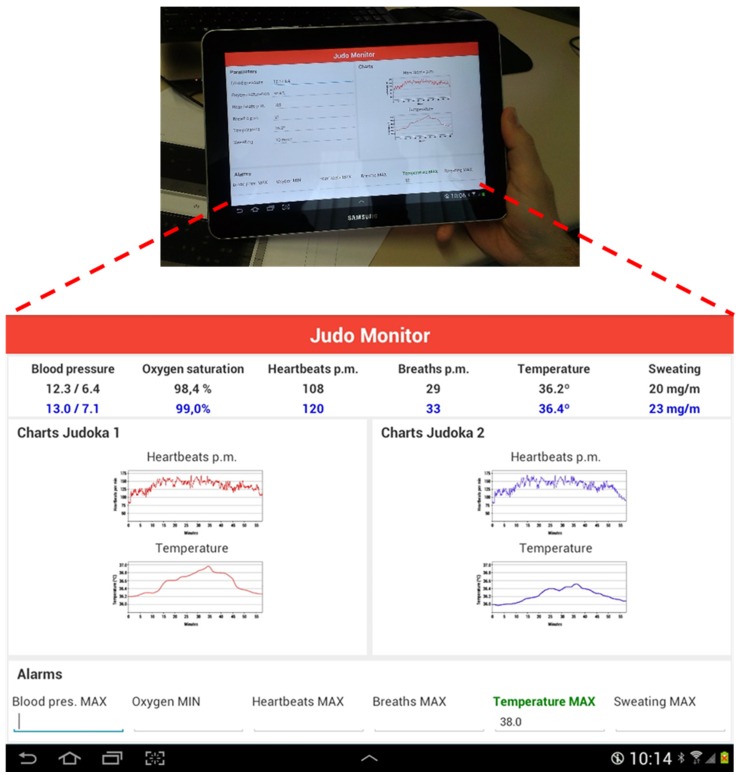
In this work, the performance of ISM 2.4 GHz Wireless Sensor Networks (WSNs) deployed in judo training venues is analyzed. Judo is a very popular martial art, which is practiced by thousands of people not only at the competition level, but also as part of physical education programs at different school levels. There is a great variety of judo training venues, and each one has specific morphological aspects, making them unique scenarios in terms of radio propagation due to the presence of furniture, columns, equipment and the presence of human beings, which is a major issue as the person density within this kind of scenarios could be high. Another key aspect is the electromagnetic interference created by other wireless systems, such as WiFi or other WSNs, which make the radio planning a complex task in terms of coexistence. In order to analyze the impact of these features on the radio propagation and the performance of WSNs, an in-house developed 3D ray launching algorithm has been used. The obtained simulation results have been validated with a measurement campaign carried out in the sport facilities of the Public University of Navarre. The analysis is completed with the inclusion of an application designed to monitor biological constants of judokas, aimed to improve their training procedures. The application, that allows the simultaneous monitoring of multiple judokas (collective workouts) minimizing the efforts of the coach and medical supervisor, is based on commercial off-the-shelf products. The presented assessment of the presence of interfering wireless systems and the presence of human beings within judo training venues shows that an in-depth radio planning is required as these issues can have a great impact in the overall performance of a ISM 2.4 GHz WSN, affecting negatively the potential applications supported by wireless channel.
在这项工作中,分析了部署在柔道训练场馆中的2.4 GHz工业、科学和医疗(ISM)频段无线传感器网络(WSN)的性能。柔道是一项非常受欢迎的武术运动,不仅有数千人参与竞技比赛,还有不同学校阶段的体育课程中也将其作为一部分。柔道训练场馆种类繁多,每个场馆都有特定的形态特征,由于存在家具、柱子、设备以及人员,这些因素使得它们在无线电传播方面成为独特的场景,因为这类场景中的人员密度可能很高,这是一个主要问题。另一个关键方面是其他无线系统(如WiFi或其他WSN)产生的电磁干扰,这使得在共存方面进行无线电规划成为一项复杂的任务。为了分析这些特征对无线电传播和WSN性能的影响,使用了一种内部开发的三维射线发射算法。所获得的仿真结果已通过在纳瓦拉公立大学体育设施中进行的测量活动进行了验证。分析还包括一个旨在监测柔道运动员生物常数的应用程序,旨在改进他们的训练程序。该应用程序基于现成的商业产品,允许同时监测多个柔道运动员(集体训练),最大限度地减少教练和医疗主管的工作量。对柔道训练场馆中干扰无线系统的存在以及人员存在情况的评估表明,需要进行深入的无线电规划,因为这些问题可能对ISM 2.4 GHz WSN的整体性能产生重大影响,对无线信道支持的潜在应用产生负面影响。