Morales-Marín Mirna Edith, Genis-Mendoza Alma Delia, Tovilla-Zarate Carlos Alfonso, Lanzagorta Nuria, Escamilla Michael, Nicolini Humberto
Genomics of Psychiatric and Neurodegenerative Diseases Laboratory, National Institute of Genomic Medicine (INMEGEN), CDMX, Mexico.
Genomics of Psychiatric and Neurodegenerative Diseases Laboratory, National Institute of Genomic Medicine (INMEGEN), CDMX, Mexico; Psychiatric Care Services, Child Psychiatric Hospital Dr Juan N Navarro, CDMX, Mexico.
Neuropsychiatr Dis Treat. 2016 Jul 25;12:1843-8. doi: 10.2147/NDT.S104654. eCollection 2016.
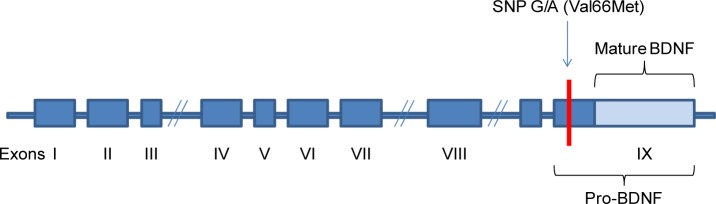
The brain-derived neurotrophic factor (BDNF) has been considered as an important candidate gene in bipolar disorder (BD); this association has been derived from several genetic and genome-wide studies. A polymorphic variant of the BDNF (Val66Met) confers some differences in the clinical presentation of affective disorders. In this study, we evaluated a sample population from Mexico City to determine whether the BDNF (rs6265) Val66Met polymorphism is associated with the body mass index (BMI) of patients with BD.
This association study included a sample population of 357 individuals recruited in Mexico City. A total of 139 participants were diagnosed with BD and 137 were classified as psychiatrically healthy controls (all individuals were interviewed and evaluated by the Diagnostic Interview for Genetic Studies). Genomic DNA was extracted from peripheral blood leukocytes. The quantitative polymerase chain reaction (qPCR) assay was performed in 96-well plates using the TaqMan Universal Thermal Cycling Protocol. After the PCR end point was reached, fluorescence intensity was measured in a 7,500 real-time PCR system and evaluated using the SDS v2.1 software, results were analyzed with Finetti and SPSS software. Concerning BMI stratification, random groups were defined as follows: normal <25 kg/m(2), overweight (Ow) =25.1-29.9 kg/m(2), and obesity (Ob) >30 kg/m(2).
In the present work, we report the association of a particular BMI phenotype with the presence of the Val66Met allele in patients with BD (P=0.0033 and odds ratio [95% confidence interval] =0.332 [157-0.703]), and correlated the risk for valine allele carriers with Ow and Ob in patients with BD.
We found that the methionine allele confers a lower risk of developing Ow and Ob in patients with BD. We also confirmed that the G polymorphism represents a risk of developing Ow and Ob in patients with BD. In future studies, the haplotype analysis should provide additional evidence that BDNF may be associated with BD and BMI within the Mexican population.
脑源性神经营养因子(BDNF)被认为是双相情感障碍(BD)的一个重要候选基因;这种关联来自多项遗传学和全基因组研究。BDNF的一个多态性变体(Val66Met)在情感障碍的临床表现上存在一些差异。在本研究中,我们评估了来自墨西哥城的样本群体,以确定BDNF(rs6265)Val66Met多态性是否与BD患者的体重指数(BMI)相关。
这项关联研究纳入了在墨西哥城招募的357名个体的样本群体。共有139名参与者被诊断为BD,137名被归类为精神健康对照者(所有个体均通过基因研究诊断访谈进行访谈和评估)。从外周血白细胞中提取基因组DNA。使用TaqMan通用热循环方案在96孔板中进行定量聚合酶链反应(qPCR)测定。PCR终点达到后,在7500实时PCR系统中测量荧光强度,并使用SDS v2.1软件进行评估,结果用Finetti和SPSS软件分析。关于BMI分层,随机分组定义如下:正常<25kg/m²,超重(Ow)=25.1-29.9kg/m²,肥胖(Ob)>30kg/m²。
在本研究中,我们报告了BD患者中特定的BMI表型与Val66Met等位基因的存在之间的关联(P=0.0033,优势比[95%置信区间]=0.332[0.157-0.703]),并将缬氨酸等位基因携带者的风险与BD患者的超重和肥胖相关联。
我们发现甲硫氨酸等位基因使BD患者发生超重和肥胖的风险较低。我们还证实G多态性代表BD患者发生超重和肥胖的风险。在未来的研究中,单倍型分析应提供更多证据表明BDNF可能与墨西哥人群中的双相情感障碍和体重指数相关。