Nikitskaya Elizaveta, Lebedeva Anna, Ivanova Oxana, Maryukhnich Elena, Shpektor Alexander, Grivel Jean-Charles, Margolis Leonid, Vasilieva Elena
Laboratory of Atherothrombosis, Cardiology Department, Moscow State University of Medicine and Dentistry, Moscow, Russia.
Section on Intercellular Interactions, Eunice Kennedy Shriver National Institute of Child Health and Human Development, National Institutes of Health, Bethesda, MD Laboratory of Atherothrombosis, Cardiology Department, Moscow State University of Medicine and Dentistry, Moscow, Russia
J Am Heart Assoc. 2016 Aug 20;5(8):e003759. doi: 10.1161/JAHA.116.003759.
Although an association between human herpesvirus (HHV) infection and atherosclerosis has been suggested, the data supporting such an association are controversial and, in most cases, are based on serological evidence or on the presence of cell-associated HHV DNA, which do not report about actual viral replication. We quantified the DNA of all 8 types of HHVs in plasma, in which their presence is evidence of viral replication.
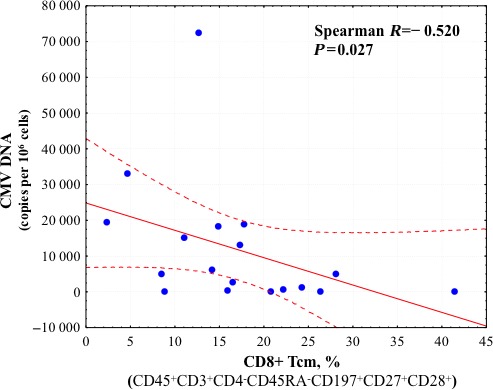
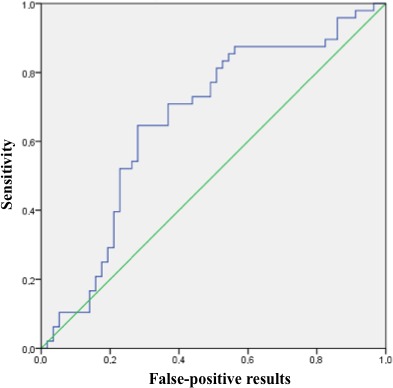
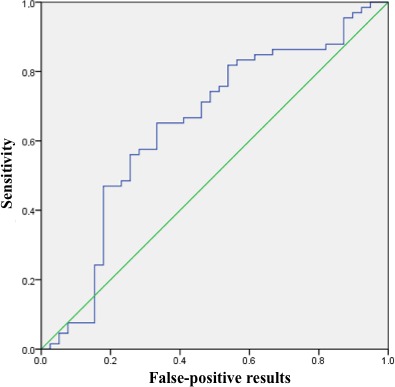
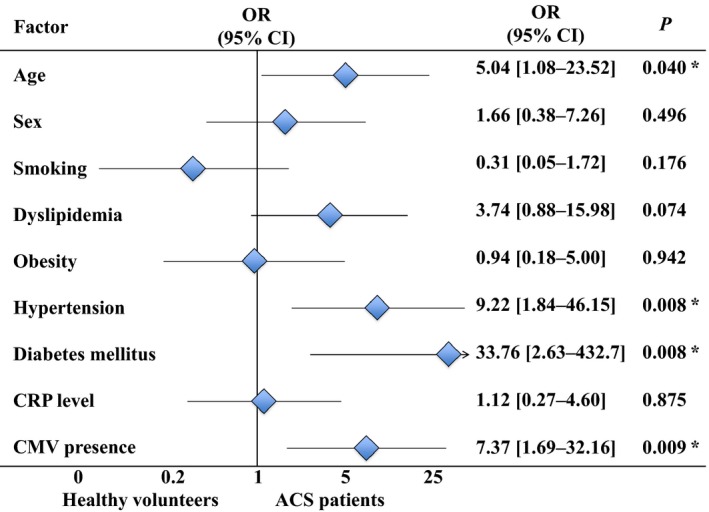
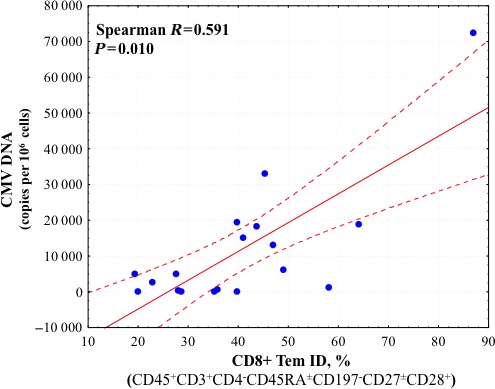
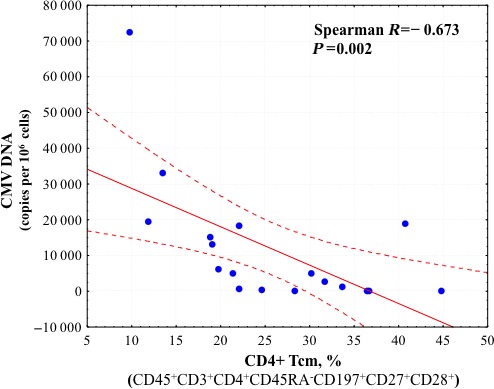
Using quantitative real-time polymerase chain reaction, we evaluated the presence of HHV DNA in blood samples obtained at the time of hospitalization from 71 patients with acute coronary syndrome, 26 patients with stable coronary artery disease, and 53 healthy volunteers and in atherosclerotic plaques of 22 patients with peripheral artery disease who underwent endarterectomy. HHV-5 (cytomegalovirus [CMV]) was the only HHV with a level that was higher in acute coronary syndrome patients than in the control group and that correlated with the level of high-sensitivity C-reactive protein. The numbers of effector memory T cells positively correlated with the numbers of CMV genome copies in carotid arteries plaques, whereas the numbers of central memory T cells negatively correlated with CMV copy numbers.
Of all HHV levels, only CMV was higher in patients with stable coronary artery disease and acute coronary syndrome than in the healthy group, and its load correlated with the level of high-sensitivity C-reactive protein. The level of CMV in atherosclerotic plaques correlated with the state of immunoactivation of lymphocytes in plaques, suggesting that the reactivation of CMV may contribute to the immune activation associated with the progression of atherosclerosis.
尽管有人提出人类疱疹病毒(HHV)感染与动脉粥样硬化之间存在关联,但支持这种关联的数据存在争议,并且在大多数情况下,是基于血清学证据或细胞相关HHV DNA的存在,而这些并不能反映病毒的实际复制情况。我们对血浆中所有8种HHV的DNA进行了定量分析,血浆中HHV的存在是病毒复制的证据。
我们使用定量实时聚合酶链反应,评估了71例急性冠状动脉综合征患者、26例稳定型冠状动脉疾病患者和53名健康志愿者住院时采集的血液样本以及22例行内膜切除术的外周动脉疾病患者动脉粥样硬化斑块中HHV DNA的存在情况。HHV-5(巨细胞病毒[CMV])是唯一一种在急性冠状动脉综合征患者中水平高于对照组且与高敏C反应蛋白水平相关的HHV。效应记忆T细胞的数量与颈动脉斑块中CMV基因组拷贝数呈正相关,而中枢记忆T细胞的数量与CMV拷贝数呈负相关。
在所有HHV水平中,只有CMV在稳定型冠状动脉疾病和急性冠状动脉综合征患者中的水平高于健康组,且其负荷与高敏C反应蛋白水平相关。动脉粥样硬化斑块中CMV的水平与斑块中淋巴细胞的免疫激活状态相关,这表明CMV的重新激活可能有助于与动脉粥样硬化进展相关的免疫激活。