Kim Ji Hyung, Hu Yu, Yongqing Tang, Kim Jessica, Hughes Victoria A, Le Nours Jérôme, Marquez Elsa A, Purcell Anthony W, Wan Qi, Sugita Masahiko, Rossjohn Jamie, Winau Florian
Program in Cellular and Molecular Medicine, Boston Children's Hospital, Department of Microbiology and Immunobiology, Harvard Medical School, Boston, Massachusetts, USA.
Infection and Immunity Program &Department of Biochemistry and Molecular Biology, Biomedicine Discovery Institute, Monash University, Clayton, Victoria, Australia.
Nat Immunol. 2016 Oct;17(10):1159-66. doi: 10.1038/ni.3523. Epub 2016 Aug 22.
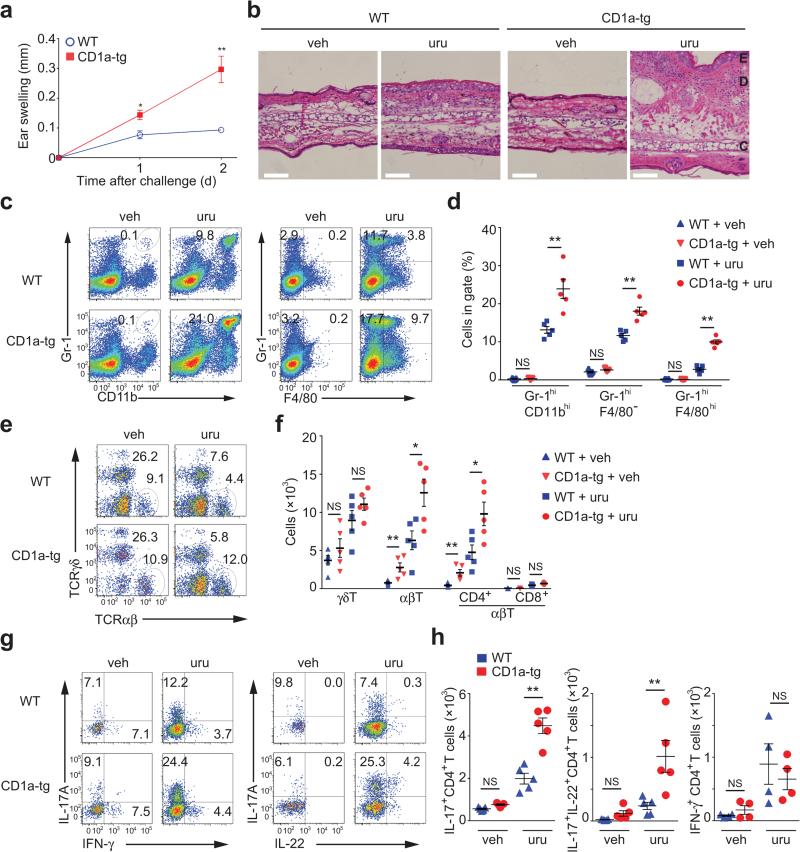
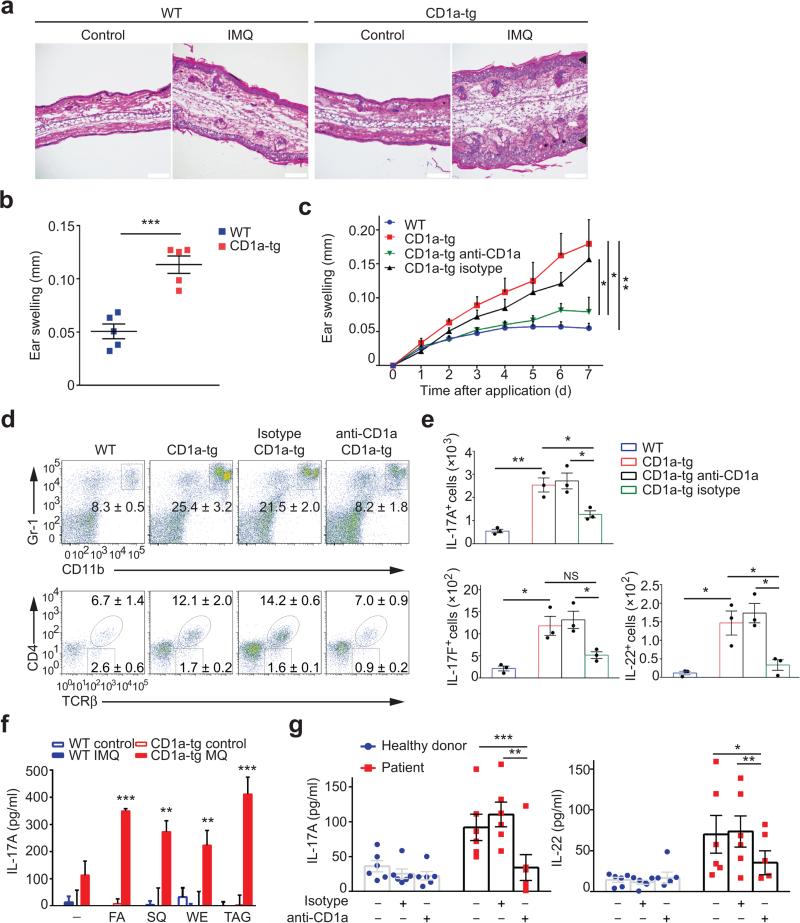
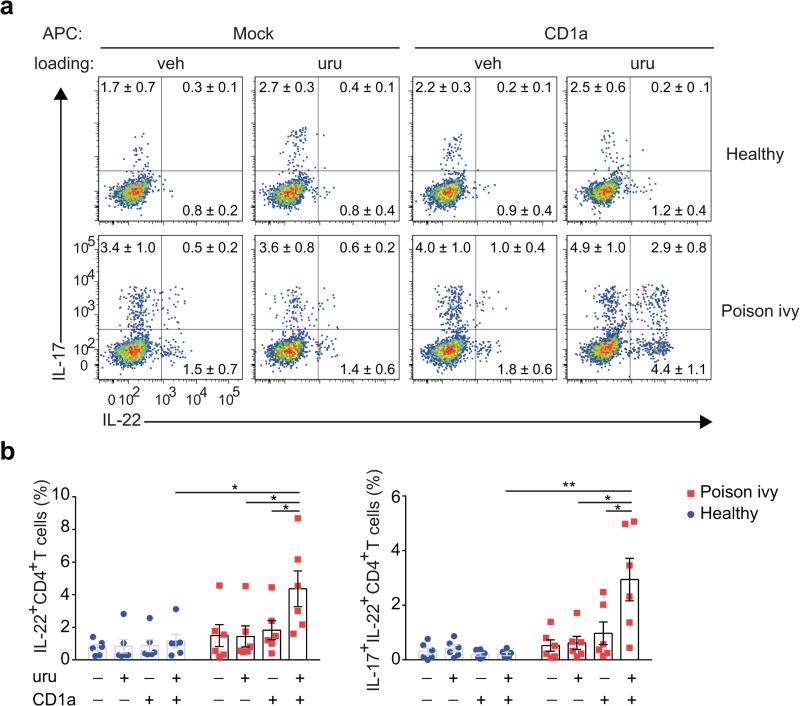
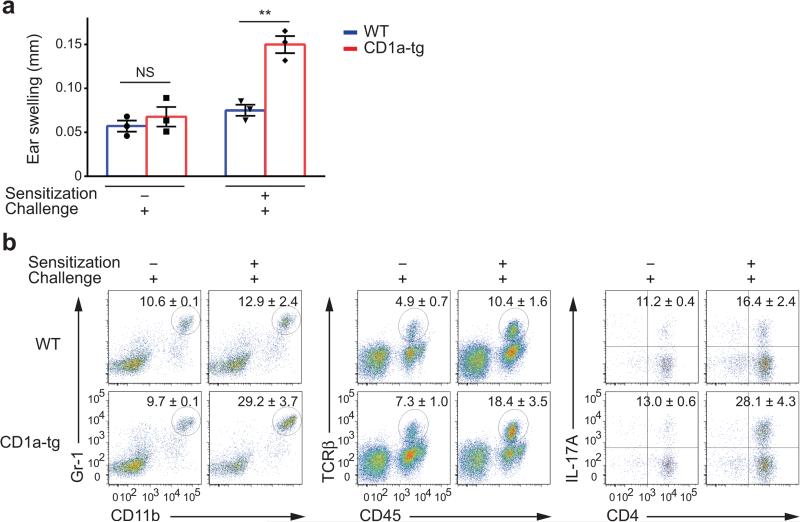
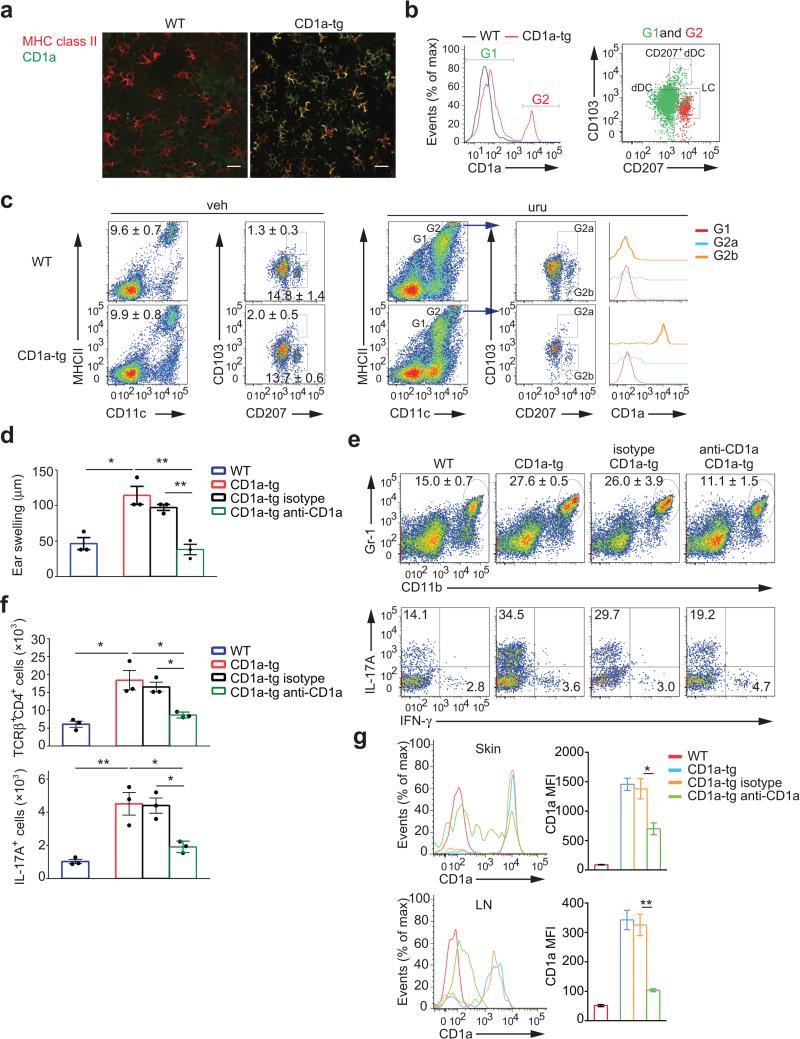
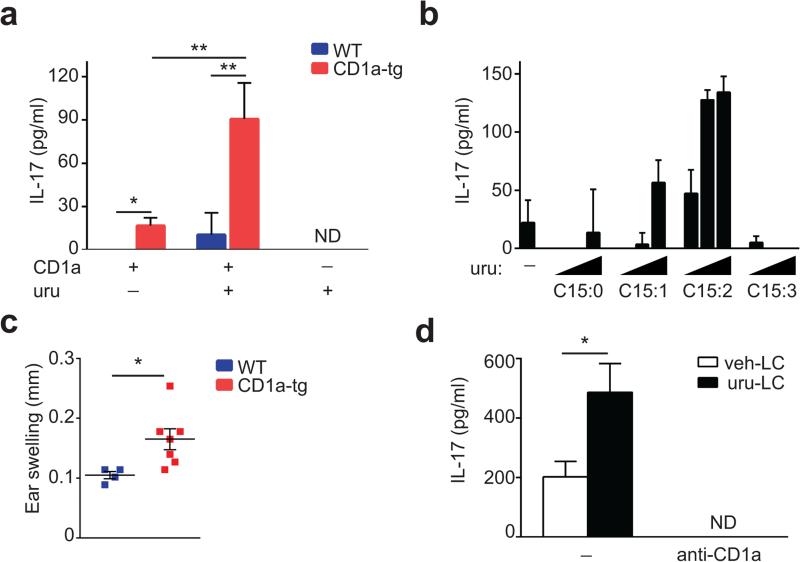
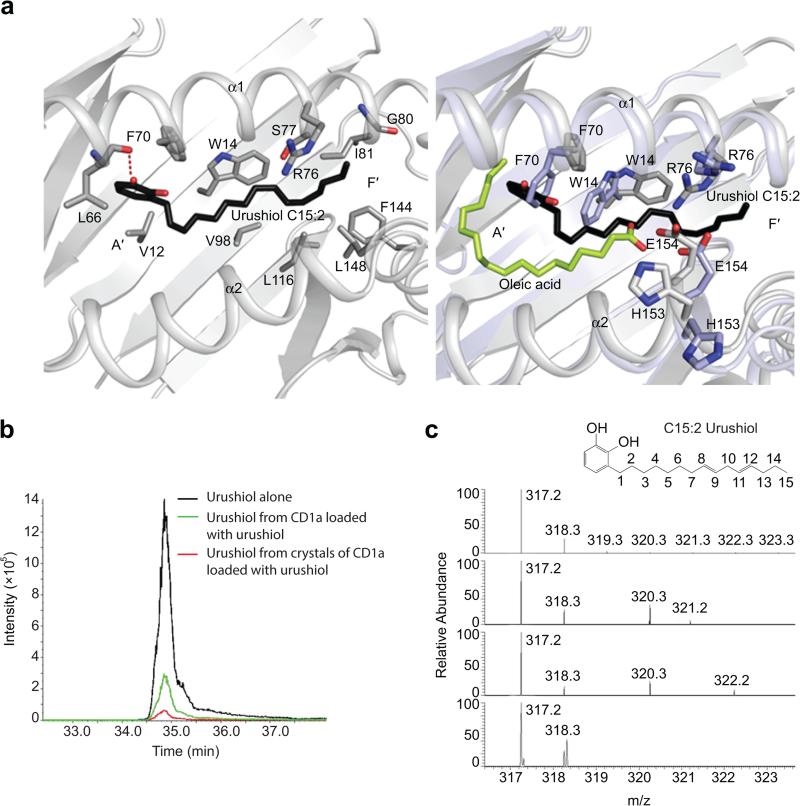
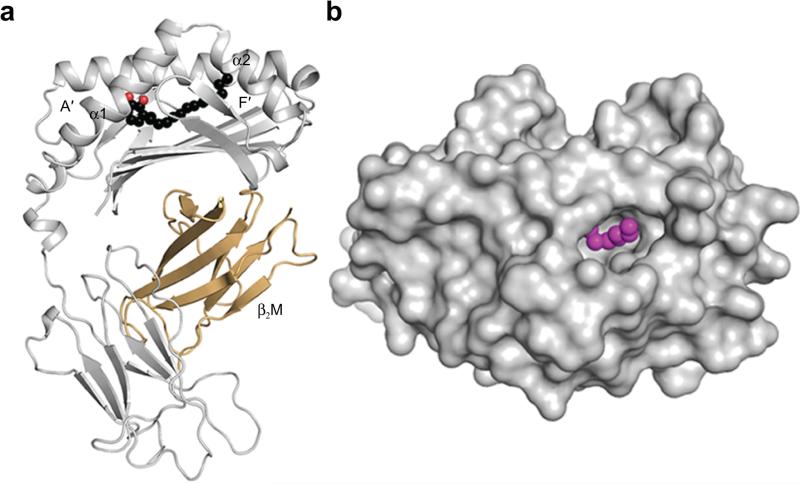
CD1a is a lipid-presenting molecule that is abundantly expressed on Langerhans cells. However, the in vivo role of CD1a has remained unclear, principally because CD1a is lacking in mice. Through the use of mice with transgenic expression of CD1a, we found that the plant-derived lipid urushiol triggered CD1a-dependent skin inflammation driven by CD4(+) helper T cells that produced the cytokines IL-17 and IL-22 (TH17 cells). Human subjects with poison-ivy dermatitis had a similar cytokine signature following CD1a-mediated recognition of urushiol. Among various urushiol congeners, we identified diunsaturated pentadecylcatechol (C15:2) as the dominant antigen for CD1a-restricted T cells. We determined the crystal structure of the CD1a-urushiol (C15:2) complex, demonstrating the molecular basis of urushiol interaction with the antigen-binding cleft of CD1a. In a mouse model and in patients with psoriasis, CD1a amplified inflammatory responses that were mediated by TH17 cells that reacted to self lipid antigens. Treatment with blocking antibodies to CD1a alleviated skin inflammation. Thus, we propose CD1a as a potential therapeutic target in inflammatory skin diseases.
CD1a是一种在朗格汉斯细胞上大量表达的脂质呈递分子。然而,CD1a在体内的作用仍不清楚,主要原因是小鼠缺乏CD1a。通过使用转染CD1a基因的小鼠,我们发现植物来源的脂质漆酚引发了由产生细胞因子IL-17和IL-22的CD4(+)辅助性T细胞(TH17细胞)驱动的CD1a依赖性皮肤炎症。患有漆树皮炎的人类受试者在CD1a介导的漆酚识别后具有相似的细胞因子特征。在各种漆酚同系物中,我们确定二不饱和十五烷基儿茶酚(C15:2)是CD1a限制性T细胞的主要抗原。我们确定了CD1a-漆酚(C15:2)复合物的晶体结构,证明了漆酚与CD1a抗原结合裂隙相互作用的分子基础。在小鼠模型和银屑病患者中,CD1a放大了由对自身脂质抗原产生反应的TH17细胞介导的炎症反应。用抗CD1a阻断抗体治疗可减轻皮肤炎症。因此,我们提出CD1a作为炎症性皮肤病的潜在治疗靶点。