Franceschelli Sara, Gatta Daniela Maria Pia, Pesce Mirko, Ferrone Alessio, Patruno Antonia, de Lutiis Maria Anna, Grilli Alfredo, Felaco Mario, Croce Fausto, Speranza Lorenza
Department of Medicine and Science of Aging, University of Gabriele D'Annunzio, 66100 Chieti, Italy.
Medicine and Health Science School, University of Gabriele D'Annunzio, 66100 Chieti, Italy.
Int J Mol Sci. 2016 Sep 1;17(9):1461. doi: 10.3390/ijms17091461.
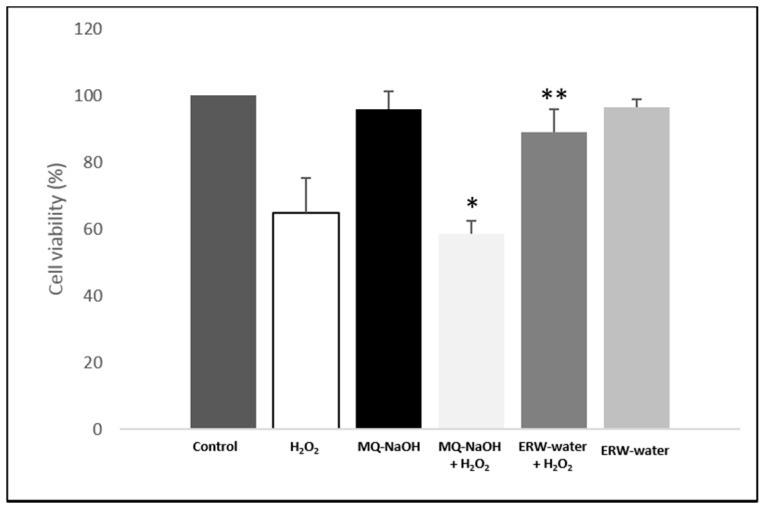
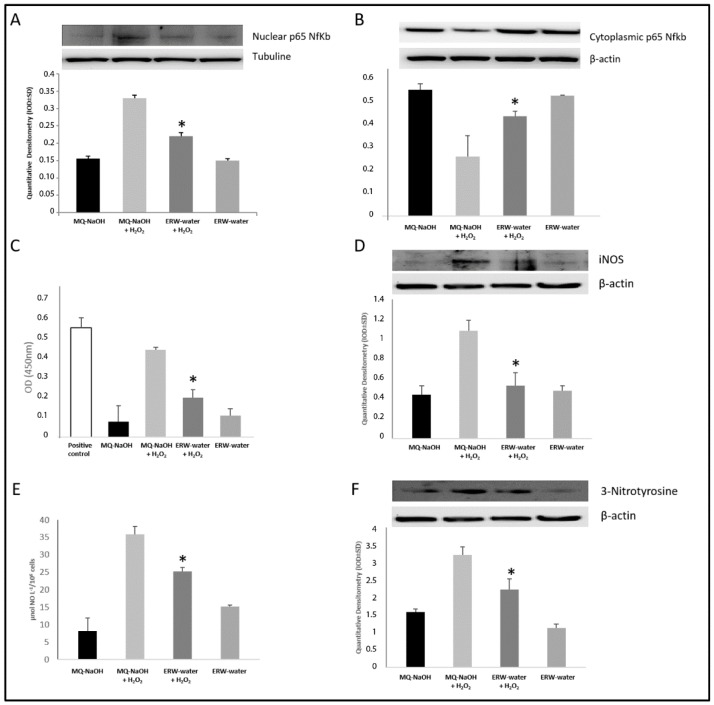
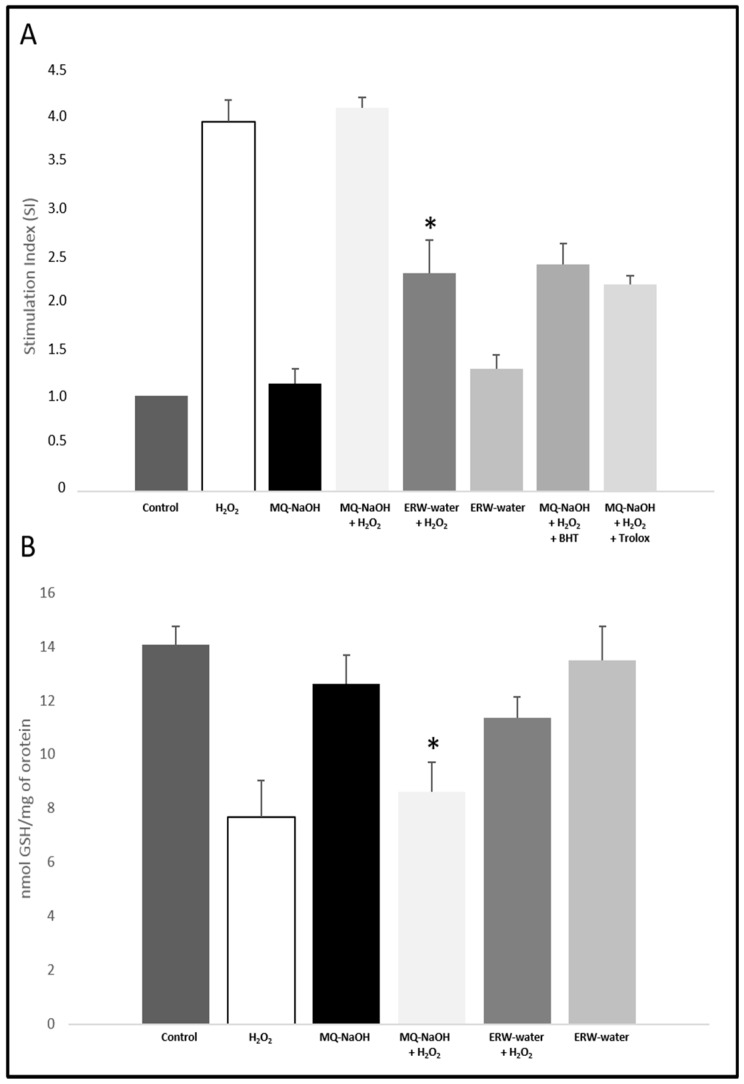
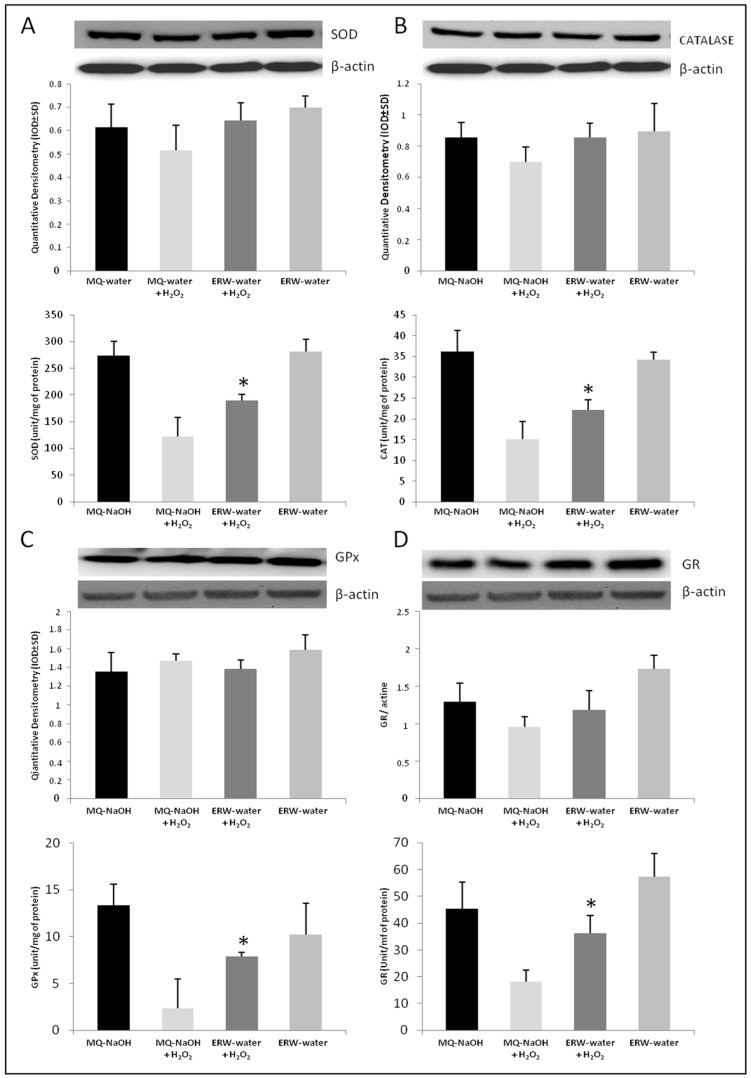
It is known that increased levels of reactive oxygen species (ROS) and reactive nitrogen species (RNS) can exert harmful effects, altering the cellular redox state. Electrolyzed Reduced Water (ERW) produced near the cathode during water electrolysis exhibits high pH, high concentration of dissolved hydrogen and an extremely negative redox potential. Several findings indicate that ERW had the ability of a scavenger free radical, which results from hydrogen molecules with a high reducing ability and may participate in the redox regulation of cellular function. We investigated the effect of ERW on H₂O₂-induced U937 damage by evaluating the modulation of redox cellular state. Western blotting and spectrophotometrical analysis showed that ERW inhibited oxidative stress by restoring the antioxidant capacity of superoxide dismutase, catalase and glutathione peroxidase. Consequently, ERW restores the ability of the glutathione reductase to supply the cell of an important endogenous antioxidant, such as GSH, reversing the inhibitory effect of H₂O₂ on redox balance of U937 cells. Therefore, this means a reduction of cytotoxicity induced by peroxynitrite via a downregulation of the NF-κB/iNOS pathway and could be used as an antioxidant for preventive and therapeutic application. In conclusion, ERW can protect the cellular redox balance, reducing the risk of several diseases with altered cellular homeostasis such as inflammation.
众所周知,活性氧(ROS)和活性氮(RNS)水平升高会产生有害影响,改变细胞氧化还原状态。水电解过程中在阴极附近产生的电解还原水(ERW)具有高pH值、高溶解氢浓度和极低的氧化还原电位。多项研究结果表明,ERW具有清除自由基的能力,这源于具有高还原能力的氢分子,并且可能参与细胞功能的氧化还原调节。我们通过评估细胞氧化还原状态的调节来研究ERW对H₂O₂诱导的U937损伤的影响。蛋白质免疫印迹法和分光光度分析表明,ERW通过恢复超氧化物歧化酶、过氧化氢酶和谷胱甘肽过氧化物酶的抗氧化能力来抑制氧化应激。因此,ERW恢复了谷胱甘肽还原酶为细胞提供重要内源性抗氧化剂(如GSH)的能力,逆转了H₂O₂对U937细胞氧化还原平衡的抑制作用。因此,这意味着通过下调NF-κB/iNOS途径降低过氧亚硝酸盐诱导的细胞毒性,并且可作为预防性和治疗性应用的抗氧化剂。总之,ERW可以保护细胞氧化还原平衡,降低多种因细胞稳态改变(如炎症)而引发疾病的风险。