Mankad Rekha, Herrmann Joerg
Department of Cardiovascular Diseases, Mayo Clinic, Rochester, Minnesota, USA.
Department of Cardiovascular Diseases, Mayo Clinic, Rochester, Minnesota, USA
Echo Res Pract. 2016 Dec;3(4):R65-R77. doi: 10.1530/ERP-16-0035. Epub 2016 Sep 6.
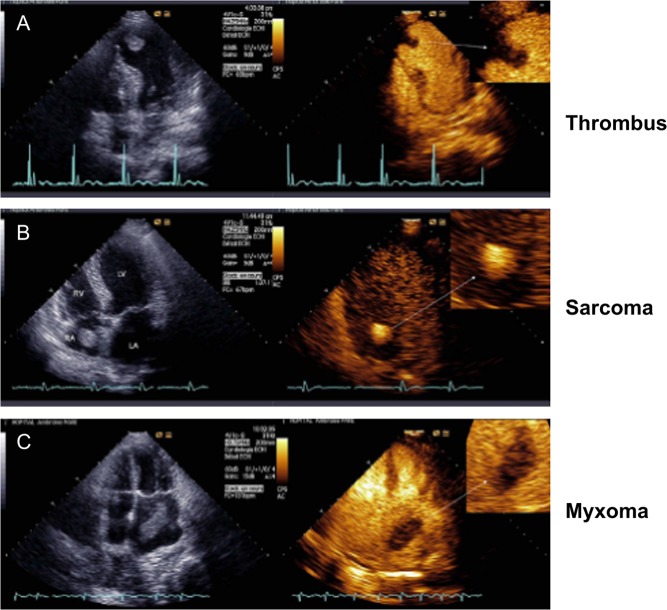
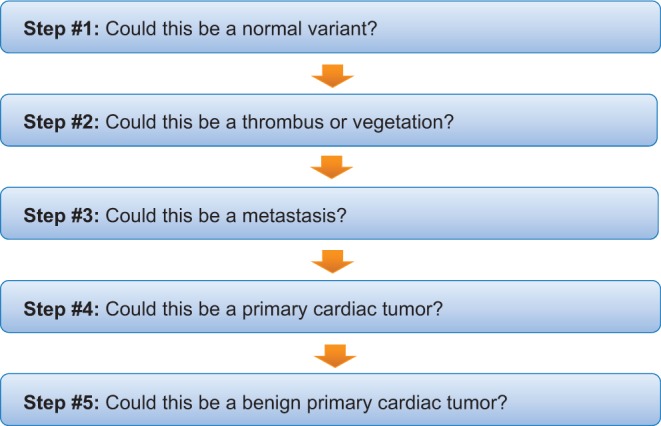
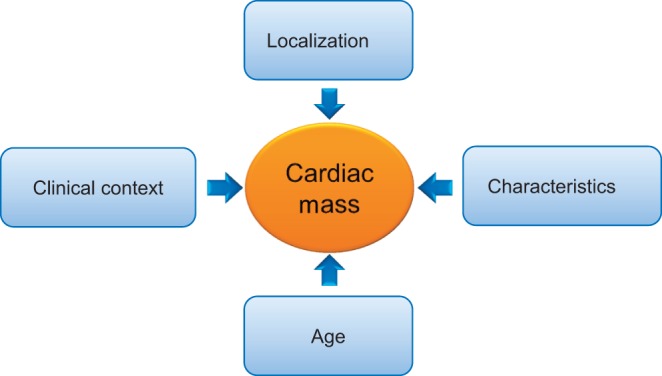
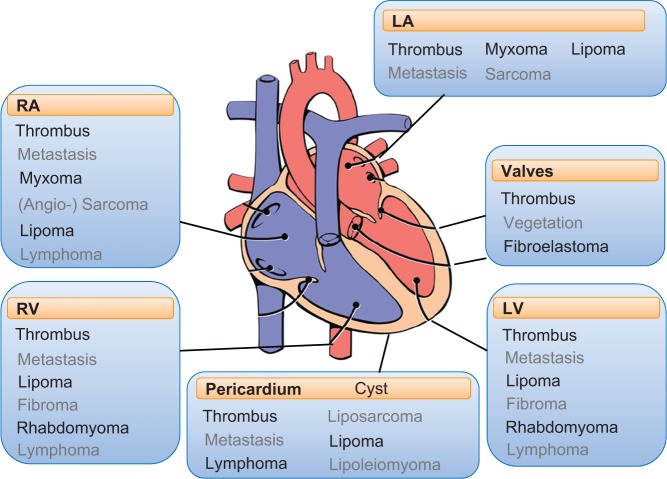
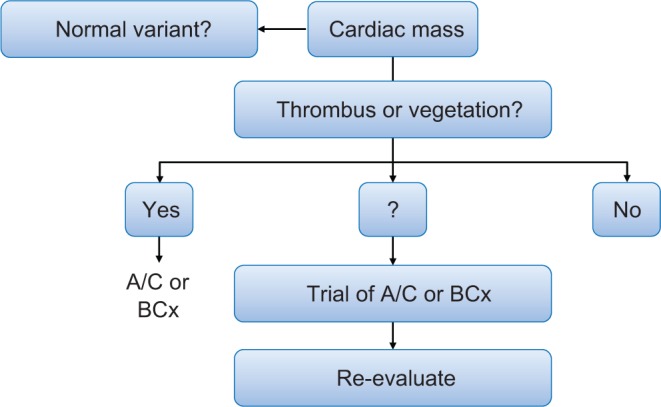
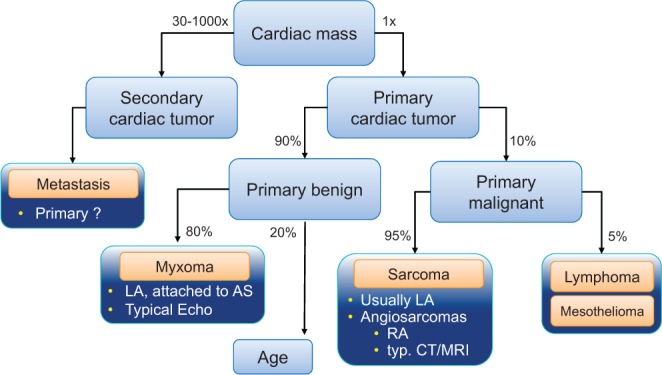
Cardiac tumors are exceedingly rare (0.001-0.03% in most autopsy series). They can be present anywhere within the heart and can be attached to any surface or be embedded in the myocardium or pericardial space. Signs and symptoms are nonspecific and highly variable related to the localization, size and composition of the cardiac mass. Echocardiography, typically performed for another indication, may be the first imaging modality alerting the clinician to the presence of a cardiac mass. Although echocardiography cannot give the histopathology, certain imaging features and adjunctive tools such as contrast imaging may aid in the differential diagnosis as do the adjunctive clinical data and the following principles: (1) thrombus or vegetations are the most likely etiology, (2) cardiac tumors are mostly secondary and (3) primary cardiac tumors are mostly benign. Although the finding of a cardiac mass on echocardiography may generate confusion, a stepwise approach may serve well practically. Herein, we will review such an approach and the role of echocardiography in the assessment of cardiac masses.
心脏肿瘤极为罕见(在大多数尸检系列中占0.001%-0.03%)。它们可出现在心脏内的任何部位,可附着于任何表面,或嵌入心肌或心包腔。体征和症状是非特异性的,且因心脏肿物的位置、大小和组成不同而有很大差异。超声心动图通常因其他指征而进行检查,可能是提醒临床医生存在心脏肿物的首个影像学检查手段。虽然超声心动图无法提供组织病理学结果,但某些影像学特征以及诸如造影成像等辅助工具,与辅助临床数据及以下原则一样,有助于鉴别诊断:(1)血栓或赘生物是最可能的病因,(2)心脏肿瘤大多是继发性的,(3)原发性心脏肿瘤大多是良性的。虽然超声心动图发现心脏肿物可能会造成混淆,但采用逐步分析的方法在实际应用中可能效果良好。在此,我们将回顾这种方法以及超声心动图在评估心脏肿物中的作用。