Fröhlich Leopold F, Mrakovcic Maria, Smole Claudia, Zatloukal Kurt
Molecular Pathology Laboratory, Medical University of Graz, Auenbruggerplatz 25, 8036 Graz, Austria.
Department of Cranio-Maxillofacial Surgery, University of Münster, Albert-Schweitzer-Campus 1, 48149 Münster, Germany.
Cancer Cell Int. 2016 Sep 6;16(1):68. doi: 10.1186/s12935-016-0343-0. eCollection 2016.
Recent studies indicated that histone deacetylase inhibitors (HDACi), a class of anticancer agents, are in addition to their ability of apoptosis induction also capable of provoking autophagy. Promoted by the treatment of malignant uterine sarcoma cells with the HDACi suberoylanilide hydroxamic acid (SAHA), we previously demonstrated predominant dose-dependent activation of autophagy in ESS-1 cells, but prevalent induction of apoptosis in MES-SA cells.
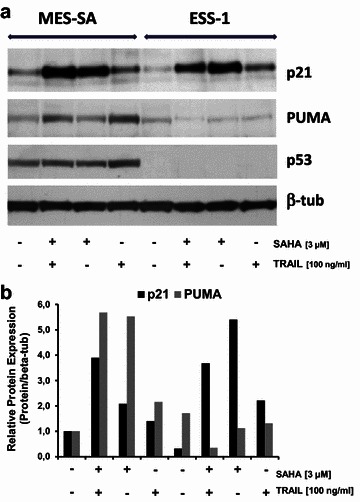
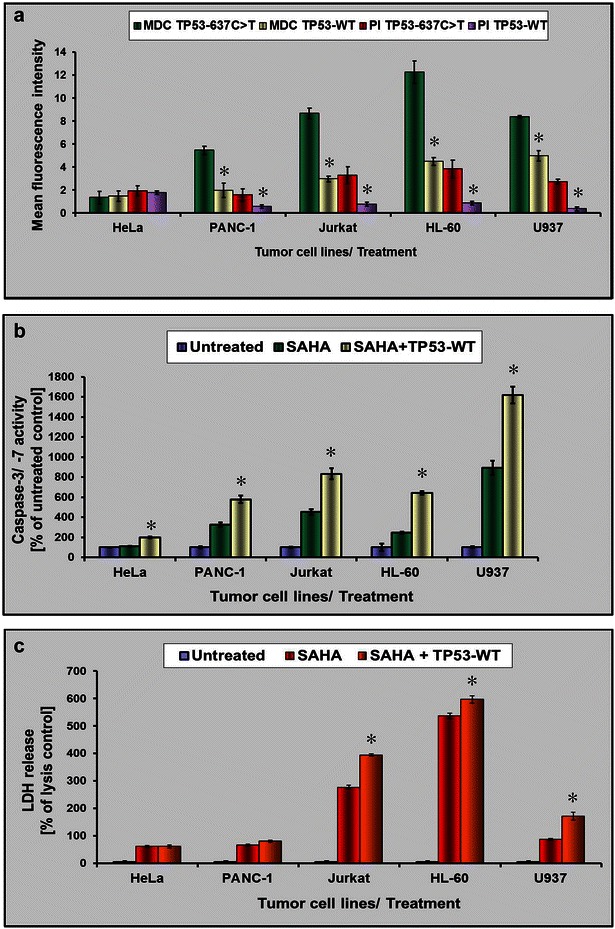
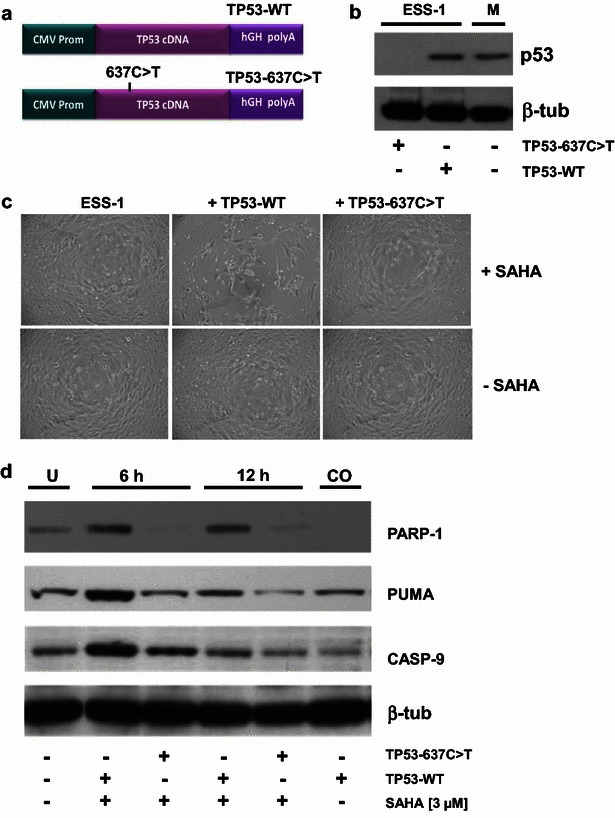
In order to extend our previous studies, SAHA-treated ESS-1 and MES-SA cells were monitored for protein expression to reveal differences in known markers of apoptosis explaining the different cytotoxic responses. Further analysis of the identified candidate protein included cell rescue experiments by gene transfer followed by subsequent screening of cells for induction of apoptosis and autophagy by immunoblotting, caspase activity as well as LC3 and MDC/PI staining. LDH release assays were performed to assess the amount of cell-mediated cytotoxicity.
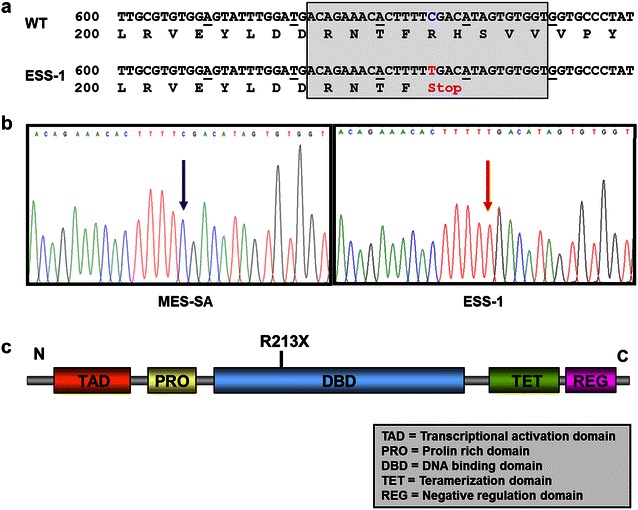
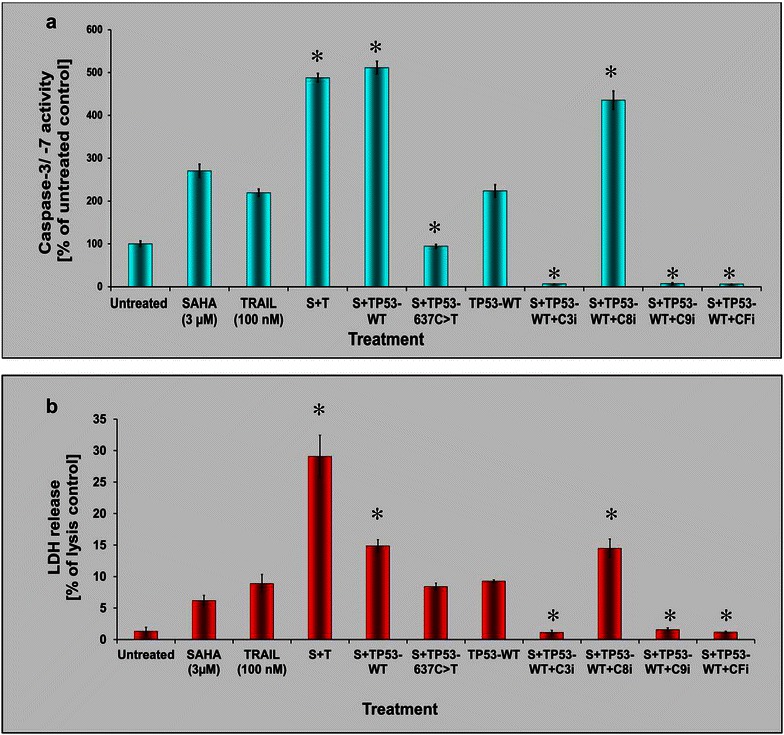
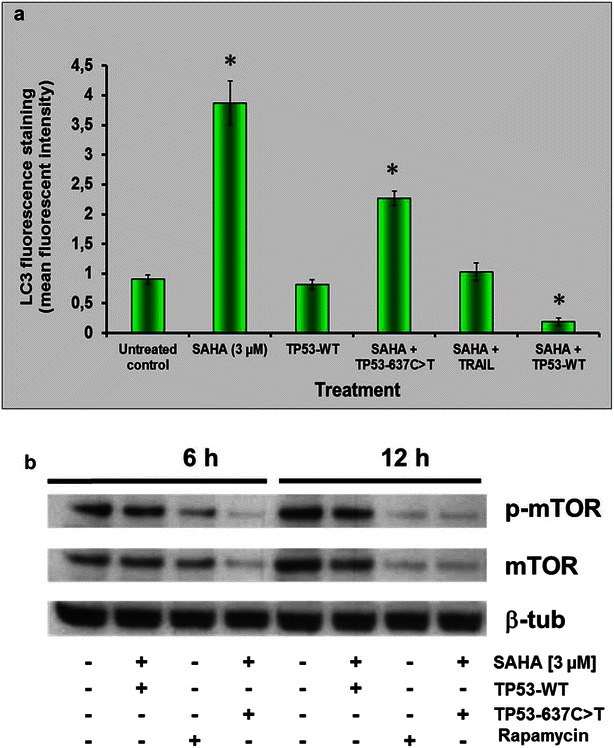
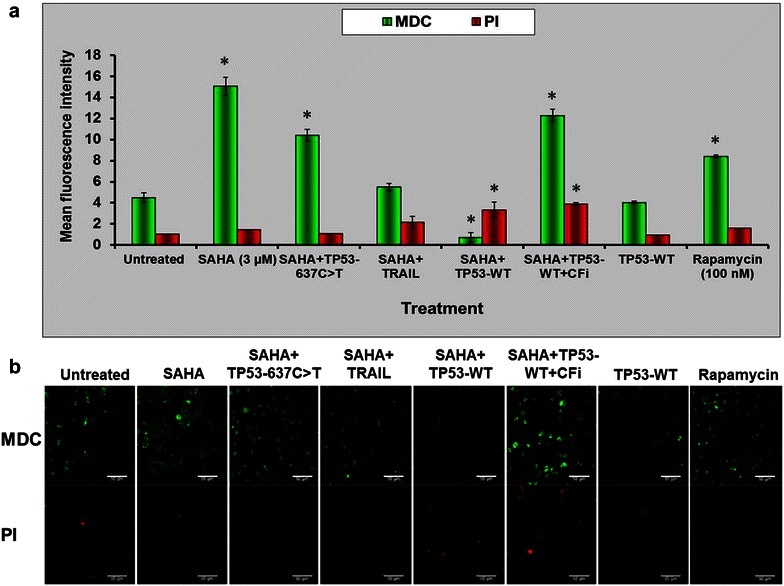
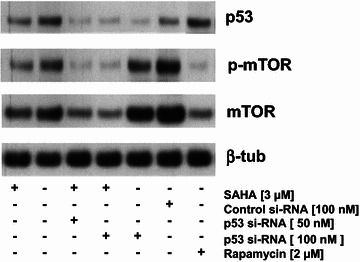
In our search for responsible autophagic regulatory genes upstream of mammalian target of rapamycin (mTOR), we now discovered that, in contrast to MES-SA cells, a TP53-637C>T nonsense mutation located in the transactivating domain of the oncogenic suppressor p53 causes loss of its protein and consequently reduced PUMA induction in ESS-1 cells. Upon re-introduction of wild-type TP53, SAHA-treated ESS-1 cells underwent immediate apoptotic cell death as supported by upregulation of PUMA and caspase-9 as well as by activation of caspases-3 and -7 and PARP-1 cleavage. Concurrent downregulation of autophagy was noticed by upregulated mTor and phospho-mTOR expression as well as monitoring autophagosome formation employing LC3 and MDC staining. Previously, cytoplasmic master regulatory activities of the oncogenic suppressor p53 in inhibiting autophagy and triggering apoptosis were unravelled. Accordingly, p53-deficiency could explain both, the previously documented apoptosis resistance and prevailing SAHA-induced autophagy in ESS-1 cells. Using MES-SA cells with RNAi-silenced p53 expression and several p53-deficient tumor cell lines undergoing SAHA-induced autophagy, we could generally validate our finding suggesting an inhibitory role for p53 in the autophagic pathway in response to SAHA treatment.
Conclusively, these results could identify cytoplasmic p53 protein as a molecular switch that directly mediates the cytotoxic response of SAHA and thus open new therapeutic avenues.
近期研究表明,组蛋白脱乙酰酶抑制剂(HDACi)作为一类抗癌药物,除了具有诱导细胞凋亡的能力外,还能够引发自噬。在用HDACi辛二酰苯胺异羟肟酸(SAHA)处理恶性子宫肉瘤细胞的促进下,我们之前证明了在ESS-1细胞中自噬主要呈剂量依赖性激活,但在MES-SA细胞中普遍诱导凋亡。
为了扩展我们之前的研究,监测了SAHA处理的ESS-1和MES-SA细胞的蛋白质表达,以揭示凋亡已知标志物的差异,从而解释不同的细胞毒性反应。对鉴定出的候选蛋白的进一步分析包括通过基因转移进行细胞拯救实验,随后通过免疫印迹、半胱天冬酶活性以及LC3和MDC/PI染色筛选细胞以诱导凋亡和自噬。进行乳酸脱氢酶(LDH)释放测定以评估细胞介导的细胞毒性程度。
在我们寻找雷帕霉素哺乳动物靶标(mTOR)上游负责自噬调节基因的过程中,我们现在发现,与MES-SA细胞相反,位于致癌抑制因子p53反式激活结构域的TP53-637C>T无义突变导致其蛋白缺失,从而减少了ESS-1细胞中PUMA的诱导。重新引入野生型TP53后,SAHA处理的ESS-1细胞立即发生凋亡性细胞死亡,这得到了PUMA和半胱天冬酶-9上调以及半胱天冬酶-3和-7激活以及PARP-1裂解的支持。通过上调mTor和磷酸化mTOR表达以及使用LC3和MDC染色监测自噬体形成,注意到自噬同时下调。以前,致癌抑制因子p53在抑制自噬和触发凋亡方面的细胞质主要调节活性已被阐明。因此,p53缺陷可以解释ESS-1细胞中先前记录的凋亡抗性和普遍的SAHA诱导的自噬。使用p53表达通过RNAi沉默的MES-SA细胞以及几种经历SAHA诱导自噬的p53缺陷肿瘤细胞系,我们总体上可以验证我们的发现,表明p53在响应SAHA处理的自噬途径中起抑制作用。
总之,这些结果可以将细胞质p53蛋白鉴定为直接介导SAHA细胞毒性反应的分子开关,从而开辟新的治疗途径。