Cooper Michael A, Kluding Patricia M, Wright Douglas E
Department of Anatomy and Cell Biology, University of Kansas Medical Center Kansas City, KS, USA.
Department of Physical Therapy and Rehabilitation Science, University of Kansas Medical Center Kansas City, KS, USA.
Front Neurosci. 2016 Aug 23;10:372. doi: 10.3389/fnins.2016.00372. eCollection 2016.
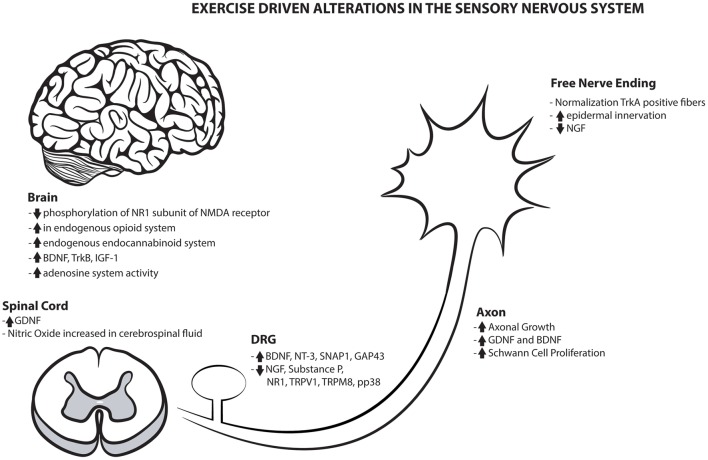
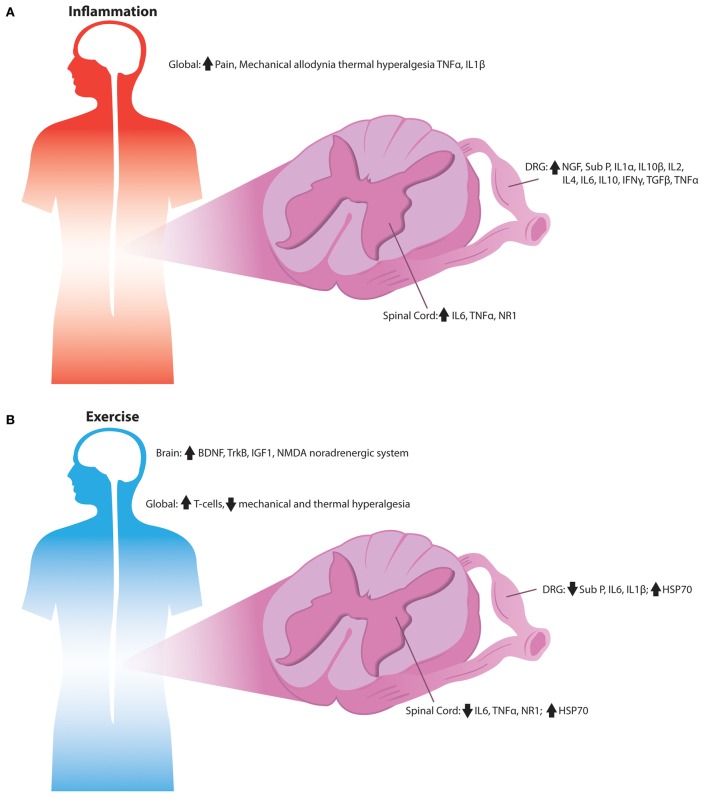
The utilization of physical activity as a therapeutic tool is rapidly growing in the medical community and the role exercise may offer in the alleviation of painful disease states is an emerging research area. The development of neuropathic pain is a complex mechanism, which clinicians and researchers are continually working to better understand. The limited therapies available for alleviation of these pain states are still focused on pain abatement and as opposed to treating underlying mechanisms. The continued research into exercise and pain may address these underlying mechanisms, but the mechanisms which exercise acts through are still poorly understood. The objective of this review is to provide an overview of how the peripheral nervous system responds to exercise, the relationship of inflammation and exercise, and experimental and clinical use of exercise to treat pain. Although pain is associated with many conditions, this review highlights pain associated with diabetes as well as experimental studies on nerve damages-associated pain. Because of the global effects of exercise across multiple organ systems, exercise intervention can address multiple problems across the entire nervous system through a single intervention. This is a double-edged sword however, as the global interactions of exercise also require in depth investigations to include and identify the many changes that can occur after physical activity. A continued investment into research is necessary to advance the adoption of physical activity as a beneficial remedy for neuropathic pain. The following highlights our current understanding of how exercise alters pain, the varied pain models used to explore exercise intervention, and the molecular pathways leading to the physiological and pathological changes following exercise intervention.
体育活动作为一种治疗手段在医学界的应用正在迅速增加,运动在缓解疼痛性疾病状态中可能发挥的作用是一个新兴的研究领域。神经性疼痛的发生是一个复杂的机制,临床医生和研究人员一直在努力更好地理解它。目前可用于缓解这些疼痛状态的有限治疗方法仍集中在减轻疼痛上,而不是治疗潜在机制。对运动与疼痛的持续研究可能会解决这些潜在机制,但运动发挥作用的机制仍知之甚少。本综述的目的是概述外周神经系统对运动的反应、炎症与运动的关系,以及运动治疗疼痛的实验和临床应用。虽然疼痛与多种疾病相关,但本综述重点关注与糖尿病相关的疼痛以及与神经损伤相关疼痛的实验研究。由于运动对多个器官系统具有全局性影响,运动干预可以通过单一干预解决整个神经系统的多个问题。然而,这是一把双刃剑,因为运动的全局性相互作用也需要深入研究,以纳入并识别身体活动后可能发生的许多变化。持续投入研究对于推动将体育活动作为神经性疼痛的有益治疗方法的应用是必要的。以下内容突出了我们目前对运动如何改变疼痛的理解、用于探索运动干预的各种疼痛模型,以及运动干预后导致生理和病理变化的分子途径。