Ma Jianhui, Dong Wen, Zhang Daijing, Gao Xiaolong, Jiang Lina, Shao Yun, Tong Doudou, Li Chunxi
College of Life Science, Henan Normal University , Xinxiang , Henan , China.
China Rural Technology Development Center , Beijing , China.
PeerJ. 2016 Aug 17;4:e2334. doi: 10.7717/peerj.2334. eCollection 2016.
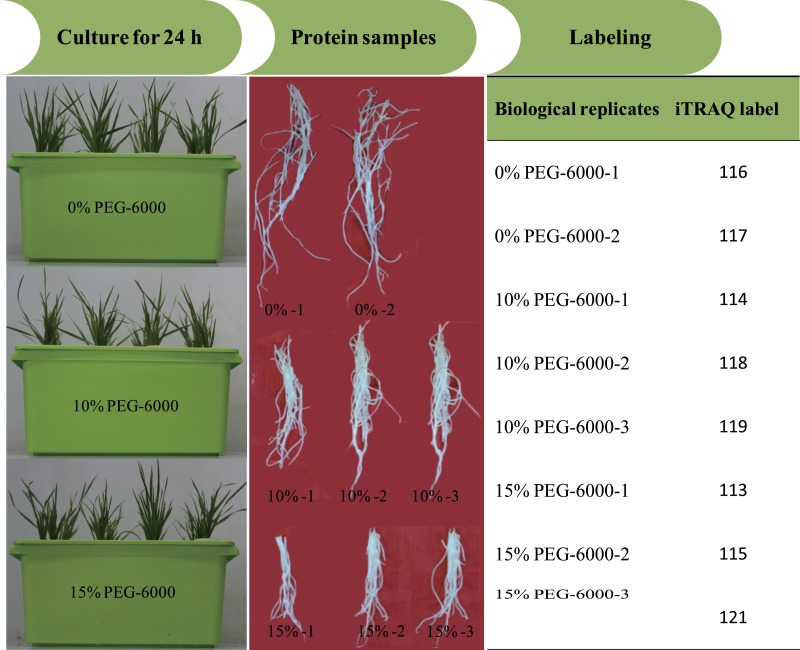
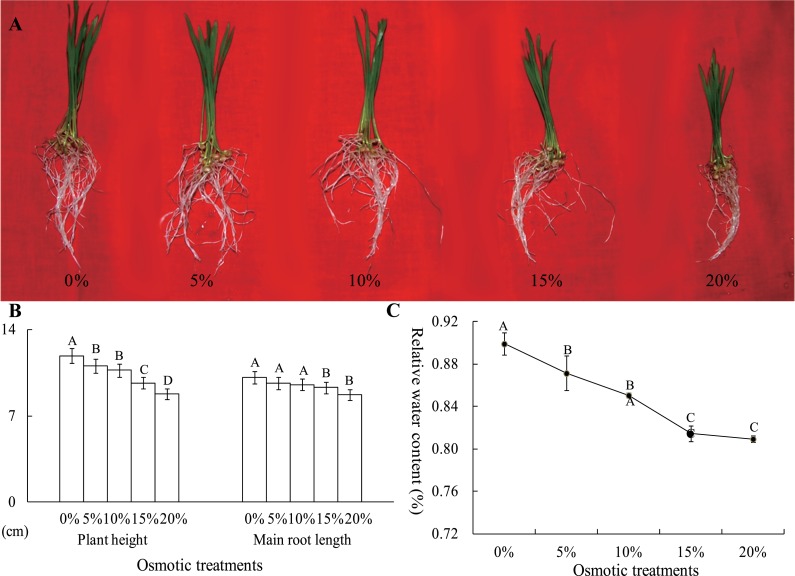
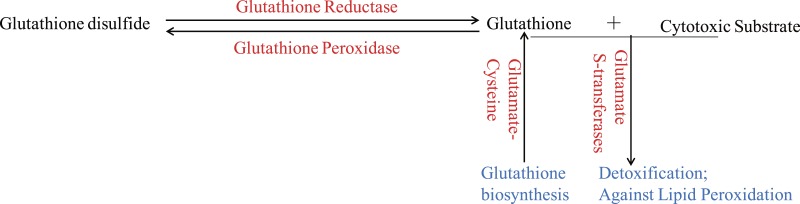
Wheat is one of the most important crops in the world, and osmotic stress has become one of the main factors affecting wheat production. Understanding the mechanism of the response of wheat to osmotic stress would be greatly significant. In the present study, isobaric tag for relative and absolute quantification (iTRAQ) was used to analyze the changes of protein expression in the wheat roots exposed to different osmotic stresses. A total of 2,228 expressed proteins, including 81 differentially expressed proteins, between osmotic stress and control, were found. The comprehensive analysis of these differentially expressed proteins revealed that osmotic stress increased the variety of expressed proteins and suppressed the quantity of expressed proteins in wheat roots. Furthermore, the proteins for detoxifying and reactive oxygen species scavenging, especially the glutathione system, played important roles in maintaining organism balance in response to osmotic stress in wheat roots. Thus, the present study comprehensively describes the protein expression changes in wheat roots in response to osmotic stress, providing firmer foundation to further study the mechanism of osmotic resistance in wheat.
小麦是世界上最重要的作物之一,渗透胁迫已成为影响小麦产量的主要因素之一。了解小麦对渗透胁迫的响应机制具有重要意义。在本研究中,采用相对和绝对定量等压标签(iTRAQ)技术分析了不同渗透胁迫下小麦根系蛋白质表达的变化。共发现2228个表达蛋白,其中包括81个在渗透胁迫和对照之间差异表达的蛋白。对这些差异表达蛋白的综合分析表明,渗透胁迫增加了小麦根系表达蛋白的种类,但抑制了其数量。此外,解毒和活性氧清除蛋白,尤其是谷胱甘肽系统,在维持小麦根系对渗透胁迫的机体平衡中发挥了重要作用。因此,本研究全面描述了小麦根系对渗透胁迫的蛋白质表达变化,为进一步研究小麦的抗渗透机制提供了更坚实的基础。