Pusceddu Matteo M, Kelly Philip, Stanton Catherine, Cryan John F, Dinan Timothy G
APC Microbiome Institute, University College Cork, Cork, Ireland (Drs Pusceddu, Cryan, and Dinan); Teagasc, Moorepark, Cork, Ireland (Drs Kelly and Stanton); Department of Anatomy and Neuroscience (Dr Cryan), and Department of Psychiatry and Neurobehavioural Science (Dr Dinan), University College Cork, Cork, Ireland.
Int J Neuropsychopharmacol. 2016 Dec 30;19(12). doi: 10.1093/ijnp/pyw078. Print 2016 Dec.
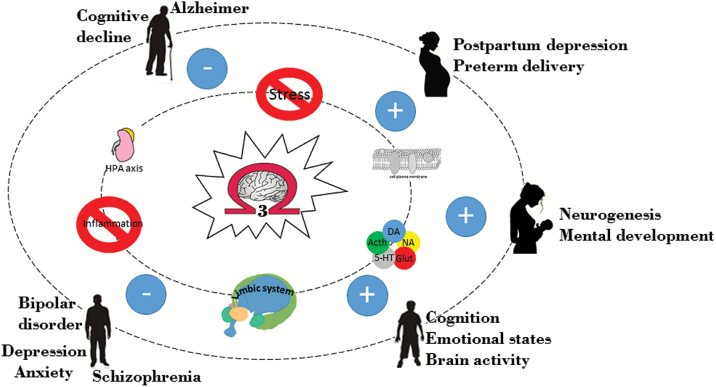
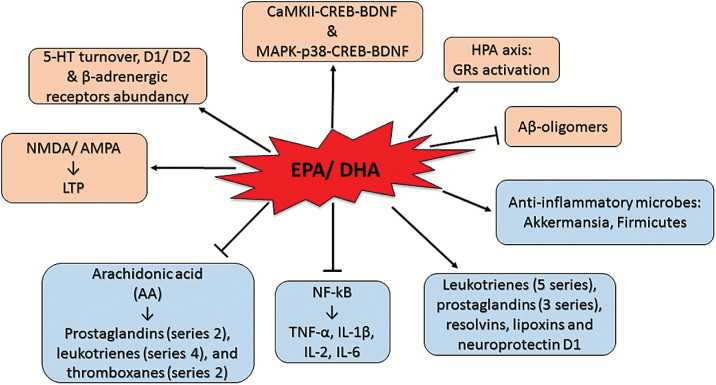
The impact of lifetime dietary habits and their role in physical, mental, and social well-being has been the focus of considerable recent research. Omega-3 polyunsaturated fatty acids as a dietary constituent have been under the spotlight for decades. Omega-3 polyunsaturated fatty acids constitute key regulating factors of neurotransmission, neurogenesis, and neuroinflammation and are thereby fundamental for development, functioning, and aging of the CNS. Of note is the fact that these processes are altered in various psychiatric disorders, including attention deficit hyperactivity disorder, depression, and Alzheimer's disease.
Relevant literature was identified through a search of MEDLINE via PubMed using the following words, "n-3 PUFAs," "EPA," and "DHA" in combination with "stress," "cognition," "ADHD," "anxiety," "depression," "bipolar disorder," "schizophrenia," and "Alzheimer." The principal focus was on the role of omega-3 polyunsaturated fatty acids throughout the lifespan and their implication for psychopathologies. Recommendations for future investigation on the potential clinical value of omega-3 polyunsaturated fatty acids were examined.
The inconsistent and inconclusive results from randomized clinical trials limits the usage of omega-3 polyunsaturated fatty acids in clinical practice. However, a body of literature demonstrates an inverse correlation between omega-3 polyunsaturated fatty acid levels and quality of life/ psychiatric diseases. Specifically, older healthy adults showing low habitual intake of omega-3 polyunsaturated fatty acids benefit most from consuming them, showing improved age-related cognitive decline.
Although further studies are required, there is an exciting and growing body of research suggesting that omega-3 polyunsaturated fatty acids may have a potential clinical value in the prevention and treatment of psychopathologies.
终生饮食习惯的影响及其在身体、心理和社会幸福感中的作用一直是近期大量研究的焦点。几十年来,作为饮食成分的ω-3多不饱和脂肪酸一直备受关注。ω-3多不饱和脂肪酸是神经传递、神经发生和神经炎症的关键调节因子,因此对中枢神经系统的发育、功能和衰老至关重要。值得注意的是,这些过程在包括注意力缺陷多动障碍、抑郁症和阿尔茨海默病在内的各种精神疾病中会发生改变。
通过使用“n-3多不饱和脂肪酸”、“二十碳五烯酸”和“二十二碳六烯酸”与“应激”、“认知”、“注意力缺陷多动障碍”、“焦虑”、“抑郁”、“双相情感障碍”、“精神分裂症”和“阿尔茨海默病”等词在PubMed上检索MEDLINE来识别相关文献。主要关注ω-3多不饱和脂肪酸在整个生命周期中的作用及其对精神病理学的影响。研究了关于ω-3多不饱和脂肪酸潜在临床价值的未来研究建议。
随机临床试验结果不一致且无定论,限制了ω-3多不饱和脂肪酸在临床实践中的应用。然而,大量文献表明ω-3多不饱和脂肪酸水平与生活质量/精神疾病之间存在负相关。具体而言,ω-3多不饱和脂肪酸习惯性摄入量低的老年健康成年人从食用它们中获益最大,与年龄相关的认知能力下降得到改善。
尽管需要进一步研究,但越来越多令人兴奋的研究表明,ω-3多不饱和脂肪酸在预防和治疗精神病理学方面可能具有潜在的临床价值。