Lindheim Lisa, Bashir Mina, Münzker Julia, Trummer Christian, Zachhuber Verena, Pieber Thomas R, Gorkiewicz Gregor, Obermayer-Pietsch Barbara
Division of Endocrinology and Diabetology, Department of Internal Medicine, Medical University Graz Graz, Austria.
Division of Endocrinology and Diabetology, Department of Internal Medicine, Medical University GrazGraz, Austria; Center for Biomarker Research in MedicineGraz, Austria.
Front Microbiol. 2016 Aug 25;7:1270. doi: 10.3389/fmicb.2016.01270. eCollection 2016.
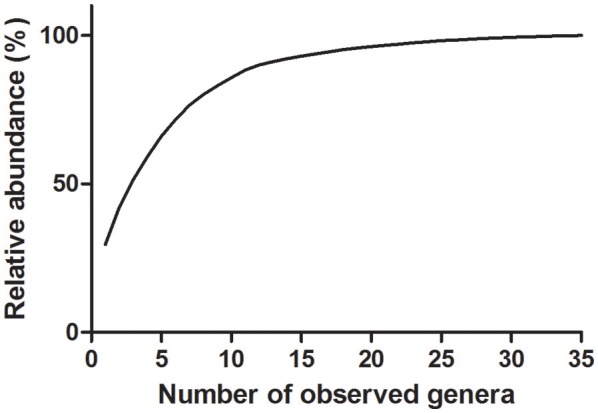
Polycystic ovary syndrome (PCOS) is a common female endocrine condition of unclear etiology characterized by hyperandrogenism, oligo/amenorrhoea, and polycystic ovarian morphology. PCOS is often complicated by infertility, overweight/obesity, insulin resistance, and low-grade inflammation. The gut microbiome is known to contribute to several of these conditions. Recently, an association between stool and saliva microbiome community profiles was shown, making saliva a possible convenient, non-invasive sample type for detecting gut microbiome changes in systemic disease. In this study, we describe the saliva microbiome of PCOS patients and the association of microbiome features with PCOS-related parameters.
16S rRNA gene amplicon sequencing was performed on saliva samples from 24 PCOS patients and 20 healthy controls. Data processing and microbiome analyses were conducted in mothur and QIIME. All study subjects were characterized regarding reproductive, metabolic, and inflammatory parameters.
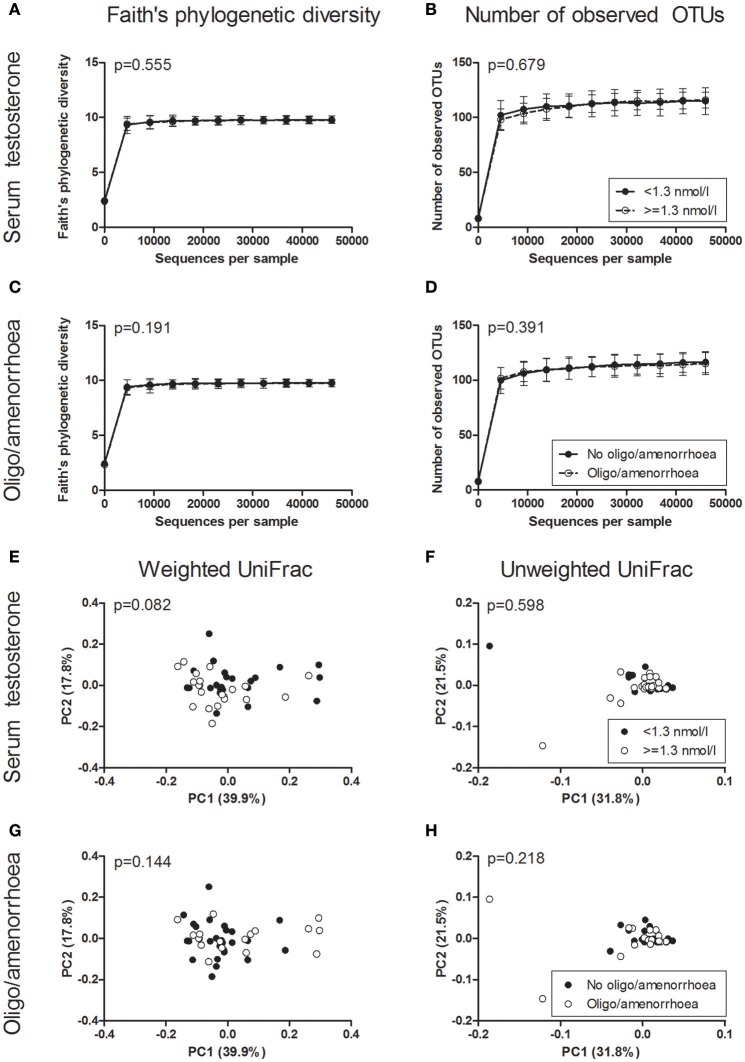
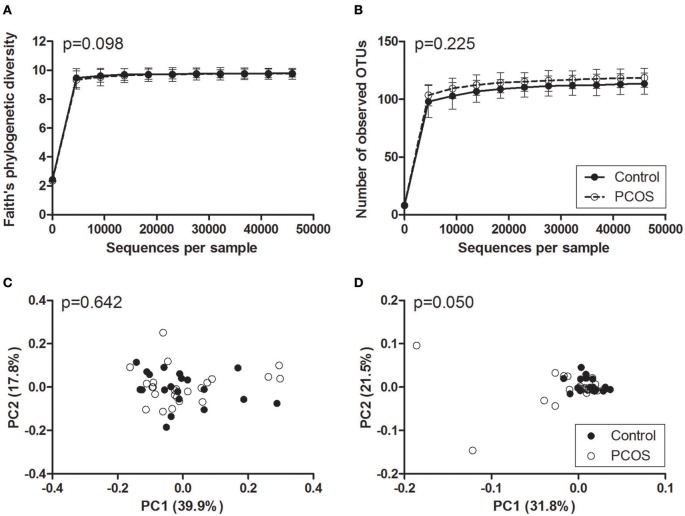
PCOS patients showed a decrease in bacteria from the phylum Actinobacteria and a borderline significant shift in bacterial community composition in unweighted UniFrac analysis. No differences between patients and controls were found in alpha diversity, weighted UniFrac analysis, or on other taxonomic levels. We found no association of saliva alpha diversity, beta diversity, or taxonomic composition with serum testosterone, oligo/amenorrhoea, overweight, insulin resistance, inflammatory markers, age, or diet.
In this pilot study, patients with PCOS showed a reduced salivary relative abundance of Actinobacteria. Reproductive and metabolic components of the syndrome were not associated with saliva microbiome parameters, indicating that the majority of between-subject variation in saliva microbiome profiles remains to be explained.
多囊卵巢综合征(PCOS)是一种常见的女性内分泌疾病,病因不明,其特征为高雄激素血症、月经稀发/闭经以及多囊卵巢形态。PCOS常并发不孕、超重/肥胖、胰岛素抵抗和低度炎症。已知肠道微生物群与其中几种情况有关。最近,研究表明粪便和唾液微生物群落谱之间存在关联,这使得唾液成为检测全身性疾病中肠道微生物群变化的一种可能方便、无创的样本类型。在本研究中,我们描述了PCOS患者的唾液微生物群以及微生物群特征与PCOS相关参数的关联。
对24例PCOS患者和20例健康对照的唾液样本进行16S rRNA基因扩增子测序。在mothur和QIIME中进行数据处理和微生物群分析。对所有研究对象的生殖、代谢和炎症参数进行了特征描述。
在未加权的UniFrac分析中,PCOS患者放线菌门细菌减少,细菌群落组成有临界显著变化。在α多样性、加权UniFrac分析或其他分类水平上,患者与对照之间未发现差异。我们发现唾液α多样性、β多样性或分类组成与血清睾酮、月经稀发/闭经、超重、胰岛素抵抗、炎症标志物、年龄或饮食之间无关联。
在这项初步研究中,PCOS患者唾液中放线菌的相对丰度降低。该综合征的生殖和代谢成分与唾液微生物群参数无关,这表明唾液微生物群谱中大多数个体间差异仍有待解释。