Naranjo David, Moldenhauer Hans, Pincuntureo Matías, Díaz-Franulic Ignacio
Centro Interdisciplinario de Neurociencia de Valparaíso, Universidad de Valparaíso, Playa Ancha, Valparaíso 2360103, Chile
Centro Interdisciplinario de Neurociencia de Valparaíso, Universidad de Valparaíso, Playa Ancha, Valparaíso 2360103, Chile.
J Gen Physiol. 2016 Oct;148(4):277-91. doi: 10.1085/jgp.201611625. Epub 2016 Sep 12.
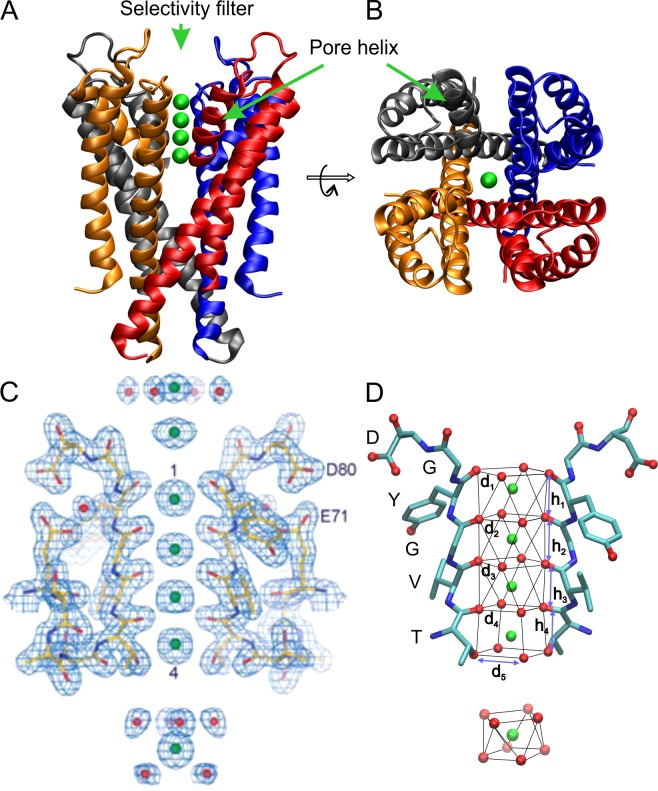
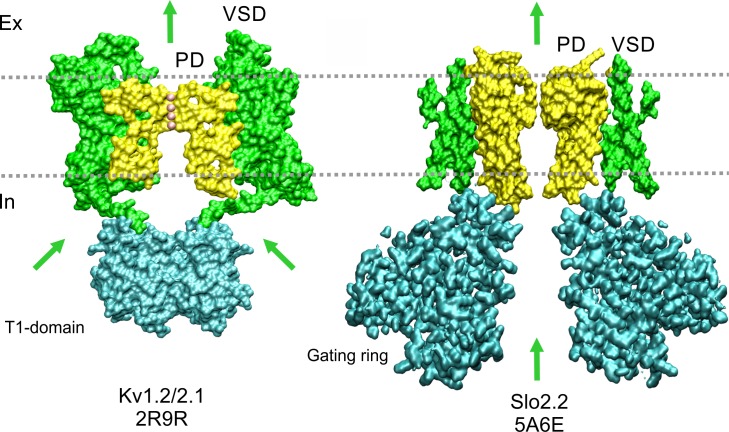
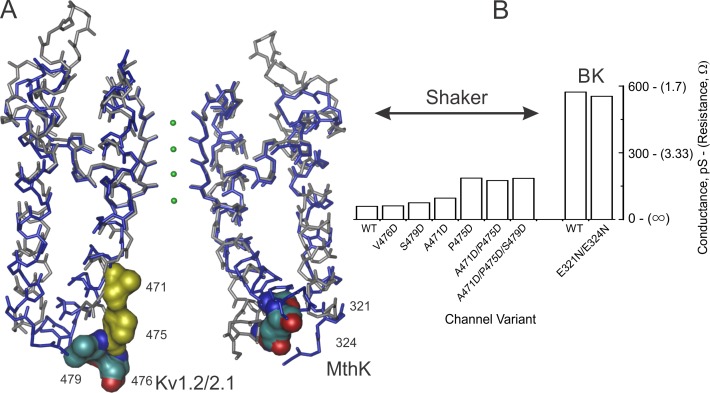
Ion channels are membrane proteins that mediate efficient ion transport across the hydrophobic core of cell membranes, an unlikely process in their absence. K(+) channels discriminate K(+) over cations with similar radii with extraordinary selectivity and display a wide diversity of ion transport rates, covering differences of two orders of magnitude in unitary conductance. The pore domains of large- and small-conductance K(+) channels share a general architectural design comprising a conserved narrow selectivity filter, which forms intimate interactions with permeant ions, flanked by two wider vestibules toward the internal and external openings. In large-conductance K(+) channels, the inner vestibule is wide, whereas in small-conductance channels it is narrow. Here we raise the idea that the physical dimensions of the hydrophobic internal vestibule limit ion transport in K(+) channels, accounting for their diversity in unitary conductance.
离子通道是介导离子高效穿过细胞膜疏水核心的膜蛋白,没有它们这一过程几乎不可能发生。钾离子通道对半径相似的阳离子具有非凡的选择性,能区分钾离子,并且显示出广泛多样的离子转运速率,单位电导相差两个数量级。大电导和小电导钾离子通道的孔结构域具有共同的总体结构设计,包括一个保守的狭窄选择性过滤器,它与通透离子形成紧密相互作用,两侧是朝向内部和外部开口的两个更宽的前庭。在大电导钾离子通道中,内部前庭较宽,而在小电导通道中则较窄。在此我们提出这样一种观点,即疏水内部前庭的物理尺寸限制了钾离子通道中的离子转运,这解释了它们在单位电导上的多样性。