Millen Rosemary, Malaterre Jordane, Cross Ryan S, Carpinteri Sandra, Desai Jayesh, Tran Ben, Darcy Phillip, Gibbs Peter, Sieber Oliver, Zeps Nikolajs, Waring Paul, Fox Stephen, Pereira Lloyd, Ramsay Robert G
Peter MacCallum Cancer Center and The Sir Peter MacCallum Department of Oncology, University of Melbourne, Melbourne ,Victoria, Australia; St Vincent's Hospital, Fitzroy, Victoria, Australia.
Peter MacCallum Cancer Center and The Sir Peter MacCallum Department of Oncology, University of Melbourne , Melbourne ,Victoria, Australia.
Oncoimmunology. 2016 Jun 29;5(7):e1149667. doi: 10.1080/2162402X.2016.1149667. eCollection 2016 Jul.
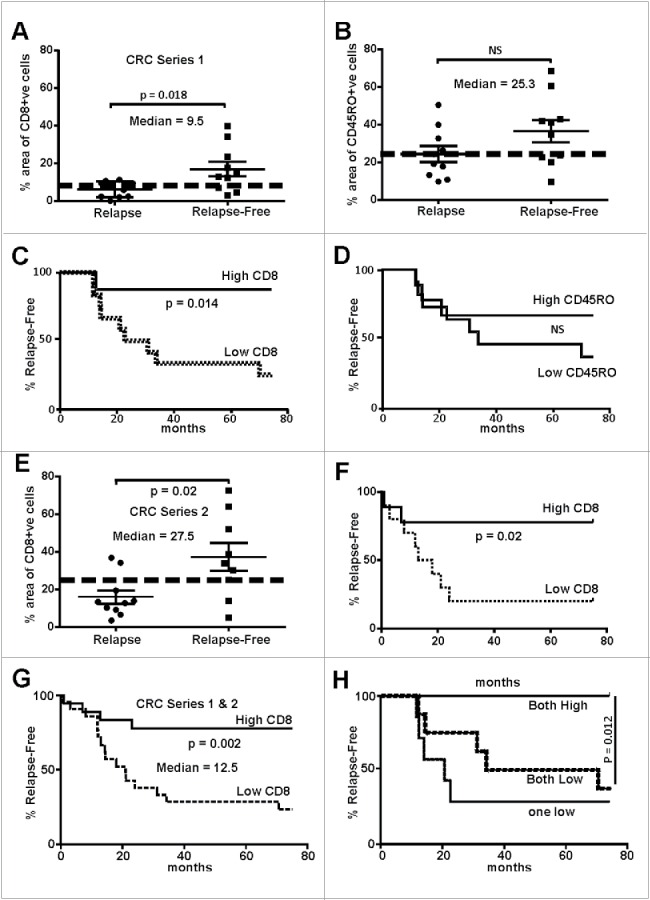
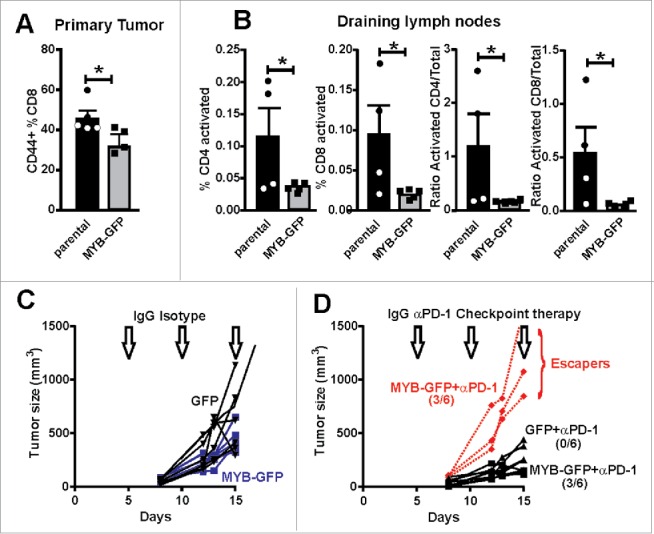
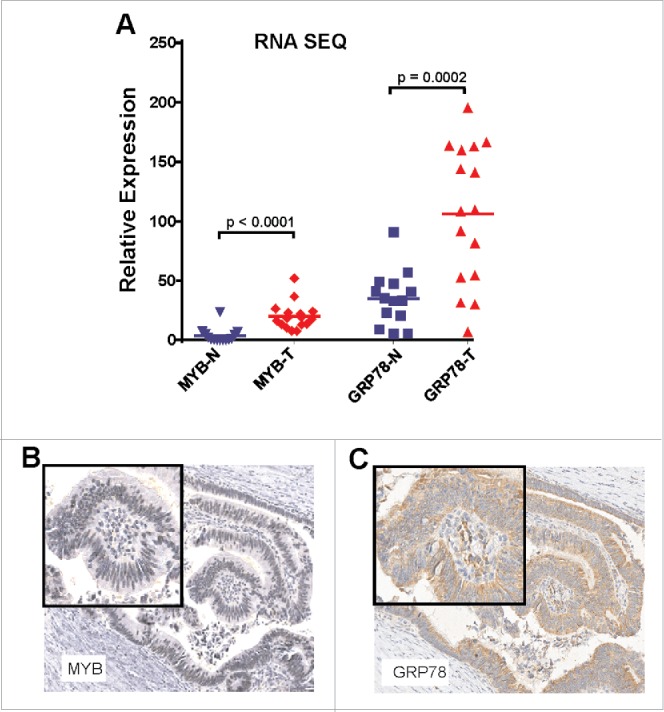
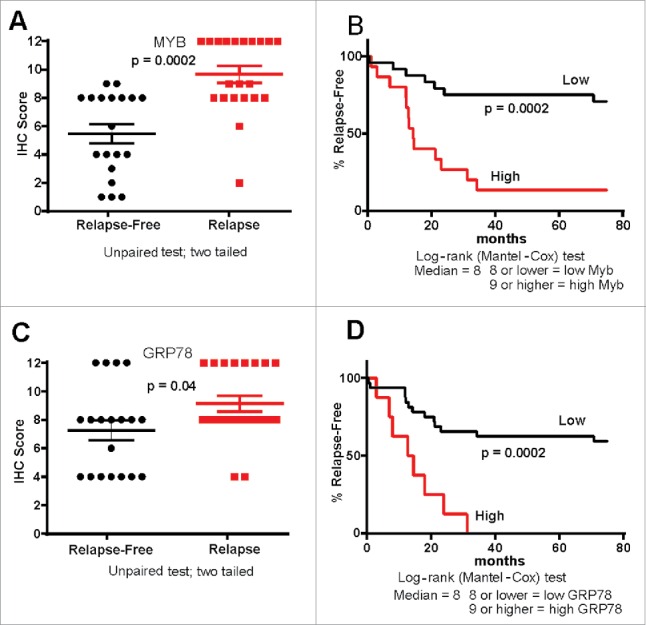
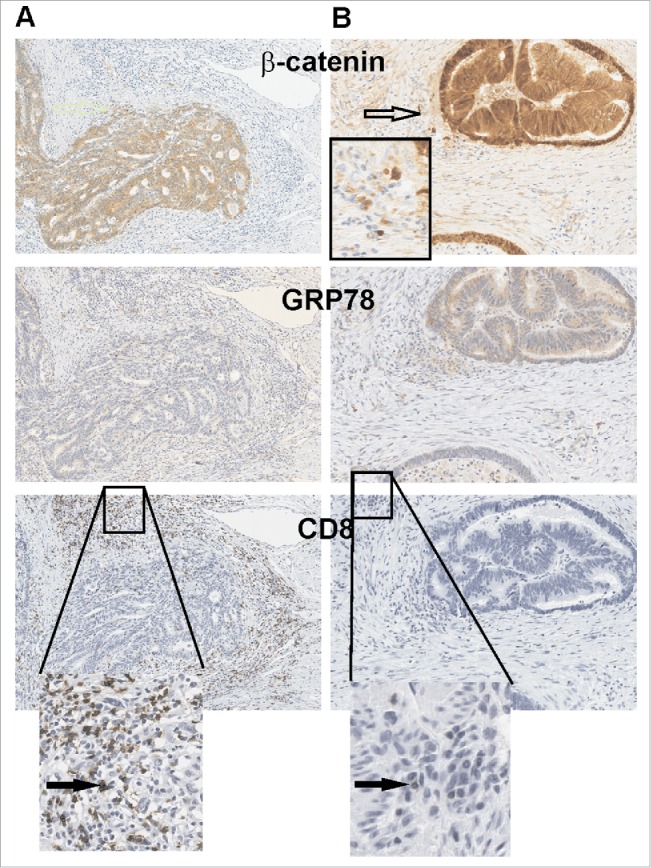
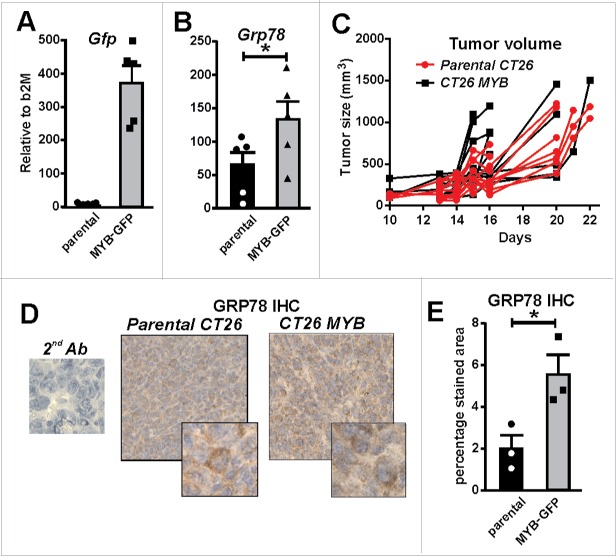
The presence of tumor immune infiltrating cells (TILs), particularly CD8(+) T-cells, is a robust predictor of outcome in patients with colorectal cancer (CRC). We revisited TIL abundance specifically in patients with microsatellite stable (MSS) CRC without evidence of lymph node or metastatic spread. Examination of the density of CD8(+) T-cells in primary tumors in the context of other pro-oncogenic markers was performed to investigate potential regulators of TILs. Two independent cohorts of patients with MSS T2-4N0M0 CRC, enriched for cases with atypical relapse, were investigated. We quantified CD8(+) and CD45RO(+) -TILs, inflammatory markers, NFkBp65, pStat3, Cyclo-oxygenase-2 (COX2) and GRP78 as well as transcription factors (TF), β-catenin and MYB. High CD8(+) TILs correlated with a better relapse-free survival in both cohorts (p = 0.002) with MYB and its target gene, GRP78 being higher in the relapse group (p = 0.001); no difference in pSTAT3 and p65 was observed. A mouse CRC (CT26) model was employed to evaluate the effect of MYB on GRP78 expression as well as T-cell infiltration. MYB over-expressing in CT26 cells increased GRP78 expression and the analysis of tumor-draining lymph nodes adjacent to tumors showed reduced T-cell activation. Furthermore, MYB over-expression reduced the efficacy of anti-PD-1 to modulate CT26 tumor growth. This high MYB and GRP78 show a reciprocal relationship with CD8(+) TILs which may be useful refining the prediction of patient outcome. These data reveal a new immunomodulatory function for MYB suggesting a basis for further development of anti-GRP78 and/or anti-MYB therapies.
肿瘤免疫浸润细胞(TILs)尤其是CD8(+) T细胞的存在,是结直肠癌(CRC)患者预后的有力预测指标。我们专门重新审视了微卫星稳定(MSS)且无淋巴结或转移扩散证据的CRC患者的TIL丰度。在其他促癌标志物的背景下,对原发性肿瘤中CD8(+) T细胞的密度进行检测,以研究TILs的潜在调节因子。对两个独立队列的MSS T2-4N0M0 CRC患者进行了研究,这些队列中富集了非典型复发的病例。我们对CD8(+)和CD45RO(+) -TILs、炎症标志物、NFkBp65、pStat3、环氧化酶-2(COX2)和GRP78以及转录因子(TF)、β-连环蛋白和MYB进行了定量分析。在两个队列中,高CD8(+) TILs均与更好的无复发生存相关(p = 0.002),MYB及其靶基因GRP78在复发组中更高(p = 0.001);未观察到pSTAT3和p65有差异。采用小鼠CRC(CT26)模型评估MYB对GRP78表达以及T细胞浸润的影响。CT26细胞中MYB过表达增加了GRP78表达,对肿瘤旁引流淋巴结的分析显示T细胞活化减少。此外,MYB过表达降低了抗PD-1调节CT26肿瘤生长的疗效。这种高表达的MYB和GRP78与CD8(+) TILs呈相互关系,这可能有助于优化患者预后的预测。这些数据揭示了MYB一种新的免疫调节功能,为抗GRP78和/或抗MYB疗法的进一步开发提供了基础。