Center for Genome Science, National Institute of Health, Osong Health Technology Administration Complex, Chungcheongbuk-do, Republic of Korea.
Center for Biomedical Sciences, National Institute of Health, Osong Health Technology Administration Complex, Chungcheongbuk-do, Republic of Korea.
Sci Rep. 2016 Sep 14;6:33043. doi: 10.1038/srep33043.
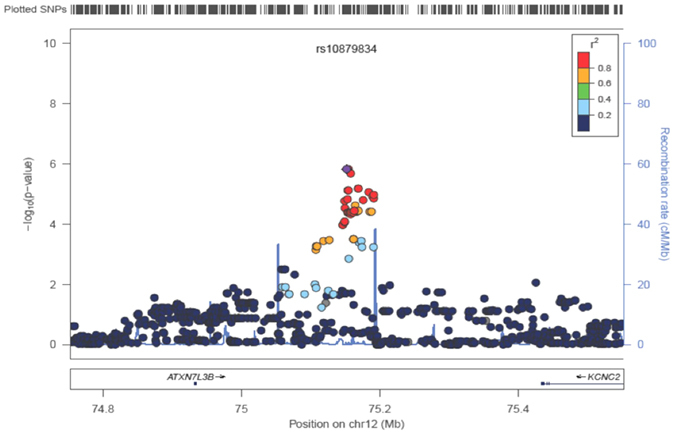
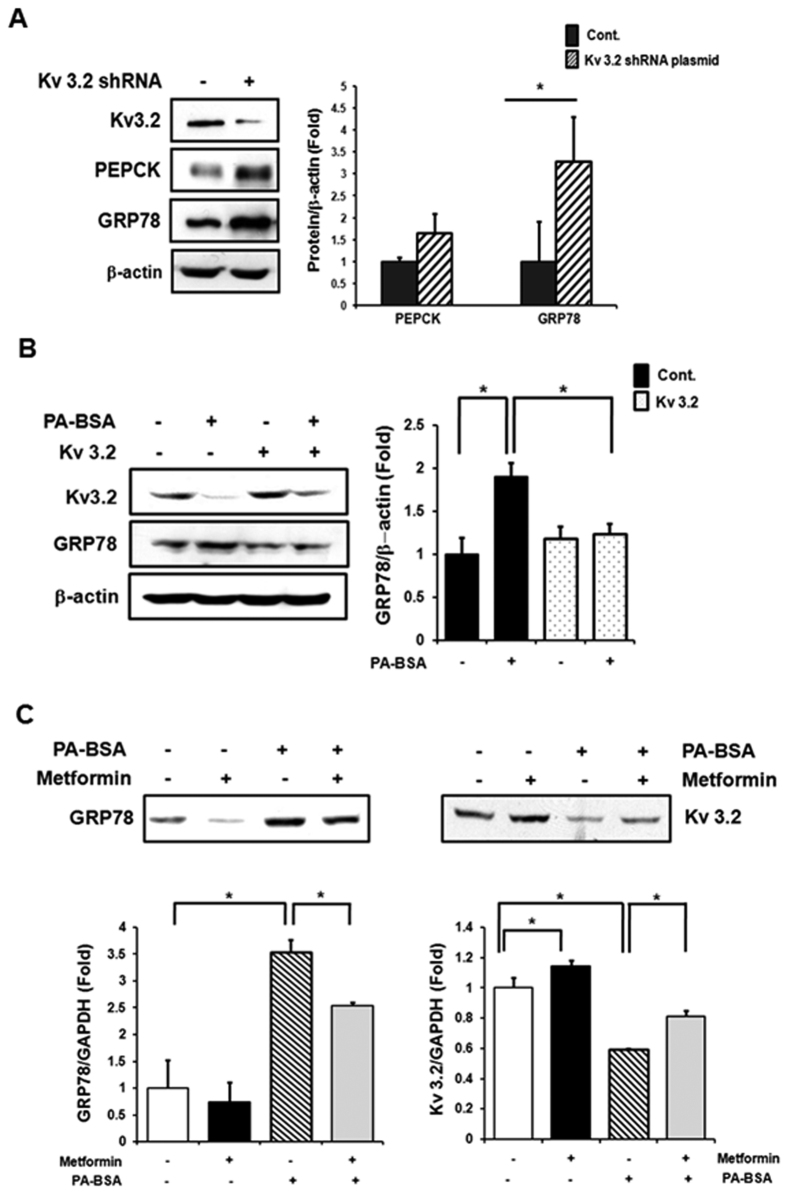
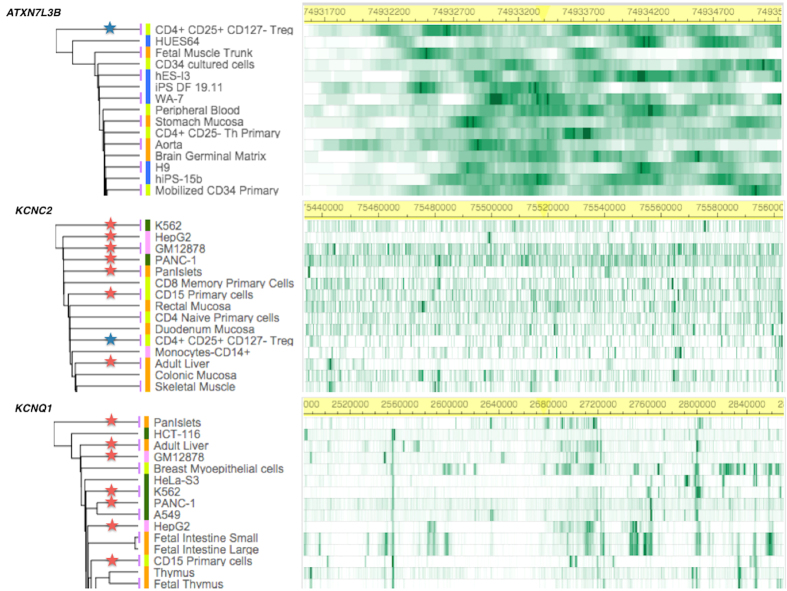
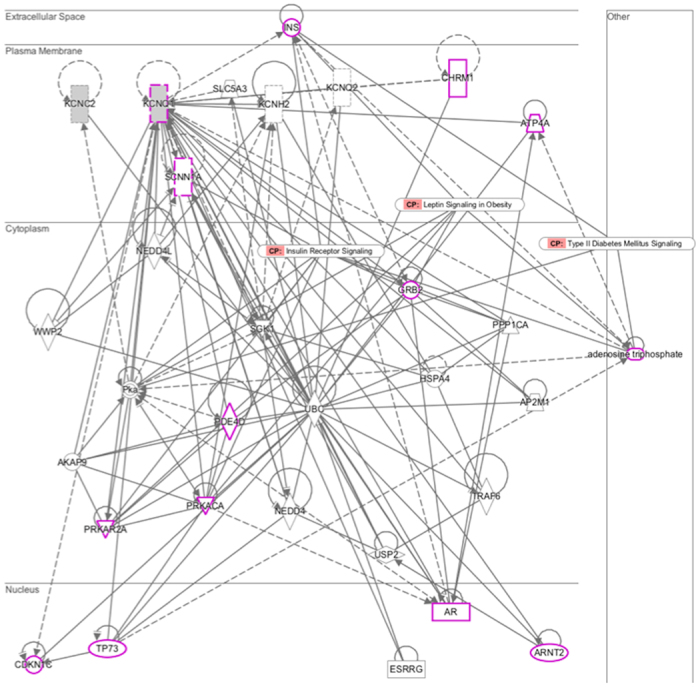
Obesity is a major risk factor for type 2 diabetes. To unravel the genetic determinants of obesity-associated diabetes, we performed a genome-wide study using the 1,000 Genomes-based imputation in a Korean childhood cohort (KoCAS-1, n = 484) and carried out de novo replication in an independent population (KoCAS-2, n = 1,548). A novel variant (rs10879834) with multiple diverse associations for obesity-related traits was also found to be replicated in an adult cohort (KARE, n = 8,842). Functional annotations using integrative epigenetic analyses identified biological significance and regulatory effects with an inverse methylation-expression correlation (cg27154343 in the 5'-UTR of the KCNC2 gene), tissue-specific enhancer mark (H3K4me1), and pathway enrichment (insulin signaling). Further functional studies in cellular and mouse models demonstrated that KCNC2 is associated with anti-obesogenic effects in the regulation of obesity-induced insulin resistance. KCNC2 shRNA transfection induced endoplasmic reticulum (ER) stress and hepatic gluconeogenesis. Overproduction of KCNC2 decreased ER stress, and treatment with metformin enhanced KCNC2 expression. Taken together, these data suggest that reduction of KCNC2 is associated with modified hepatic gluconeogenesis and increased ER stress on obesity-mediated diabetic risk. An integrative multi-omics analysis might reveal new functional and clinical implications related to the control of energy and metabolic homeostasis in humans.
肥胖是 2 型糖尿病的一个主要危险因素。为了揭示与肥胖相关的糖尿病的遗传决定因素,我们使用基于 1000 基因组的韩国儿童队列(KoCAS-1,n=484)进行了全基因组研究,并在独立人群中进行了从头复制(KoCAS-2,n=1548)。还发现了一种新的变体(rs10879834),它与肥胖相关特征的多种不同关联也在成年队列(KARE,n=8842)中得到复制。使用整合表观遗传分析的功能注释确定了生物学意义和调节作用,与反向甲基化-表达相关性(KCNC2 基因 5'-UTR 中的 cg27154343)、组织特异性增强子标记(H3K4me1)和途径富集(胰岛素信号)相关。细胞和小鼠模型的进一步功能研究表明,KCNC2 与肥胖诱导的胰岛素抵抗的调节中的抗肥胖作用有关。KCNC2 shRNA 转染诱导内质网(ER)应激和肝糖异生。KCNC2 的过表达降低了 ER 应激,而二甲双胍的治疗增强了 KCNC2 的表达。总之,这些数据表明,KCNC2 的减少与肥胖介导的糖尿病风险相关的肝糖异生改变和 ER 应激增加有关。综合多组学分析可能揭示与人类能量和代谢稳态控制相关的新的功能和临床意义。