Zeng Jun, Lou Kai, Zhang Cui-Jing, Wang Jun-Tao, Hu Hang-Wei, Shen Ju-Pei, Zhang Li-Mei, Han Li-Li, Zhang Tao, Lin Qin, Chalk Phillip M, He Ji-Zheng
State Key Laboratory of Urban and Regional Ecology, Research Center for Eco-Environmental Sciences, Chinese Academy of SciencesBeijing, China; College of Resources and Environment, University of Chinese Academy of SciencesBeijing, China; Institute of Applied Microbiology, Xinjiang Academy of Agricultural SciencesUrumqi, China.
Institute of Applied Microbiology, Xinjiang Academy of Agricultural Sciences Urumqi, China.
Front Microbiol. 2016 Aug 30;7:1353. doi: 10.3389/fmicb.2016.01353. eCollection 2016.
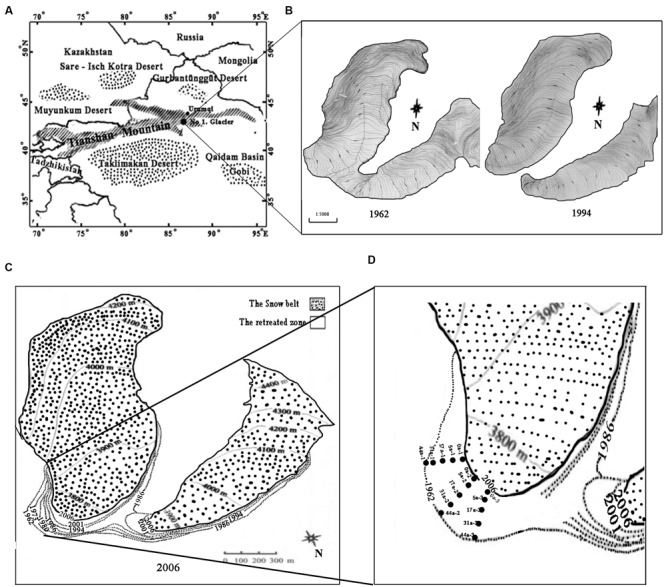
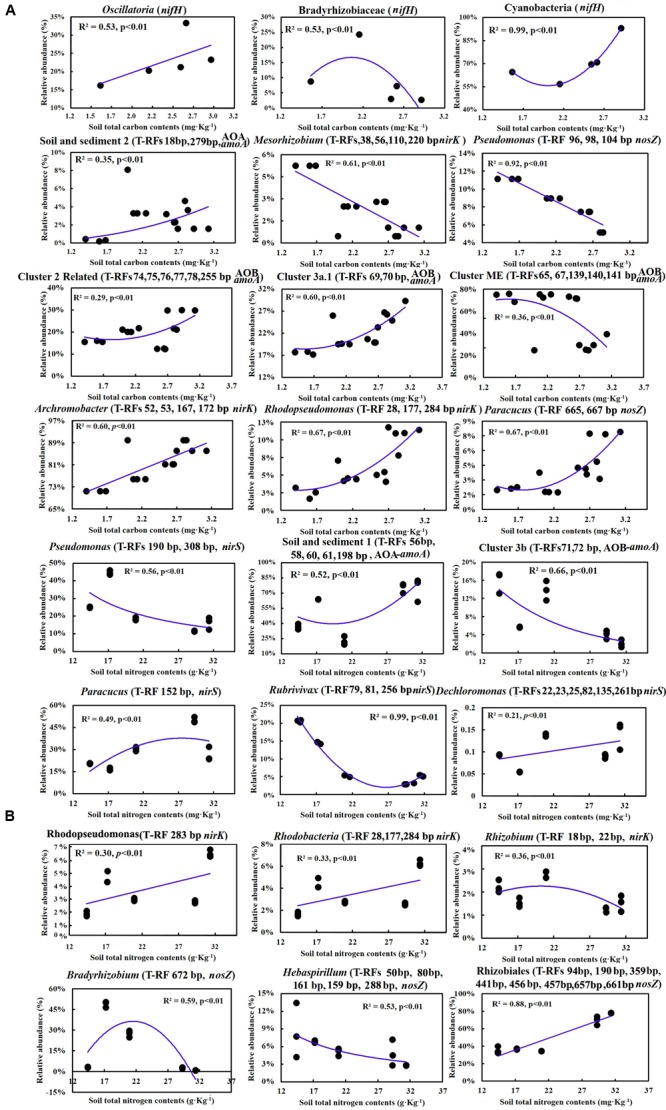
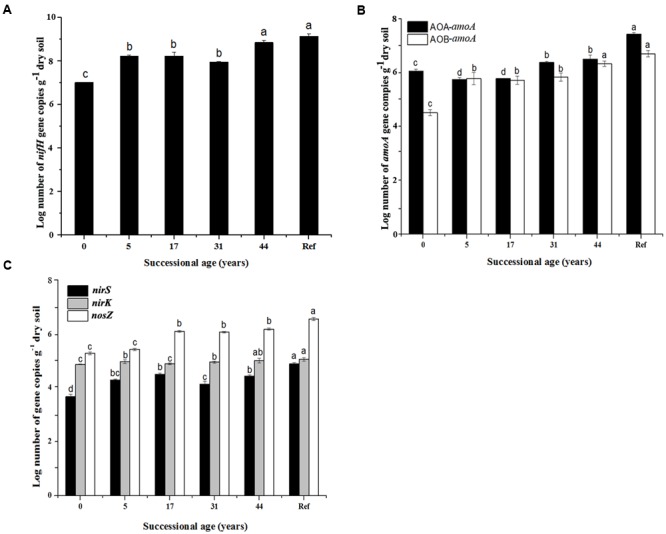
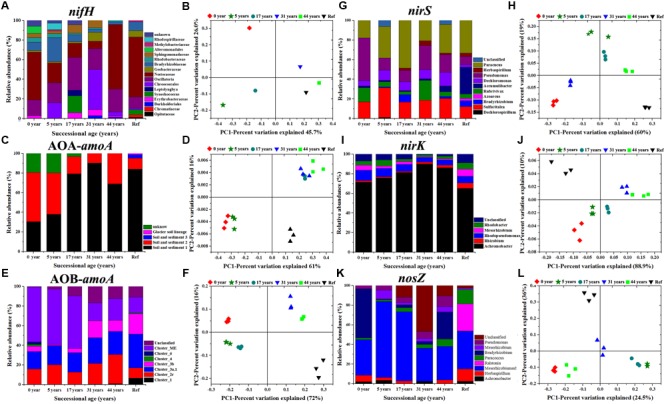
Structural succession and its driving factors for nitrogen (N) cycling microbial communities during the early stages of soil development (0-44 years) were studied along a chronosequence in the glacial forelands of the Tianshan Mountain No.1 glacier in the arid and semi-arid region of central Asia. We assessed the abundance and population of functional genes affiliated with N-fixation (nifH), nitrification (bacterial and archaeal amoA), and denitrification (nirK/S and nosZ) in a glacier foreland using molecular methods. The abundance of functional genes significantly increased with soil development. N cycling community compositions were also significantly shifted within 44 years and were structured by successional age. Cyanobacterial nifH gene sequences were the most dominant N fixing bacteria and its relative abundance increased from 56.8-93.2% along the chronosequence. Ammonia-oxidizing communities shifted from the Nitrososphaera cluster (AOA-amoA) and the Nitrosospira cluster ME (AOB-aomA) in younger soils (0 and 5 years) to communities dominated by soil and sediment 1 (AOA-amoA) and Nitrosospira Cluster 2 Related (AOB-aomA) in older soils (≥17 years). Most of the denitrifers closest relatives were potential aerobic denitrifying bacteria, and some other types of denitrifying bacteria (like autotrophic nitrate-reducing, sulfide-oxidizing bacteria and denitrifying phosphorus removing bacteria) were also detected in all soil samples. The regression analysis showed that N cycling microbial communities were dominant in younger soils (0-5 years) and significantly correlated with soil total carbon, while communities that were most abundant in older soils were significantly correlated with soil total nitrogen. These results suggested that the shift of soil C and N contents during the glacial retreat significantly influenced the abundance, composition and diversity of N cycling microbial communities.
在中亚干旱和半干旱地区天山一号冰川的冰前区域,沿着时间序列研究了土壤发育早期(0 - 44年)氮(N)循环微生物群落的结构演替及其驱动因素。我们采用分子方法评估了冰川前沿区域土壤中与固氮(nifH)、硝化作用(细菌和古菌amoA)以及反硝化作用(nirK/S和nosZ)相关的功能基因的丰度和种群。功能基因的丰度随着土壤发育显著增加。氮循环群落组成在44年内也发生了显著变化,并由演替年龄构建。蓝藻nifH基因序列是最主要的固氮细菌,其相对丰度沿时间序列从56.8% - 93.2%增加。氨氧化群落从年轻土壤(0年和5年)中的亚硝化球菌簇(AOA - amoA)和亚硝化螺菌簇ME(AOB - aomA)转变为老年土壤(≥17年)中以土壤和沉积物1(AOA - amoA)和亚硝化螺菌簇2相关(AOB - aomA)为主的群落。大多数反硝化细菌的近亲是潜在的好氧反硝化细菌,并且在所有土壤样品中还检测到了其他一些类型的反硝化细菌(如自养硝酸盐还原菌、硫化物氧化菌和反硝化除磷菌)。回归分析表明,氮循环微生物群落在年轻土壤(0 - 5年)中占主导地位,且与土壤总碳显著相关,而在老年土壤中最丰富的群落与土壤总氮显著相关。这些结果表明,冰川消退期间土壤碳和氮含量的变化显著影响了氮循环微生物群落的丰度、组成和多样性。