Yu Ning, Gu Hong, Wei Yulong, Zhu Ning, Wang Yanli, Zhang Haiping, Zhu Yue, Zhang Xin, Ma Chao, Sun Aidong
College of Biological Sciences and Technology, Beijing Forestry University, Beijing 100083, China.
Beijing Key Laboratory of Forest Food Processing and Safety, Beijing Forestry University, Beijing 100083, China.
Molecules. 2016 Sep 12;21(9):1221. doi: 10.3390/molecules21091221.
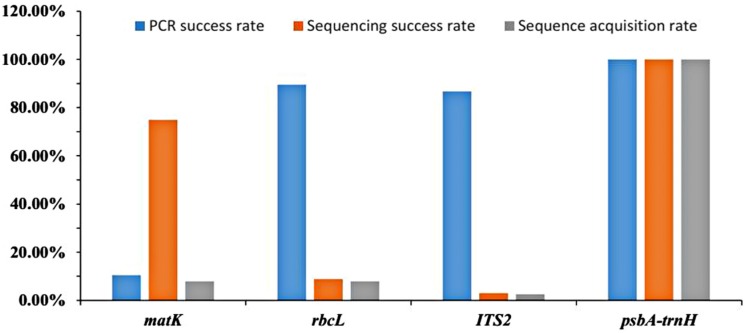
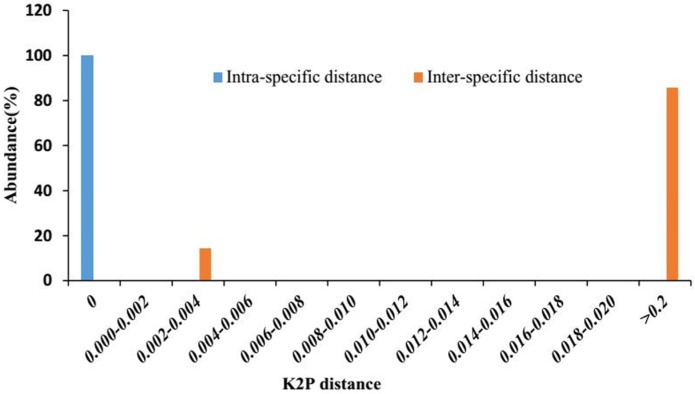
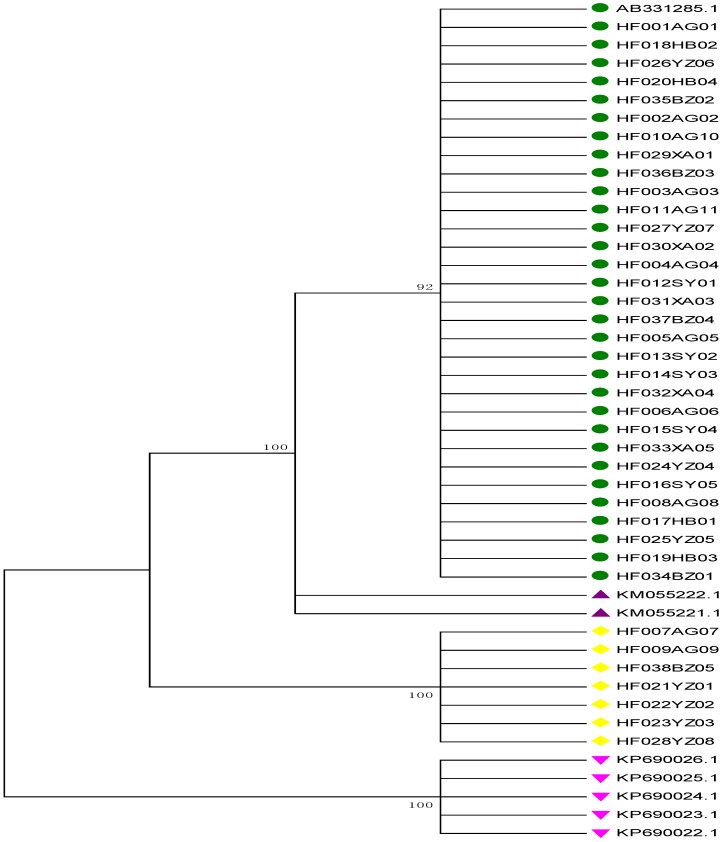
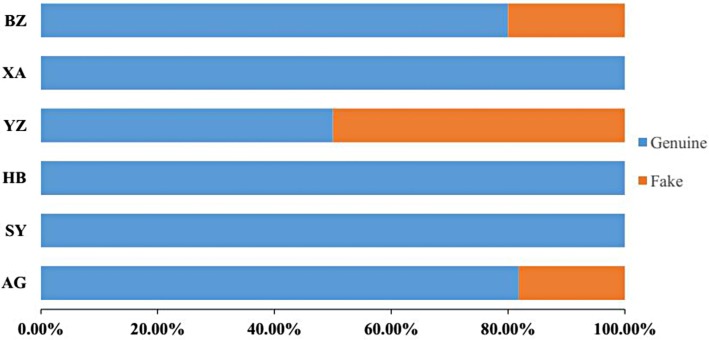
Piper kadsura is a vine-like medicinal plant which is widely used in clinical treatment. However, P. kadsura is often substituted by other materials in the markets, thereby causing health risks. In this study, 38 P. kadsura samples and eight sequences from GenBank, including a closely-related species and common adulterants were collected. This study aimed to identify an effective DNA barcode from four popular DNA loci for P. kadsura authentication. The success rates of PCR amplification, sequencing, and sequence acquisition of matK were 10.5%, 75%, and 7.9%, respectively; for rbcL they were 89.5%, 8.8%, and 7.9%, respectively; ITS2 rates were 86.8%, 3.0%, and 2.6%, respectively, while for psbA-trnH they were all 100%, which is much higher than for the other three loci. The sequences were aligned using Muscle, genetic distances were computed using MEGA 5.2.2, and barcoding gap was performed using TAXON DNA. Phylogenetic analysis showed that psbA-trnH could clearly distinguish P. kadsura from its closely related species and the common adulterant. psbA-trnH was then used to evaluate the fake proportions of P. kadsura. Results showed that 18.4% of P. kadsura samples were fake, indicating that adulterant species exist in the Chinese markets. Two-dimensional DNA barcoding imaging of P. kadsura was conducted, which was beneficial to the management of P. kadsura. We conclude that the psbA-trnH region is a powerful tool for P. kadsura identification and supervision in the current medicine markets.
海风藤是一种藤状药用植物,在临床治疗中广泛应用。然而,市场上的海风藤常被其他材料替代,从而带来健康风险。本研究收集了38份海风藤样本以及来自GenBank的8个序列,包括一个近缘物种和常见掺假品。本研究旨在从四个常用的DNA位点中鉴定出一种有效的DNA条形码,用于海风藤的鉴定。matK的PCR扩增成功率、测序成功率和序列获取率分别为10.5%、75%和7.9%;rbcL的相应比率分别为89.5%、8.8%和7.9%;ITS2的比率分别为86.8%、3.0%和2.6%,而psbA-trnH的比率均为100%,远高于其他三个位点。使用Muscle对序列进行比对,使用MEGA 5.2.2计算遗传距离,并使用TAXON DNA进行条形码间隙分析。系统发育分析表明,psbA-trnH能够清晰地将海风藤与其近缘物种和常见掺假品区分开来。然后使用psbA-trnH评估海风藤的掺假比例。结果显示,18.4%的海风藤样本为掺假品,表明中国市场上存在掺假物种。对海风藤进行了二维DNA条形码成像,这有助于海风藤的管理。我们得出结论,psbA-trnH区域是当前医药市场上鉴定和监管海风藤的有力工具。