Lucas Alexander R, Focht Brian C, Cohn David E, Buckworth Janet, Klatt Maryanna D
1 Wake Forest School of Medicine, Winston-Salem, NC, USA.
2 The Ohio State University, Columbus, OH, USA.
Integr Cancer Ther. 2017 Sep;16(3):263-275. doi: 10.1177/1534735416668257. Epub 2016 Sep 14.
Mindfulness-based interventions (MBIs) to address self-regulation and lifestyle behaviors (diet, physical activity) may benefit endometrial cancer survivors (ECS), who are at increased risk for morbidity and mortality associated with obesity. However, the acceptability of mindfulness training and whether it can augment behavior change in ECS is unknown. We aimed to examine; 1) the feasibility of the Mindfulness in Motion + Diet (MIM+D) intervention and 2) the preliminary efficacy of MIM+D for improving mindfulness, diet, PA and health-related quality of life (HRQL).
ECS (Mage=62.4, ±5yrs from diagnosis) completed assessments at baseline, 8 and 14 weeks. Feasibility was determined by intervention completion surveys, attendance and adherence data. We used repeated measures ANOVA's (SPSS 22.0) and effect size estimates (Cohen's d) to examine changes in mindfulness, diet, PA, and HRQL over time.
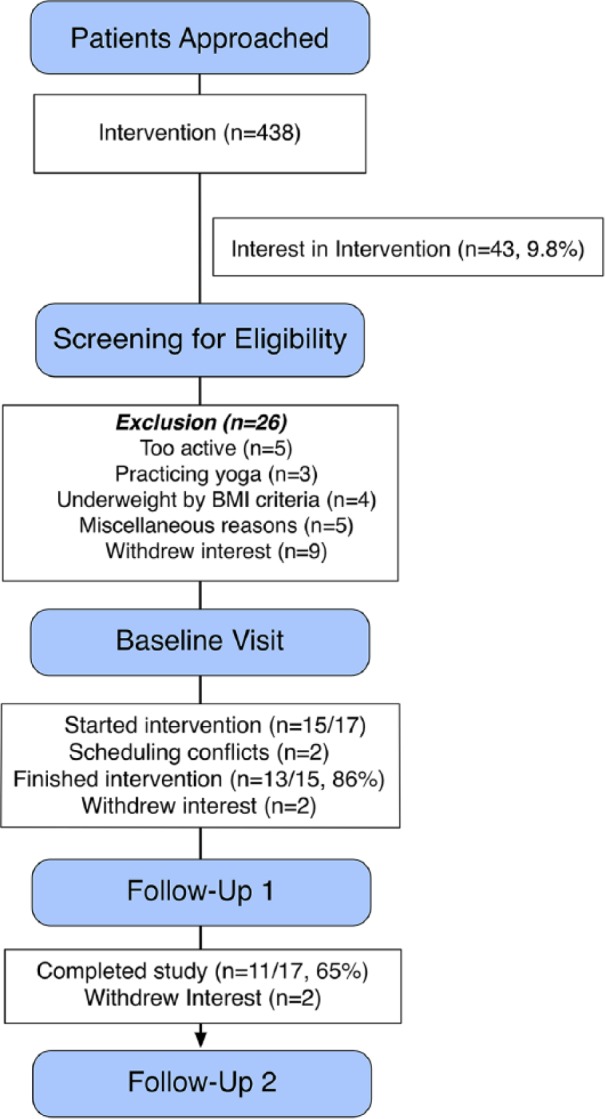
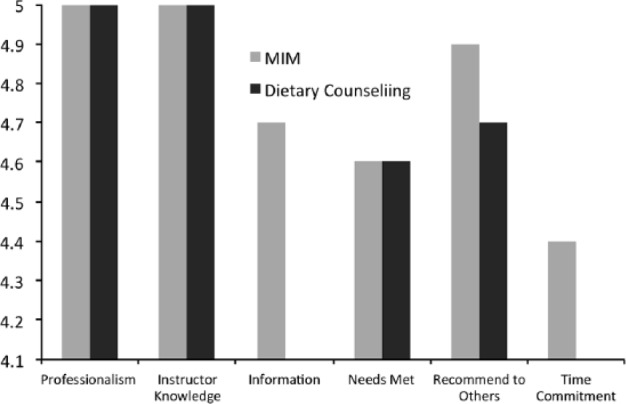
Thirteen ECS (76%) completed the MIM+D program and attendance (≥6/8 sessions) was 90%. Women reported favorably on the overall quality (mean of 4.75/5) and benefits of the MIM+D program; however, would have preferred receiving MIM+D closer to diagnosis. Intention to treat analyses found MIM+D did not significantly improve any outcomes. However, an intervention completers analysis showed significant change in mindfulness (p=.0039) and small to moderate estimates for change in fruits and vegetable intake (d=.23), MVPA (d=.45), RAND SF-36: MCS (d=.46), and sleep quality (d=.68).
Integrating mindfulness training into behavioral interventions is feasible and ECS that adhere to these lifestyle programs may benefit. However, to future research should examine the-long term effects of mindfulness-based behavioral lifestyle interventions.
基于正念的干预措施(MBIs)用于解决自我调节和生活方式行为(饮食、体育活动)问题,可能会使子宫内膜癌幸存者(ECS)受益,这些幸存者因肥胖而面临更高的发病和死亡风险。然而,正念训练的可接受性以及它是否能增强ECS的行为改变尚不清楚。我们旨在研究:1)运动与饮食中的正念(MIM+D)干预的可行性,以及2)MIM+D对提高正念、饮食、体育活动和健康相关生活质量(HRQL)的初步疗效。
ECS(诊断后平均年龄62.4岁,±5岁)在基线、第8周和第14周完成评估。通过干预完成情况调查、出勤和依从性数据来确定可行性。我们使用重复测量方差分析(SPSS 22.0)和效应量估计(科恩d值)来研究正念、饮食、体育活动和HRQL随时间的变化。
13名ECS(76%)完成了MIM+D项目,出勤率(≥6/8次课程)为90%。女性对MIM+D项目的整体质量(平均4.75/5)和益处评价良好;然而,她们更希望在接近诊断时接受MIM+D。意向性分析发现MIM+D并未显著改善任何结果。然而,干预完成者分析显示正念有显著变化(p=.0039),水果和蔬菜摄入量变化的效应量估计为小到中度(d=.23),中等强度身体活动(MVPA,d=.45),兰德36项健康调查简表:心理维度(MCS,d=.46)和睡眠质量(d=.68)。
将正念训练纳入行为干预是可行的,坚持这些生活方式项目的ECS可能会受益。然而,未来的研究应考察基于正念的行为生活方式干预的长期效果。