Mogilyansky Elena, Clark Peter, Quann Kevin, Zhou Honglei, Londin Eric, Jing Yi, Rigoutsos Isidore
Computational Medicine Center, Sidney Kimmel Medical College, Thomas Jefferson University, Philadelphia PA, USA.
Department of Pathology and Laboratory Medicine, The Children's Hospital of Philadelphia, Philadelphia PA, USA.
Front Genet. 2016 Aug 31;7:143. doi: 10.3389/fgene.2016.00143. eCollection 2016.
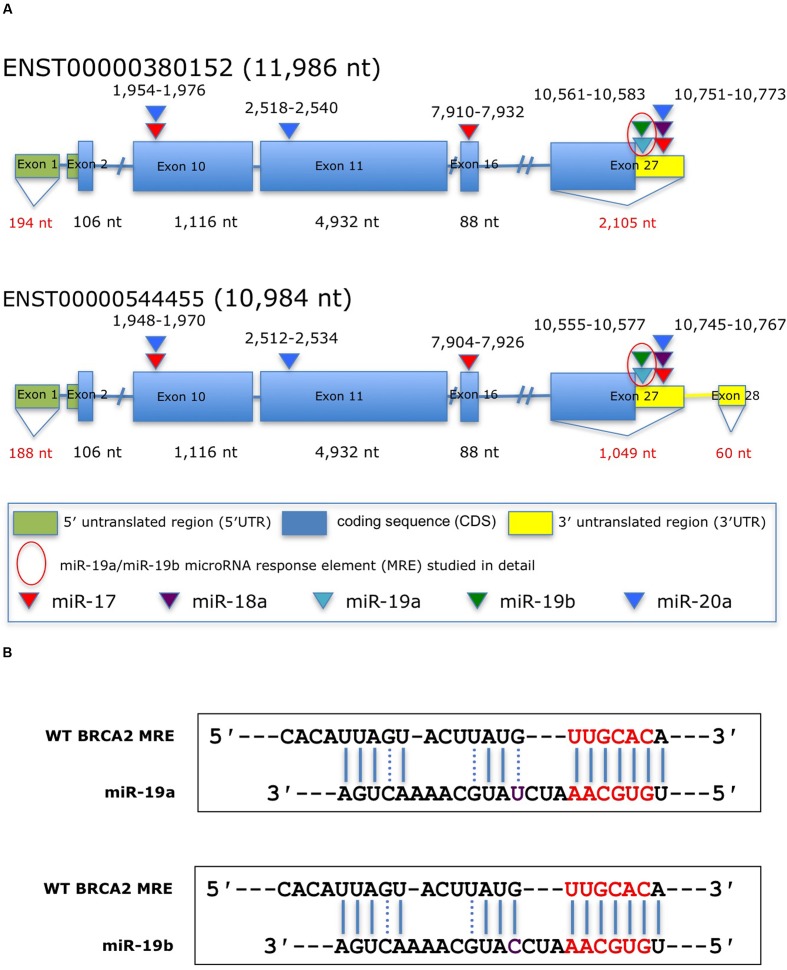
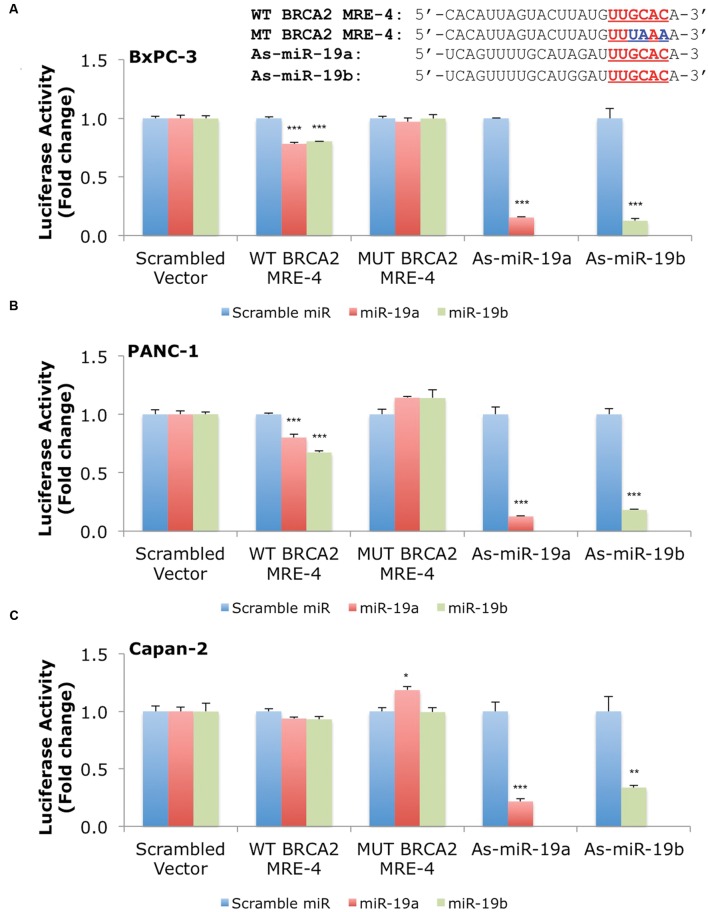
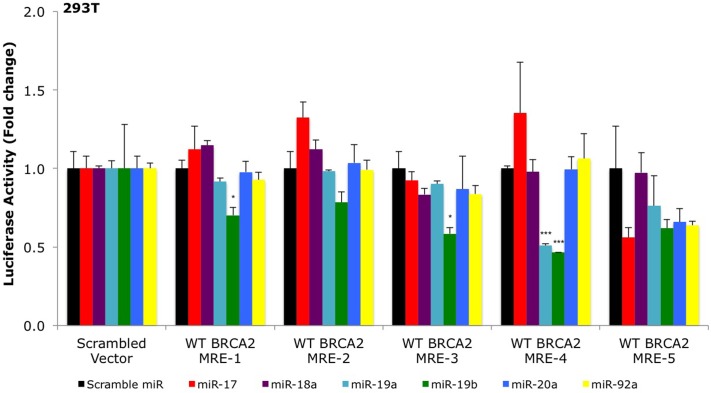
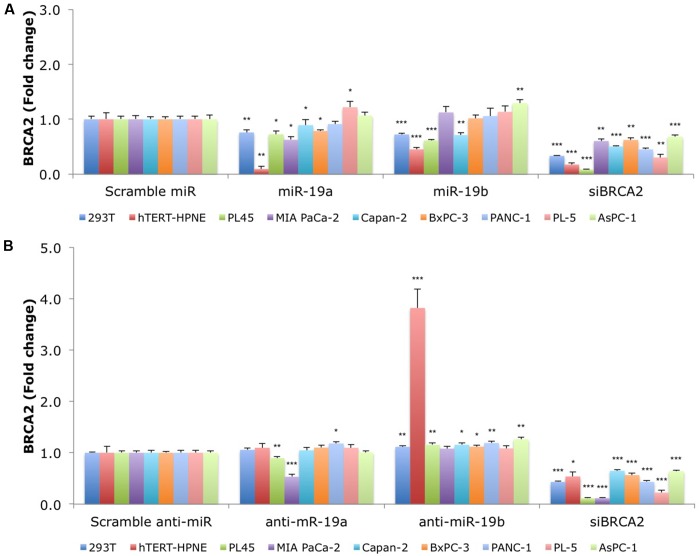
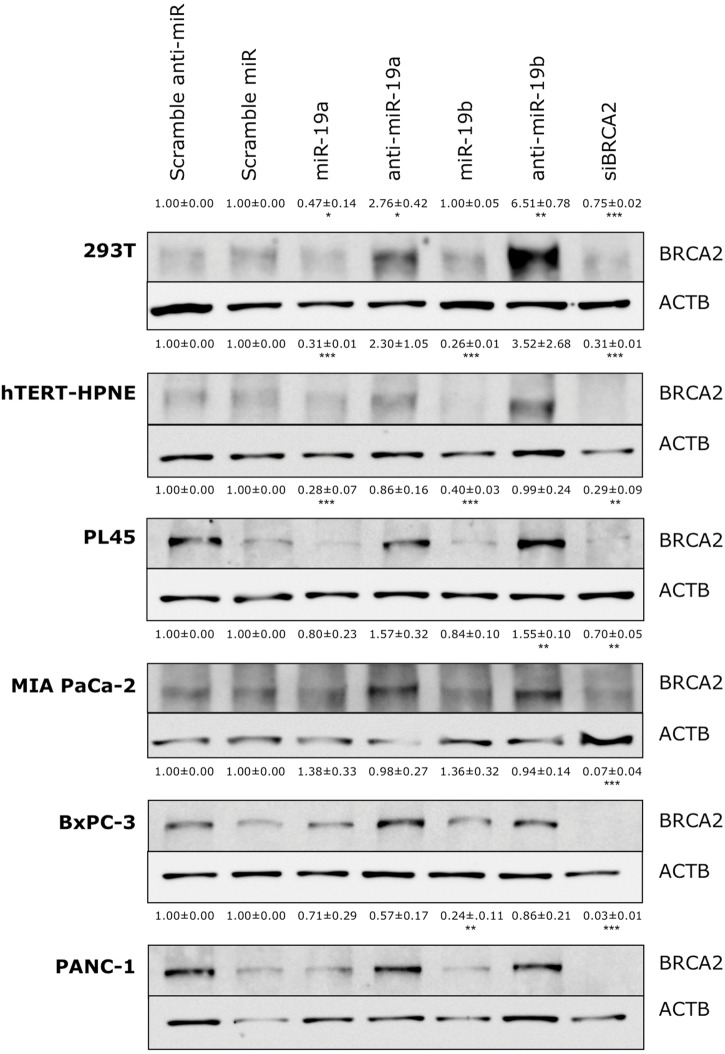
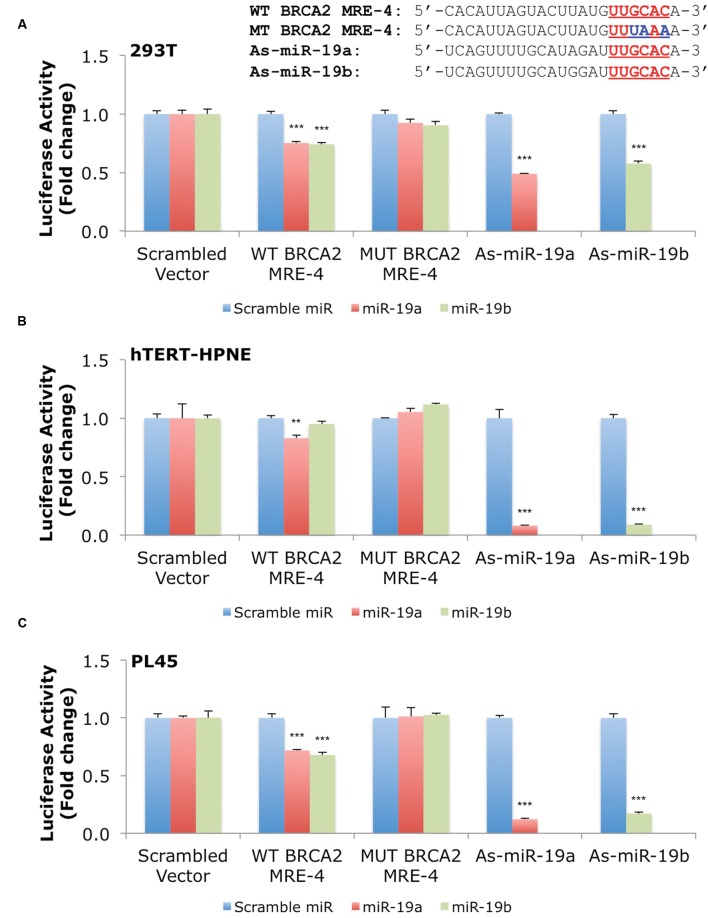
Breast cancer type 2, early onset susceptibility gene (BRCA2) is a major component of the homologous recombination DNA repair pathway. It acts as a tumor suppressor whose function is often lost in cancers. Patients with specific mutations in the BRCA2 gene often display discrete clinical, histopathological, and molecular features. However, a subset of sporadic cancers has wild type BRCA2 and display defects in the homology-directed repair pathway, which is the hallmark of 'BRCAness.' The mechanisms by which BRCAness arises are not well understood but post-transcriptional regulation of BRCA2 gene expression by microRNAs (miRNAs) may contribute to this phenotype. Here, we examine the post-transcriptional effects that some members of the six-miRNA cluster known as the miR-17/92 cluster have on the abundance of BRCA2's messenger RNA (mRNA) and protein. We discuss two interactions involving the miR-19a and miR-19b members of the cluster and the 3'UTR of BRCA2's mRNA. We investigated these miRNA:mRNA interactions in 15 cell lines derived from pancreatic, breast, colon, and kidney tissue. We show that over-expression of these two miRNAs results in a concomitant decrease of BRCA2's mRNA and protein expression in a subset of the tested cell lines. Additionally, using luciferase reporter assays we identified direct interactions between miR-19a/miR-19b and a miRNA response element (MRE) in BRCA2's 3'UTR. Our results suggest that BRCA2 is subject to a complex post-transcriptional regulatory program that has specific dependencies on the genetic and phenotypic background of cell types.
乳腺癌2型早发易感基因(BRCA2)是同源重组DNA修复途径的主要组成部分。它作为一种肿瘤抑制因子,其功能在癌症中常常丧失。BRCA2基因发生特定突变的患者通常表现出不同的临床、组织病理学和分子特征。然而,一部分散发性癌症具有野生型BRCA2,但在同源定向修复途径中存在缺陷,这是“BRCAness”的标志。BRCAness产生的机制尚不完全清楚,但微小RNA(miRNA)对BRCA2基因表达的转录后调控可能导致这种表型。在这里,我们研究了被称为miR-17/92簇的六个miRNA簇中的一些成员对BRCA2信使核糖核酸(mRNA)和蛋白质丰度的转录后影响。我们讨论了该簇中的miR-19a和miR-19b成员与BRCA2 mRNA的3'非翻译区(3'UTR)之间的两种相互作用。我们在源自胰腺、乳腺、结肠和肾脏组织的15种细胞系中研究了这些miRNA与mRNA的相互作用。我们发现,在一部分测试细胞系中,这两种miRNA的过表达会导致BRCA2的mRNA和蛋白质表达同时下降。此外,使用荧光素酶报告基因检测,我们确定了miR-19a/miR-19b与BRCA2的3'UTR中的一个miRNA反应元件(MRE)之间的直接相互作用。我们的结果表明,BRCA2受到一个复杂的转录后调控程序的影响,该程序对细胞类型的遗传和表型背景具有特定的依赖性。