Istituto di Biostrutture e Bioimmagini - CNR Sede di Catania, Via P. Gaifami, 9- 95126 Catania, Italy.
Fondazione RiMed, Via Bandiera 11, 90133, Palermo, Italy.
Sci Rep. 2016 Sep 16;6:33444. doi: 10.1038/srep33444.
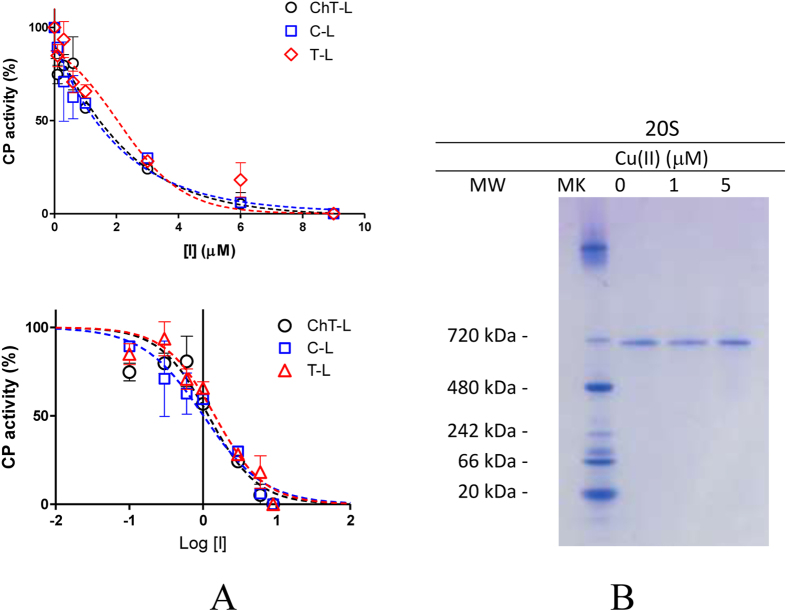
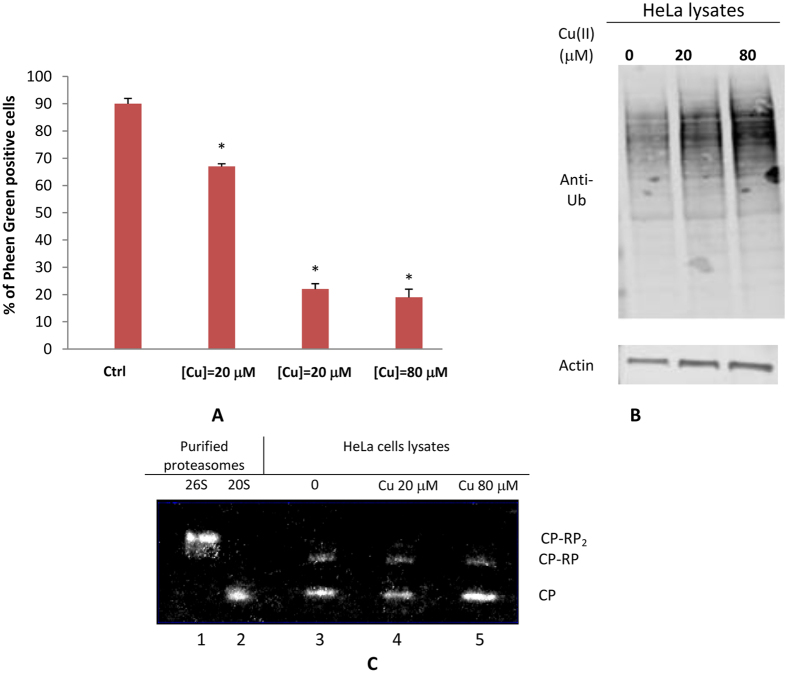
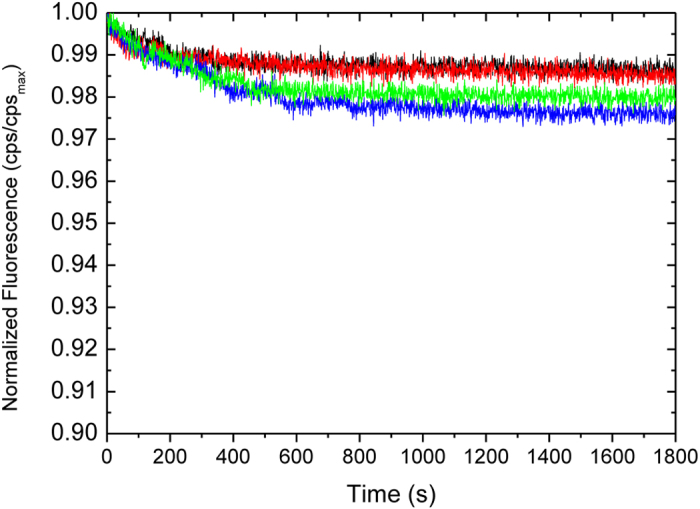
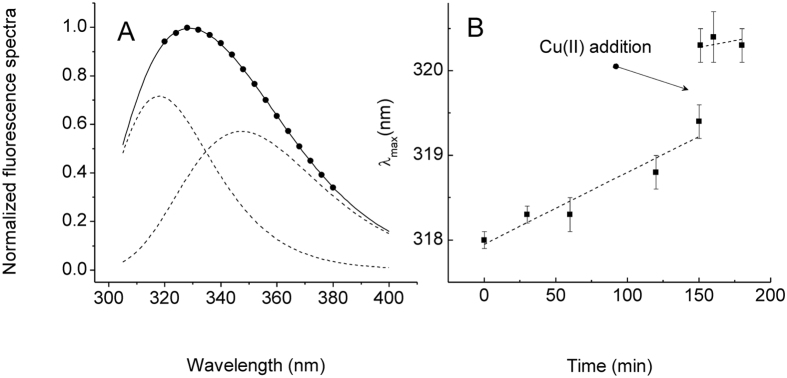
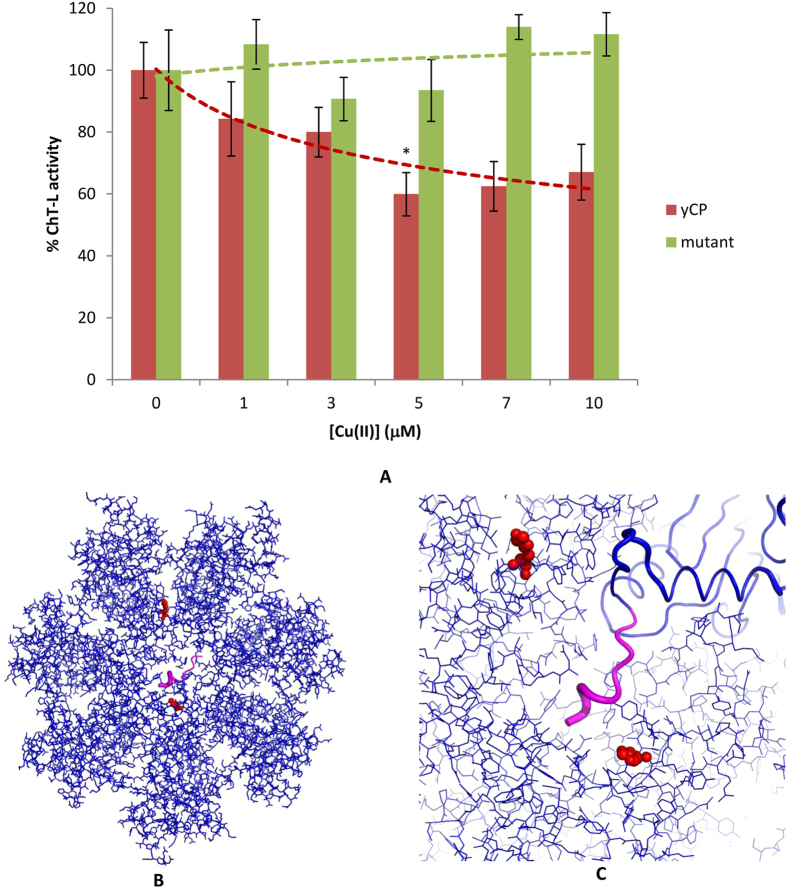
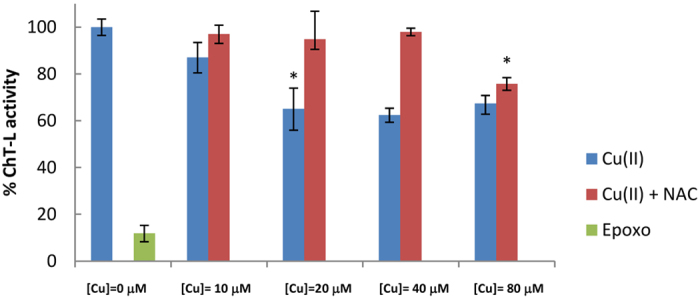
Due to their altered metabolism cancer cells are more sensitive to proteasome inhibition or changes of copper levels than normal cells. Thus, the development of copper complexes endowed with proteasome inhibition features has emerged as a promising anticancer strategy. However, limited information is available about the exact mechanism by which copper inhibits proteasome. Here we show that Cu(II) ions simultaneously inhibit the three peptidase activities of isolated 20S proteasomes with potencies (IC50) in the micromolar range. Cu(II) ions, in cell-free conditions, neither catalyze red-ox reactions nor disrupt the assembly of the 20S proteasome but, rather, promote conformational changes associated to impaired channel gating. Notably, HeLa cells grown in a Cu(II)-supplemented medium exhibit decreased proteasome activity. This effect, however, was attenuated in the presence of an antioxidant. Our results suggest that if, on one hand, Cu(II)-inhibited 20S activities may be associated to conformational changes that favor the closed state of the core particle, on the other hand the complex effect induced by Cu(II) ions in cancer cells is the result of several concurring events including ROS-mediated proteasome flooding, and disassembly of the 26S proteasome into its 20S and 19S components.
由于其代谢改变,癌细胞比正常细胞对蛋白酶体抑制或铜水平变化更为敏感。因此,开发具有蛋白酶体抑制特性的铜配合物已成为一种很有前途的抗癌策略。然而,关于铜抑制蛋白酶体的确切机制的信息有限。在这里,我们表明 Cu(II) 离子同时以微摩尔范围内的效力(IC50)抑制分离的 20S 蛋白酶体的三种肽酶活性。Cu(II) 离子在无细胞条件下既不催化氧化还原反应,也不破坏 20S 蛋白酶体的组装,而是促进与通道门控受损相关的构象变化。值得注意的是,在补充 Cu(II) 的培养基中生长的 HeLa 细胞表现出降低的蛋白酶体活性。然而,在存在抗氧化剂的情况下,这种效应会减弱。我们的结果表明,如果一方面 Cu(II) 抑制的 20S 活性可能与有利于核心颗粒关闭状态的构象变化有关,另一方面 Cu(II) 离子在癌细胞中引起的复杂效应是包括 ROS 介导的蛋白酶体泛滥在内的多种并发事件的结果,以及 26S 蛋白酶体分解为 20S 和 19S 组件。