Pickering Amy J, Arnold Benjamin F, Dentz Holly N, Colford John M, Null Clair
Civil and Environmental Engineering, Stanford University, Stanford, California, USA.
Environ Health Perspect. 2017 Mar;125(3):278-283. doi: 10.1289/EHP342. Epub 2016 Sep 16.
The recent global climate agreement in Paris aims to mitigate greenhouse gas emissions while fostering sustainable development and establishes an international trading mechanism to meet this goal. Currently, carbon offset program implementers are allowed to collect their own monitoring data to determine the number of carbon credits to be awarded.
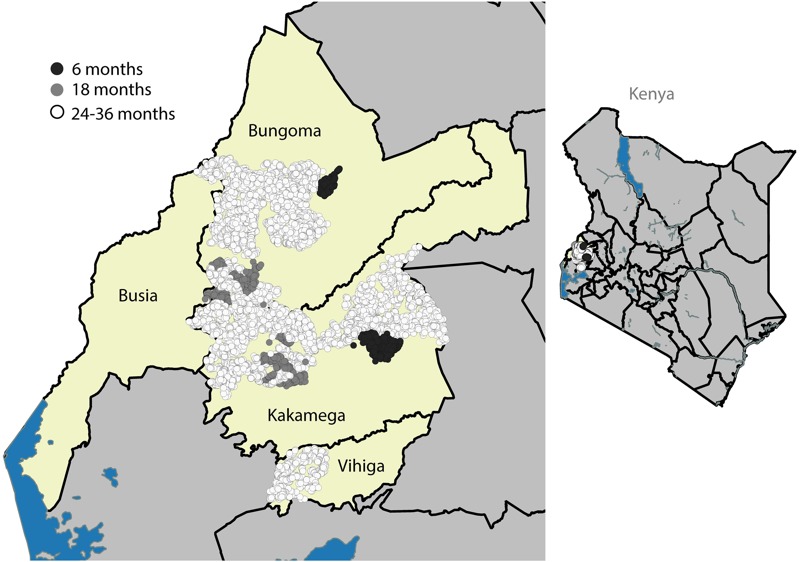
We summarize reasons for mandating independent monitoring of greenhouse gas emission reduction projects. In support of our policy recommendations, we describe a case study of a program designed to earn carbon credits by distributing almost one million drinking water filters in rural Kenya to avert the use of fuel for boiling water. We compare results from an assessment conducted by our research team in the program area among households with pregnant women or caregivers in rural villages with low piped water access with the reported program monitoring data and discuss the implications.
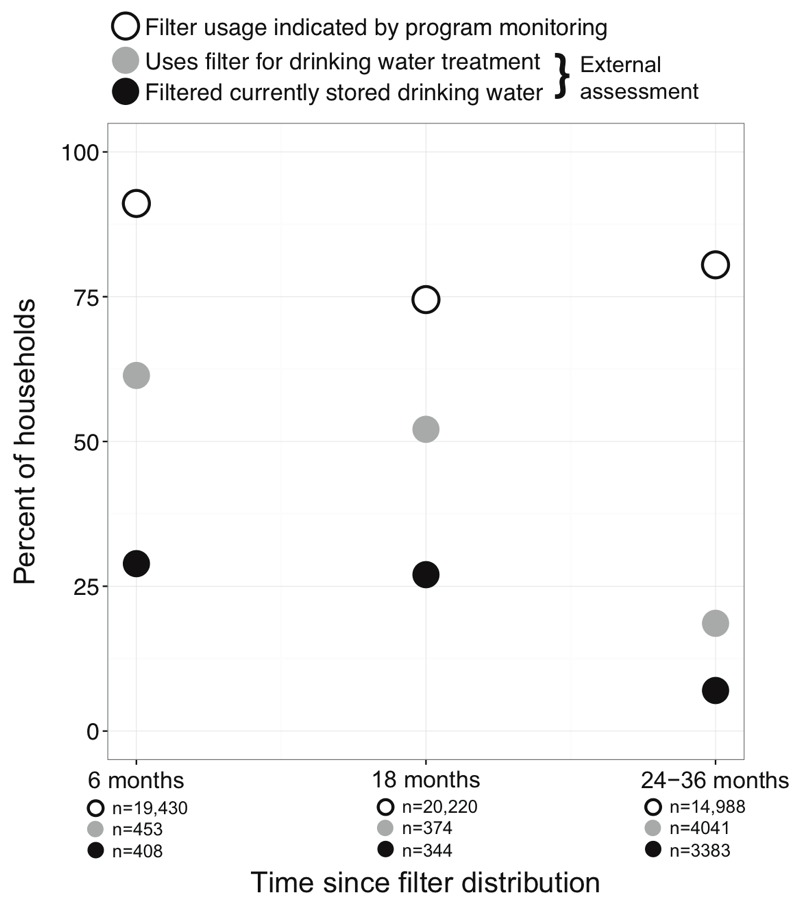
Our assessment in Kenya found lower levels of household water filter usage than the internal program monitoring reported estimates used to determine carbon credits; we found 19% ( = 4,041) of households reported filter usage 2-3 years after filter distribution compared to the program stated usage rate of 81% ( = 14,988) 2.7 years after filter distribution. Although carbon financing could be a financially sustainable approach to scale up water treatment and improve health in low-income settings, these results suggest program effectiveness will remain uncertain in the absence of requiring monitoring data be collected by third-party organizations.
Independent monitoring should be a key requirement for carbon credit verification in future international carbon trading mechanisms to ensure programs achieve benefits in line with sustainable development goals. Citation: Pickering AJ, Arnold BF, Dentz HN, Colford JM Jr., Null C. 2017. Climate and health co-benefits in low-income countries: a case study of carbon financed water filters in Kenya and a call for independent monitoring. Environ Health Perspect 125:278-283; http://dx.doi.org/10.1289/EHP342.
近期达成的全球气候协议《巴黎协定》旨在减少温室气体排放,同时促进可持续发展,并建立了一个国际贸易机制以实现这一目标。目前,碳抵消计划实施者可以自行收集监测数据,以确定应授予的碳信用额度数量。
我们总结了强制对温室气体减排项目进行独立监测的原因。为支持我们的政策建议,我们描述了一个项目的案例研究,该项目旨在通过在肯尼亚农村地区分发近100万个饮用水过滤器来避免使用燃料烧水,从而赚取碳信用额度。我们将研究团队在项目地区对农村地区自来水供应不足的孕妇家庭或照料者家庭进行的评估结果与项目报告的监测数据进行了比较,并讨论了其中的影响。
我们在肯尼亚的评估发现,家庭用水过滤器的使用水平低于项目内部监测报告中用于确定碳信用额度的估计值;我们发现,在过滤器分发2 - 3年后,有19%(= 4041户)的家庭报告使用了过滤器,而项目规定的分发2.7年后的使用率为81%(= 14988户)。尽管碳融资可能是在低收入环境中扩大水处理规模和改善健康状况的一种经济上可持续的方法,但这些结果表明,在不要求第三方组织收集监测数据的情况下,项目效果仍将不确定。
在未来的国际碳交易机制中,独立监测应成为碳信用额度核查的一项关键要求,以确保项目实现符合可持续发展目标的效益。引用文献:Pickering AJ, Arnold BF, Dentz HN, Colford JM Jr., Null C. 2017. 低收入国家的气候与健康协同效益:肯尼亚碳融资水过滤器的案例研究及对独立监测的呼吁。《环境健康展望》125:278 - 283;http://dx.doi.org/10.1289/EHP342。