Hu Nan, Ren Jun, Zhang Yingmei
Shanghai Institute of Cardiovascular Diseases, Zhongshan Hospital, Fudan University, Shanghai, China.
Center for Cardiovascular Research and Alternative Medicine, University of Wyoming College of Health Sciences, Laramie, WY, USA.
Oncotarget. 2016 Nov 22;7(47):76398-76414. doi: 10.18632/oncotarget.11977.
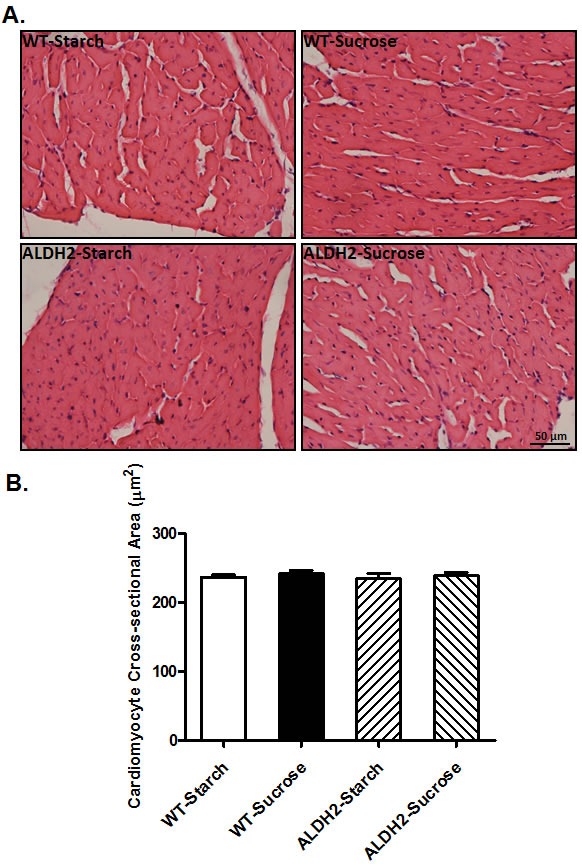
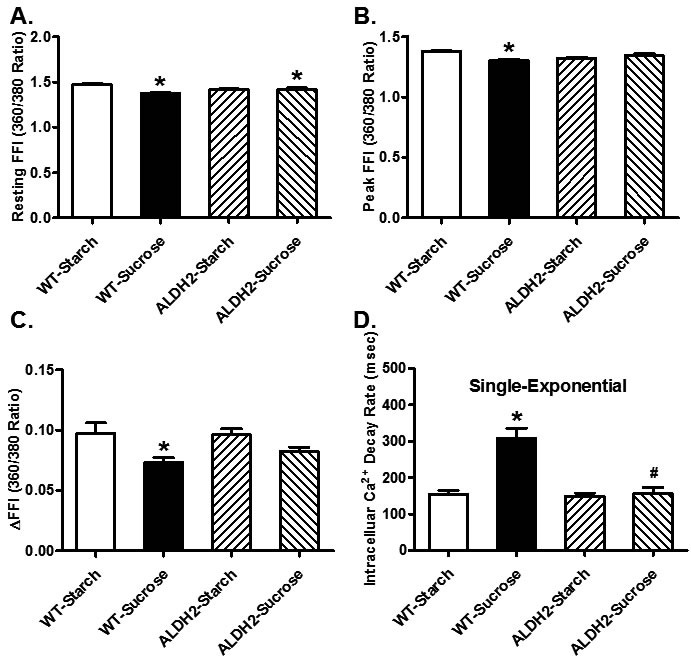
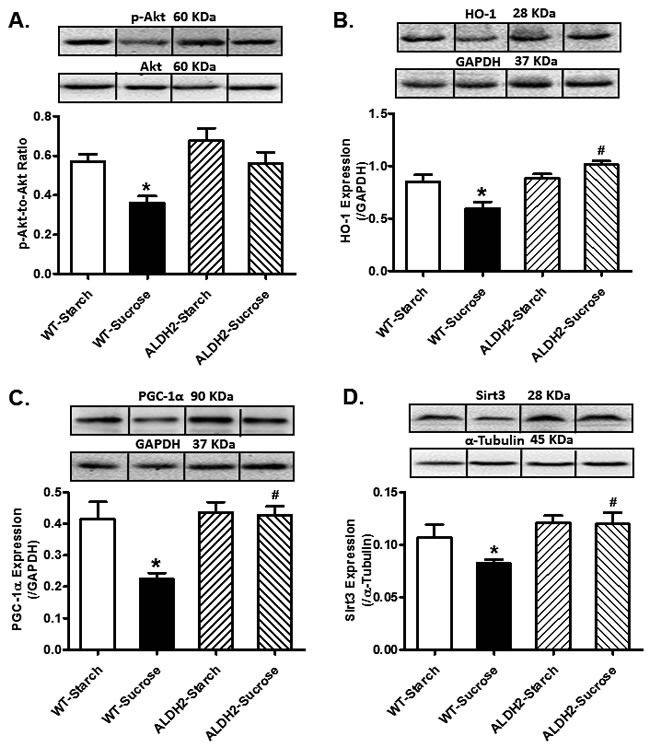
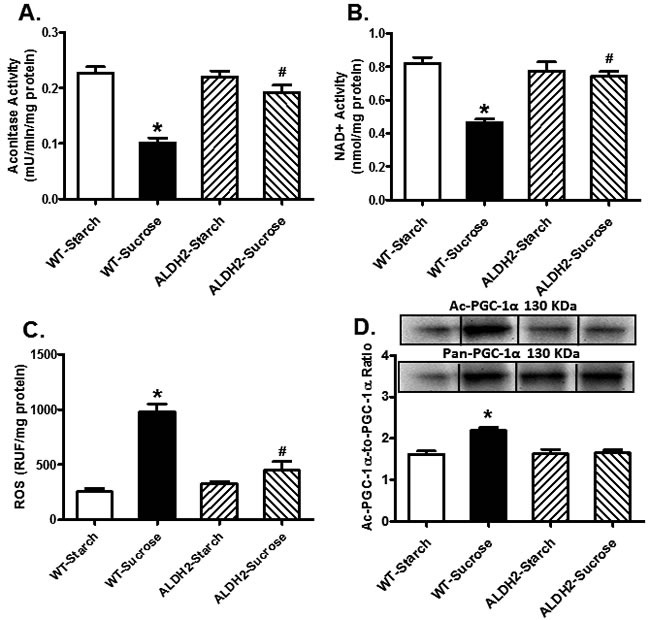
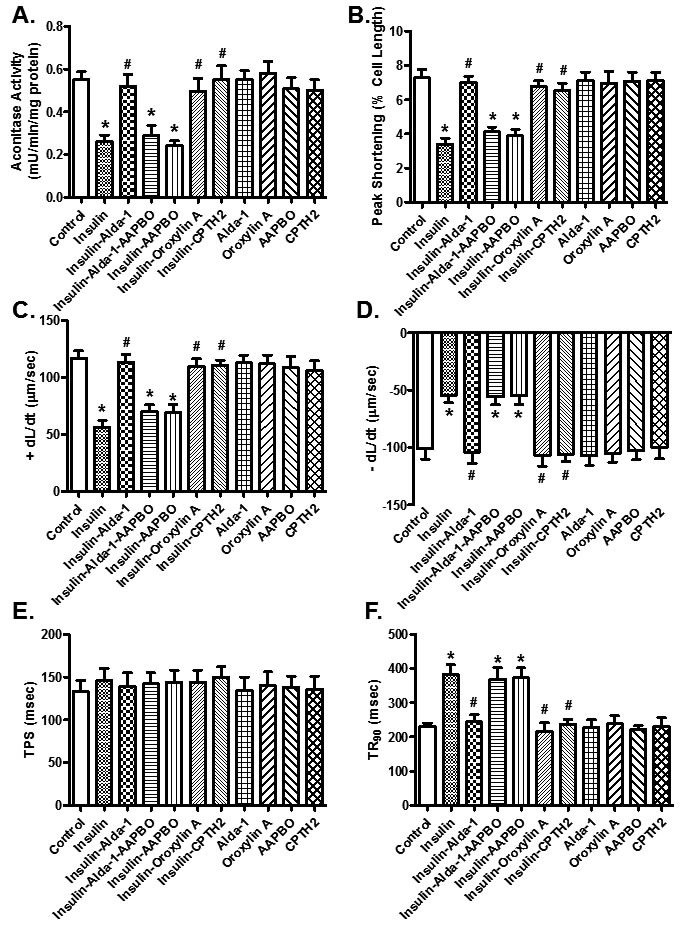
Insulin resistance contributes to the high prevalence of type 2 diabetes mellitus, leading to cardiac anomalies. Emerging evidence depicts a pivotal role for mitochondrial injury in oxidative metabolism and insulin resistance. Mitochondrial aldehyde dehydrogenase (ALDH2) is one of metabolic enzymes detoxifying aldehydes although its role in insulin resistance remains elusive. This study was designed to evaluate the impact of ALDH2 overexpression on insulin resistance-induced myocardial damage and mechanisms involved with a focus on autophagy. Wild-type (WT) and transgenic mice overexpressing ALDH2 were fed sucrose or starch diet for 8 weeks and cardiac function and intracellular Ca2+ handling were assessed using echocardiographic and IonOptix systems. Western blot analysis was used to evaluate Akt, heme oxygenase-1 (HO-1), PGC-1α and Sirt-3. Our data revealed that sucrose intake provoked insulin resistance and compromised fractional shortening, cardiomyocyte function and intracellular Ca2+ handling (p < 0.05) along with unaltered cardiomyocyte size (p > 0.05), mitochondrial injury (elevated ROS generation, suppressed NAD+ and aconitase activity, p < 0.05 for all), the effect of which was ablated by ALDH2. In vitro incubation of the ALDH2 activator Alda-1, the Sirt3 activator oroxylin A and the histone acetyltransferase inhibitor CPTH2 rescued insulin resistance-induced changes in aconitase activity and cardiomyocyte function (p < 0.05). Inhibiting Sirt3 deacetylase using 5-amino-2-(4-aminophenyl) benzoxazole negated Alda-1-induced cardioprotective effects. Taken together, our data suggest that ALDH2 serves as an indispensable cardioprotective factor against insulin resistance-induced cardiomyopathy with a mechanism possibly associated with facilitation of the Sirt3-dependent PGC-1α deacetylation.
胰岛素抵抗导致2型糖尿病的高患病率,并引发心脏异常。新出现的证据表明,线粒体损伤在氧化代谢和胰岛素抵抗中起关键作用。线粒体醛脱氢酶(ALDH2)是一种代谢酶,可解毒醛类物质,但其在胰岛素抵抗中的作用仍不明确。本研究旨在评估ALDH2过表达对胰岛素抵抗诱导的心肌损伤的影响及其机制,重点关注自噬。将野生型(WT)和过表达ALDH2的转基因小鼠喂食蔗糖或淀粉饮食8周,使用超声心动图和IonOptix系统评估心脏功能和细胞内Ca2+处理情况。采用蛋白质印迹分析评估Akt、血红素加氧酶-1(HO-1)、PGC-1α和Sirt-3。我们的数据显示,摄入蔗糖会引发胰岛素抵抗,损害缩短分数、心肌细胞功能和细胞内Ca2+处理(p < 0.05),同时心肌细胞大小未改变(p > 0.05),线粒体损伤(活性氧生成增加、NAD+和乌头酸酶活性受抑制,所有指标p < 0.05),而ALDH2可消除这些影响。在体外培养中,ALDH2激活剂Alda-1、Sirt3激活剂奥洛西宁A和组蛋白乙酰转移酶抑制剂CPTH2可挽救胰岛素抵抗诱导的乌头酸酶活性和心肌细胞功能变化(p < 0.05)。使用5-氨基-2-(4-氨基苯基)苯并恶唑抑制Sirt3脱乙酰酶可消除Alda-1诱导的心脏保护作用。综上所述,我们的数据表明,ALDH2是抵抗胰岛素抵抗诱导的心肌病的不可或缺的心脏保护因子,其机制可能与促进Sirt3依赖的PGC-1α去乙酰化有关。