Arcaya Mariana C, Tucker-Seeley Reginald D, Kim Rockli, Schnake-Mahl Alina, So Marvin, Subramanian S V
Massachusetts Institute of Technology, USA.
Harvard Chan School of Public Health, USA; Dana-Farber Cancer Institute, USA.
Soc Sci Med. 2016 Nov;168:16-29. doi: 10.1016/j.socscimed.2016.08.047. Epub 2016 Aug 28.
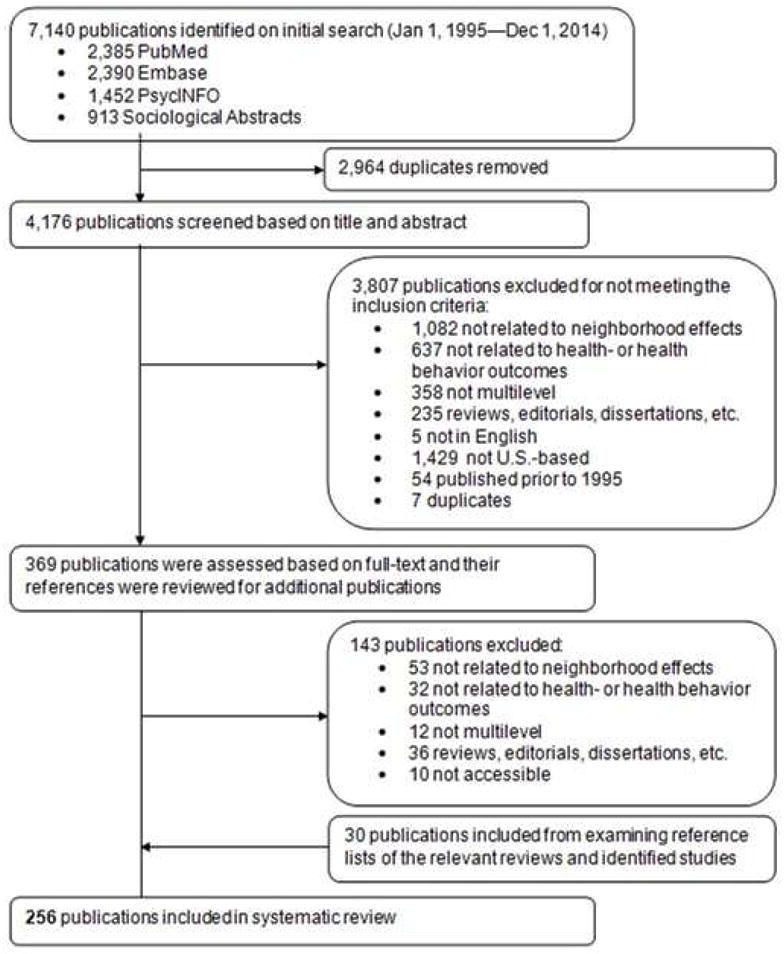
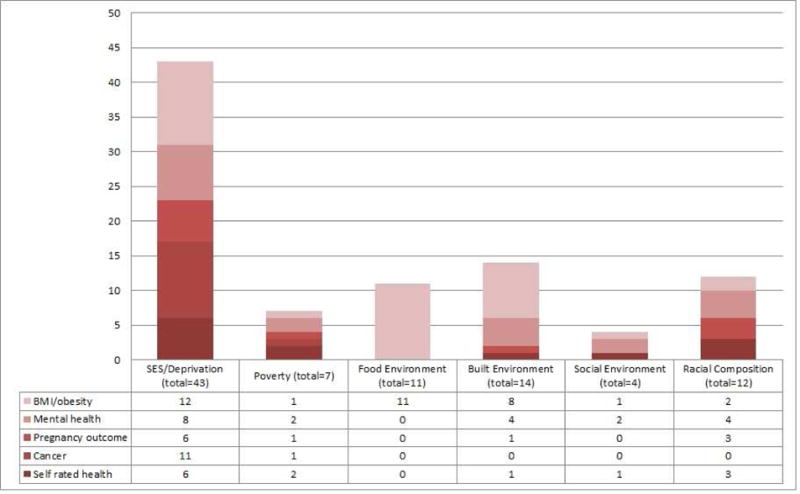
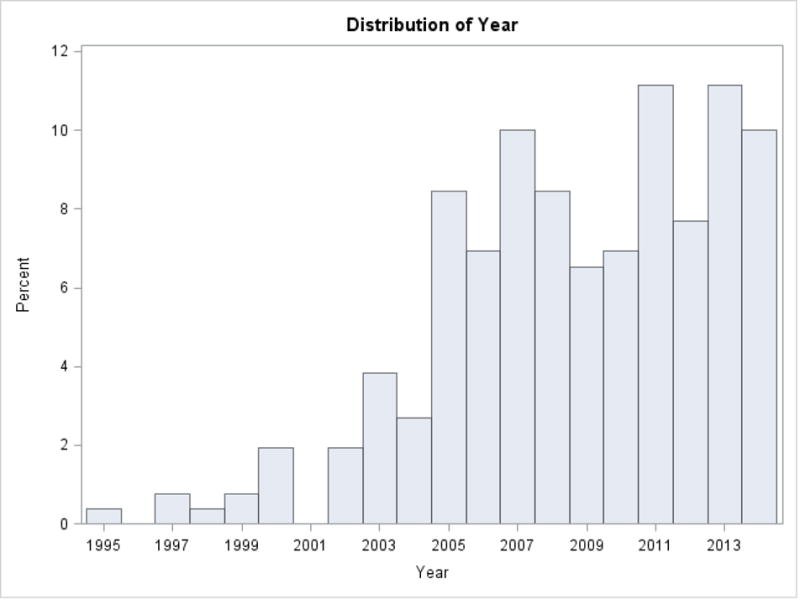
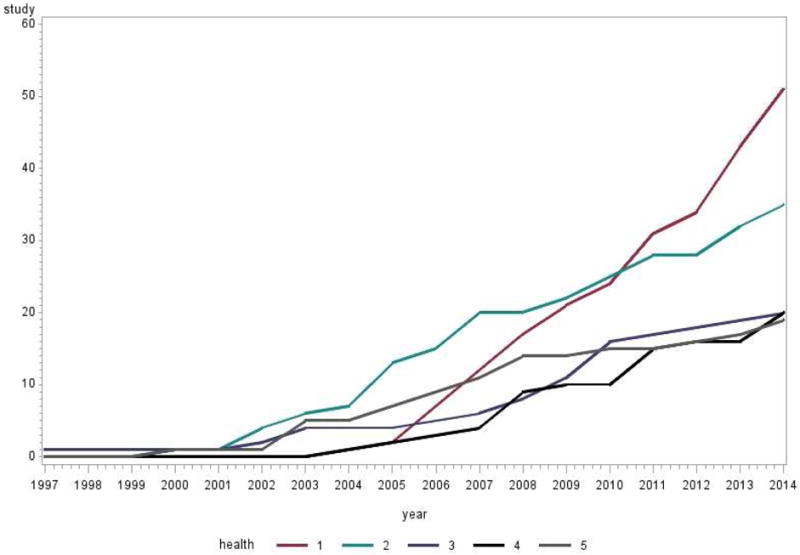
Neighborhood effects on health research has grown over the past 20 years. While the substantive findings of this literature have been published in systematic reviews, meta-analyses, and commentaries, operational details of the research have been understudied. We identified 7140 multi-level neighborhoods and health papers published on US populations between 1995 and 2014, and present data on the study characteristics of the 256 papers that met our inclusion criteria. Our results reveal rapid growth in neighborhoods and health research in the mid-2000s, illustrate the dominance of observational cross-sectional study designs, and show a heavy reliance on single-level, census-based neighborhood definitions. Socioeconomic indicators were the most commonly analyzed neighborhood variables and body mass was the most commonly studied health outcome. Well-known challenges associated with neighborhood effects research were infrequently acknowledged. We discuss how these results move the agenda forward for neighborhoods and health research.
在过去20年里,邻里环境对健康影响的研究不断增加。虽然该文献的实质性研究结果已发表在系统评价、荟萃分析和评论中,但研究的操作细节却未得到充分研究。我们识别出了1995年至2014年间发表的7140篇关于美国人群的多层次邻里环境与健康的论文,并给出了符合我们纳入标准的256篇论文的研究特征数据。我们的结果显示,邻里环境与健康研究在21世纪中期迅速增长,说明了观察性横断面研究设计的主导地位,并表明严重依赖基于单一层次人口普查的邻里环境定义。社会经济指标是最常被分析的邻里环境变量,体重是最常被研究的健康结果。与邻里环境影响研究相关的众所周知的挑战很少被提及。我们讨论了这些结果如何推动邻里环境与健康研究的议程。