Skurvydas Albertas, Mamkus Gediminas, Kamandulis Sigitas, Dudoniene Vilma, Valanciene Dovile, Westerblad Håkan
Institute of Sports Science and Innovation, Lithuanian Sports University, Lithuania, Sporto 6, 44221, Kaunas, Lithuania.
Department of Physiology and Pharmacology, Karolinska Institutet, 171 77, Stockholm, Sweden.
Eur J Appl Physiol. 2016 Dec;116(11-12):2215-2224. doi: 10.1007/s00421-016-3473-0. Epub 2016 Sep 16.
Force production frequently remains depressed for several hours or even days after various types of strenuous physical exercise. We hypothesized that the pattern of force changes during the first hour after exercise can be used to reveal muscular mechanisms likely to underlie the decline in muscle performance during exercise as well as factors involved in the triggering the prolonged force depression after exercise.
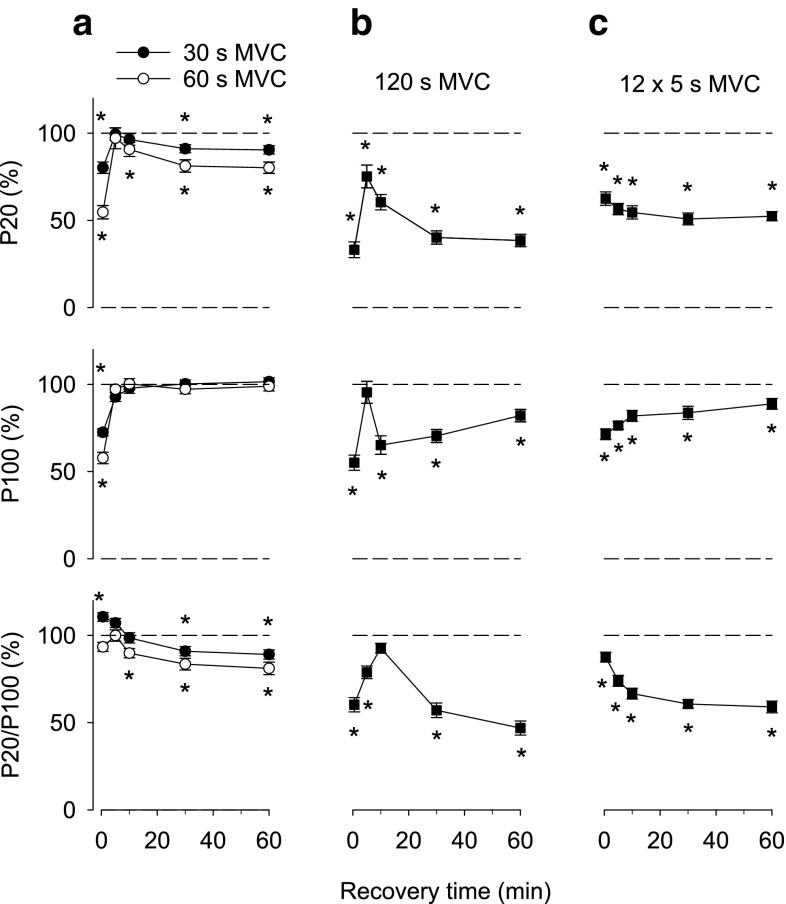
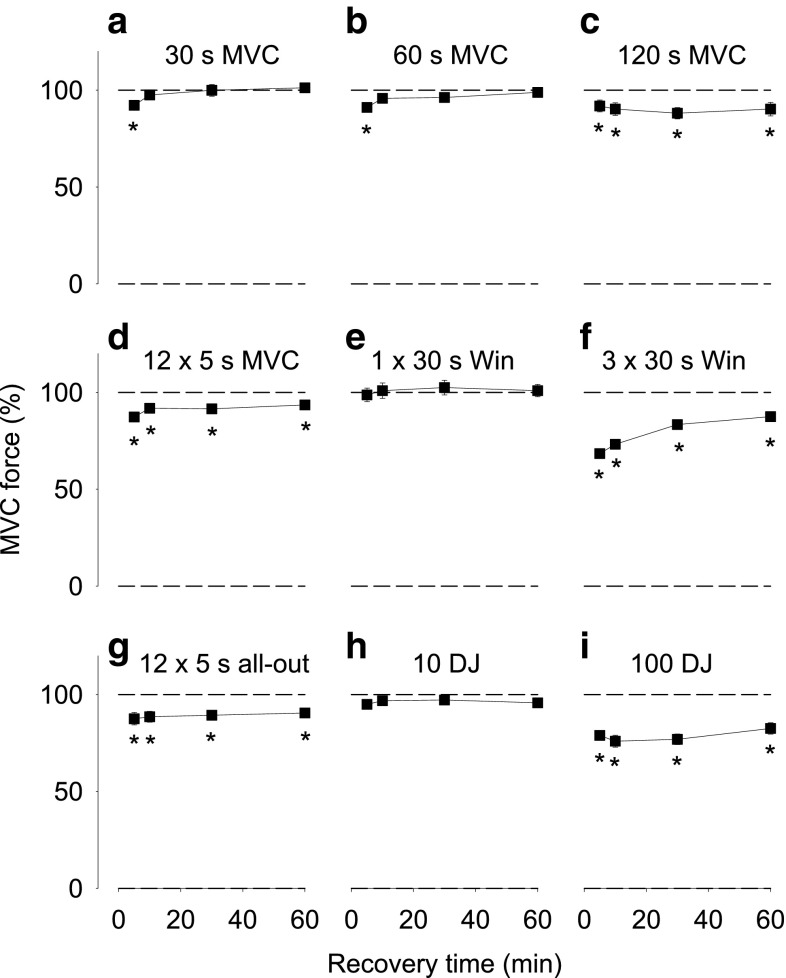
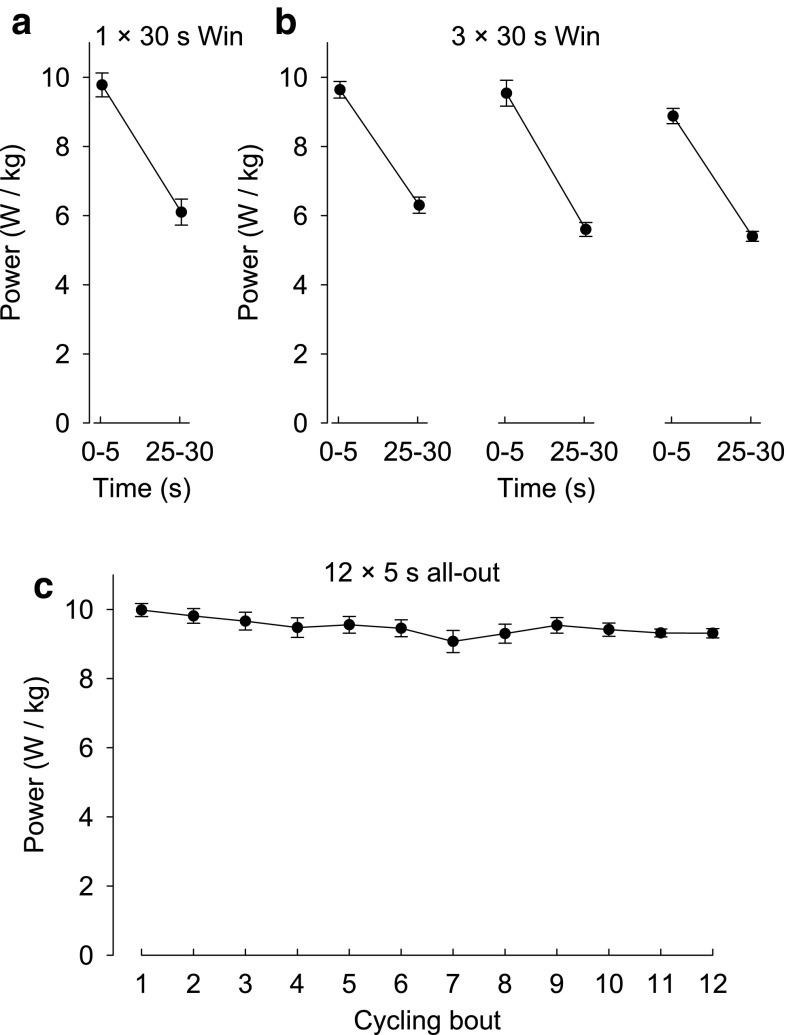
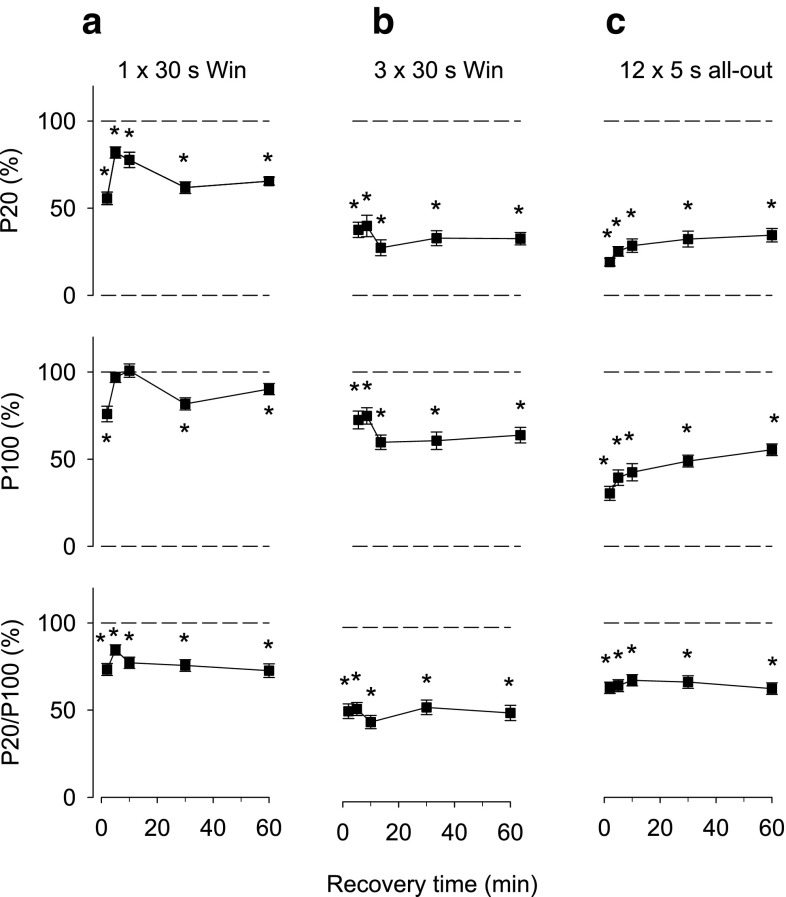
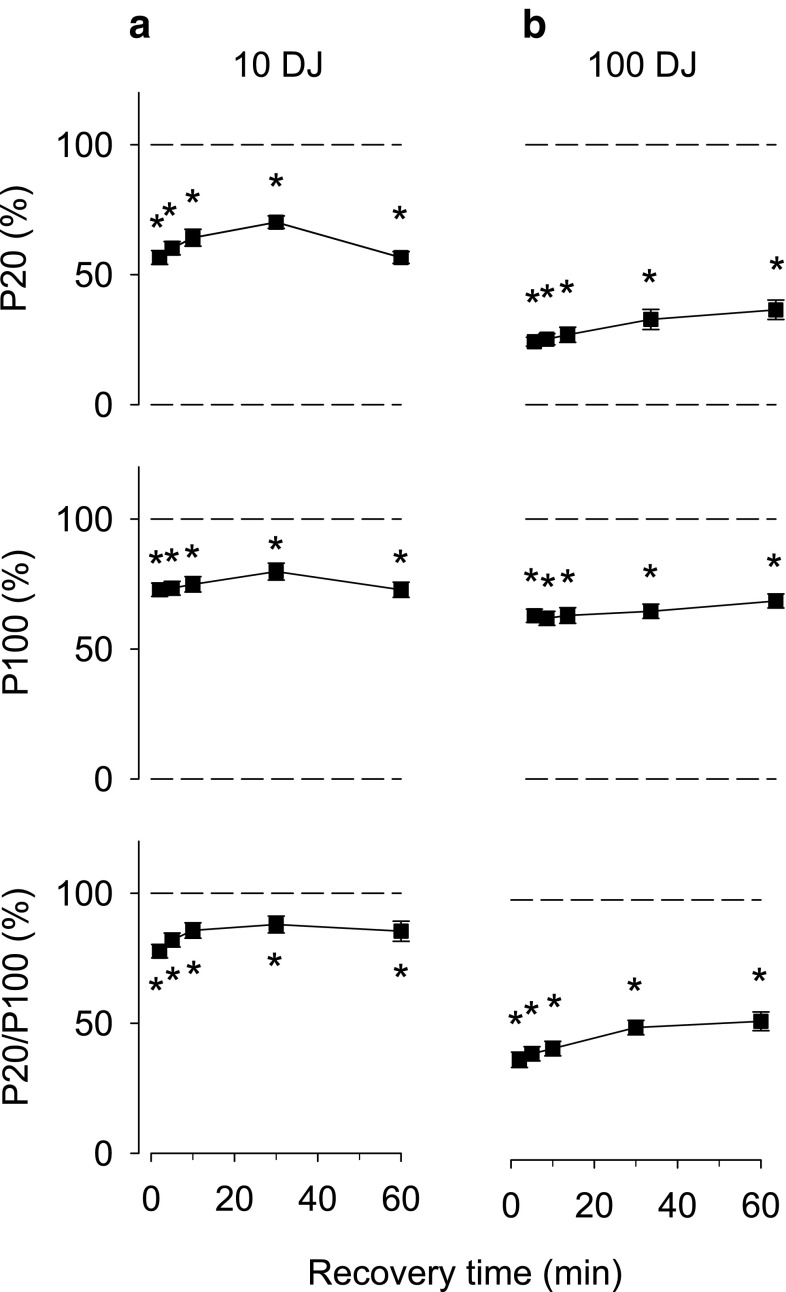
Nine groups of recreationally active male volunteers performed one of the following types of exercise: single prolonged or repeated short maximum voluntary contractions (MVCs); single or repeated all-out cycling bouts; repeated drop jumps. The isometric force of the right quadriceps muscle was measured during stimulation with brief 20 and 100 Hz trains of electrical pulses given before and at regular intervals for 60 min after exercise.
All exercises resulted in a prolonged force depression, which was more marked at 20 Hz than at 100 Hz. Short-lasting (≤2 min) MVC and all-out cycling exercises showed an initial force recovery (peak after ~ 5 min) followed by a secondary force depression. The repeated drop jumps, which involve eccentric contractions, resulted in a stable force depression with the 20 Hz force being markedly more decreased after 100 than 10 jumps.
In accordance with our hypothesis, the results propose at least three different mechanisms that influence force production after exercise: (1) a transiently recovering process followed by (2) a prolonged force depression after metabolically demanding exercise, and (3) a stable force depression after mechanically demanding contractions.
在进行各种类型的剧烈体育锻炼后,力量产生常常会持续数小时甚至数天受到抑制。我们推测,运动后第一小时内力量变化的模式可用于揭示可能是运动期间肌肉性能下降基础的肌肉机制,以及参与引发运动后长时间力量抑制的因素。
九组有休闲运动习惯的男性志愿者进行了以下类型的运动之一:单次长时间或重复短时间的最大自主收缩(MVC);单次或重复的全力骑行;重复的纵跳。在运动前及运动后每隔一定时间给予20Hz和100Hz的短暂电脉冲串刺激时,测量右侧股四头肌的等长力量,持续60分钟。
所有运动均导致力量长时间抑制,在20Hz时比在100Hz时更明显。短暂(≤2分钟)的MVC和全力骑行运动显示出初始力量恢复(约5分钟后达到峰值),随后是二次力量抑制。涉及离心收缩的重复纵跳导致稳定的力量抑制,100次纵跳后20Hz的力量下降明显大于10次纵跳后。
根据我们的假设,结果提出了至少三种影响运动后力量产生的不同机制:(1)一个短暂恢复过程,随后是(2)在进行高代谢需求运动后的长时间力量抑制,以及(3)在进行高机械需求收缩后的稳定力量抑制。