Department of Chemistry, Aligarh Muslim University, Aligarh, 202002, Uttar Pradesh, India.
Department of Biology, College of Natural and Computational Sciences, University of Gondar, P.O. Box #196, Gondar, Ethiopia.
Nanoscale Res Lett. 2016 Dec;11(1):400. doi: 10.1186/s11671-016-1607-2. Epub 2016 Sep 15.
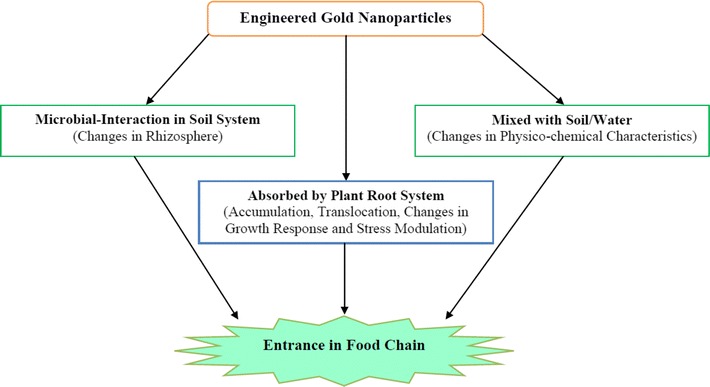
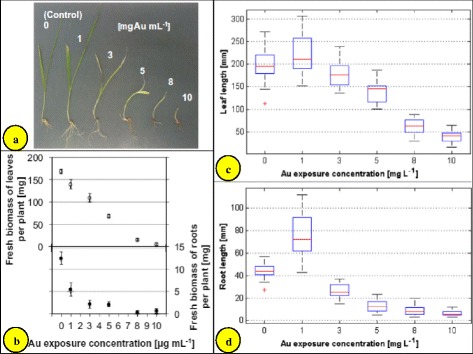
Use of metal nanoparticles in biological system has recently been recognised although little is known about their possible effects on plant growth and development. Nanoparticles accumulation, translocation, growth response and stress modulation in plant system is not well understood. Plants exposed to gold and gold nanoparticles have been demonstrated to exhibit both positive and negative effects. Their growth and yield vary from species to species. Cytoxicity of engineered gold nanoparticles depends on the concentration, particle size and shape. They exhibit increase in vegetative growth and yield of fruit/seed at lower concentration and decrease them at higher concentration. Studies have shown that the gold nanoparticles exposure has improved free radical scavenging potential and antioxidant enzymatic activities and alter micro RNAs expression that regulate different morphological, physiological and metabolic processes in plants. These modulations lead to improved plant growth and yields. Prior to the use of gold nanoparticles, it has been suggested that its cost may be calculated to see if it is economically feasible.
尽管人们对金属纳米粒子在植物生长和发育方面可能产生的影响知之甚少,但它们在生物系统中的应用最近已得到认可。目前人们还不太了解纳米粒子在植物系统中的积累、转移、生长反应和应激调节。已经证明,暴露于金和金纳米粒子的植物表现出积极和消极的影响。它们的生长和产量因物种而异。工程金纳米粒子的细胞毒性取决于浓度、颗粒大小和形状。在较低浓度下,它们会增加植物的营养生长和果实/种子的产量,而在较高浓度下则会降低。研究表明,金纳米粒子的暴露可以提高清除自由基的能力和抗氧化酶的活性,并改变调节植物不同形态、生理和代谢过程的 microRNAs 表达。这些调节导致植物生长和产量的提高。在使用金纳米粒子之前,建议计算其成本,以确定其是否具有经济可行性。