Siddiqi Khwaja Salahuddin, Husen Azamal
Department of Chemistry, Aligarh Muslim University, Aligarh, 202002, Uttar Pradesh, India.
Department of Biology, College of Natural and Computational Sciences, University of Gondar, P.O. Box #196, Gondar, Ethiopia.
Nanoscale Res Lett. 2016 Dec;11(1):98. doi: 10.1186/s11671-016-1311-2. Epub 2016 Feb 24.
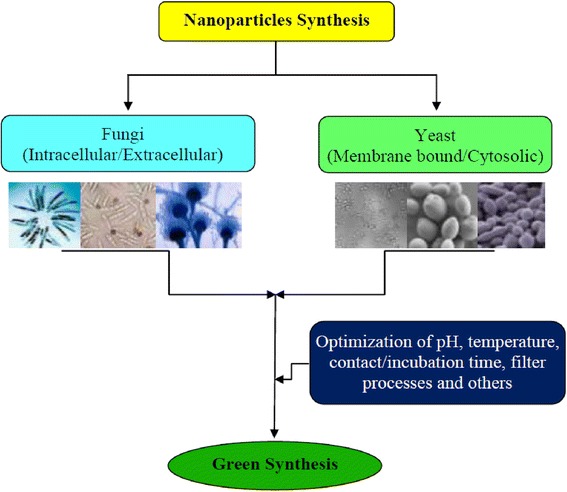
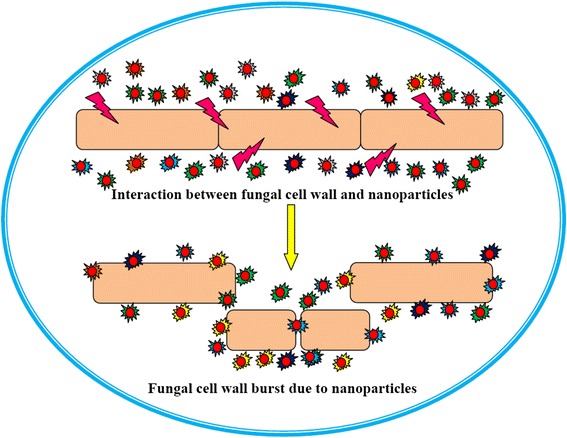
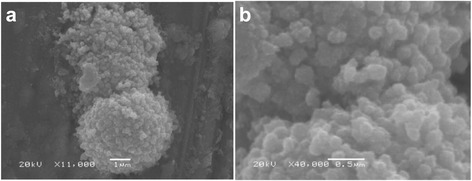
Fungi secrete enzymes and proteins as reducing agents which can be used for the synthesis of metal nanoparticles from metal salts. Large-scale production of nanoparticles from diverse fungal strains has great potential since they can be grown even in vitro. In recent years, various approaches have been made to maximize the yield of nanoparticles of varying shape, size, and stability. They have been characterized by thermogravimetric analysis, X-ray diffractometry, SEM/TEM, zeta potential measurements, UV-vis, and Fourier transform infrared (FTIR) spectroscopy. In this review, we focus on the biogenic synthesis of metal nanoparticles by fungi to explore the chemistry of their formation extracellularly and intracellularly. Emphasis has been given to the potential of metal nanoparticles as an antimicrobial agent to inhibit the growth of pathogenic fungi, and on other potential applications.
真菌分泌酶和蛋白质作为还原剂,可用于从金属盐合成金属纳米颗粒。利用多种真菌菌株大规模生产纳米颗粒具有巨大潜力,因为它们甚至可以在体外生长。近年来,人们采用了各种方法来最大限度地提高不同形状、尺寸和稳定性的纳米颗粒的产量。这些纳米颗粒已通过热重分析、X射线衍射、扫描电子显微镜/透射电子显微镜、zeta电位测量、紫外可见光谱和傅里叶变换红外(FTIR)光谱进行了表征。在这篇综述中,我们重点关注真菌对金属纳米颗粒的生物合成,以探索其在细胞外和细胞内形成的化学过程。重点介绍了金属纳米颗粒作为抗菌剂抑制致病真菌生长的潜力以及其他潜在应用。