Neurorehabilitation Laboratory, Associação Alberto Santos Dumont para Apoio à Pesquisa (AASDAP), São Paulo, Brazil.
STI IMT, Ecole Polytechnique Fédérale de Lausanne, Lausanne, Switzerland.
Sci Rep. 2016 Sep 19;6:32293. doi: 10.1038/srep32293.
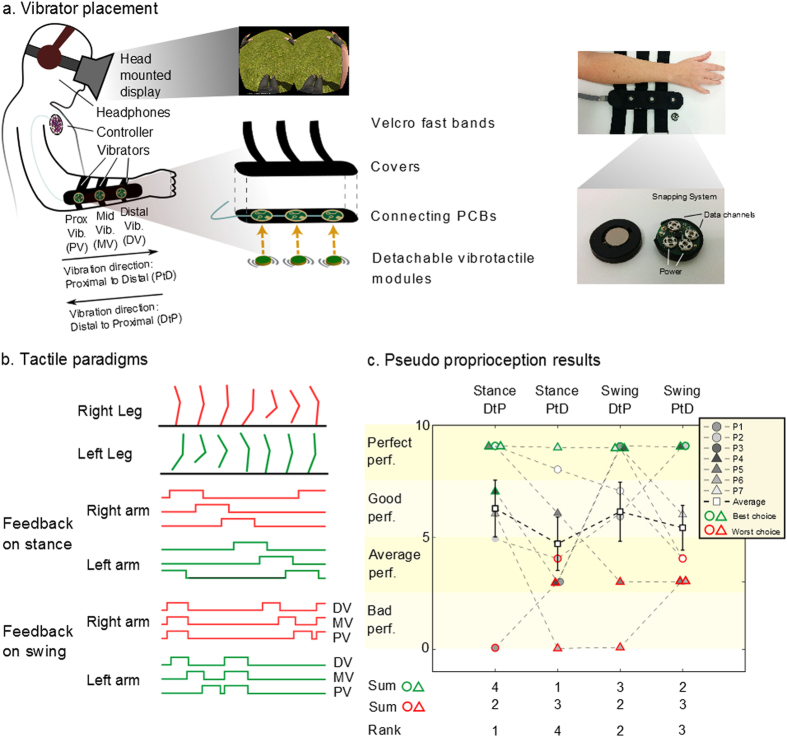
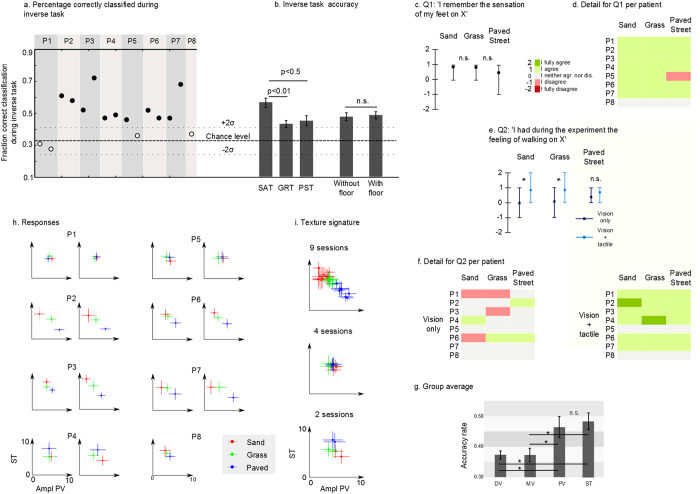
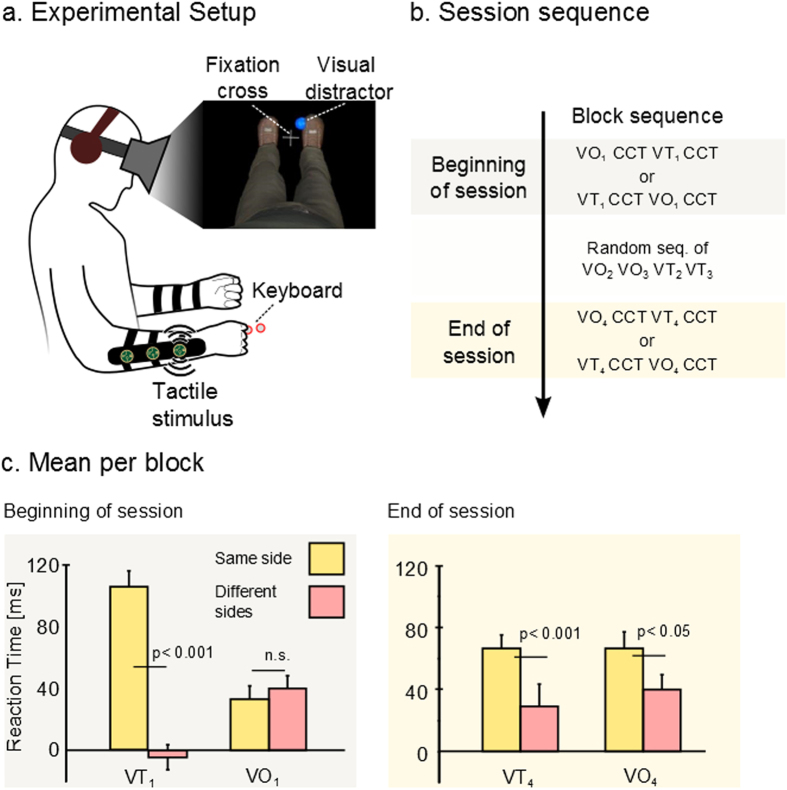
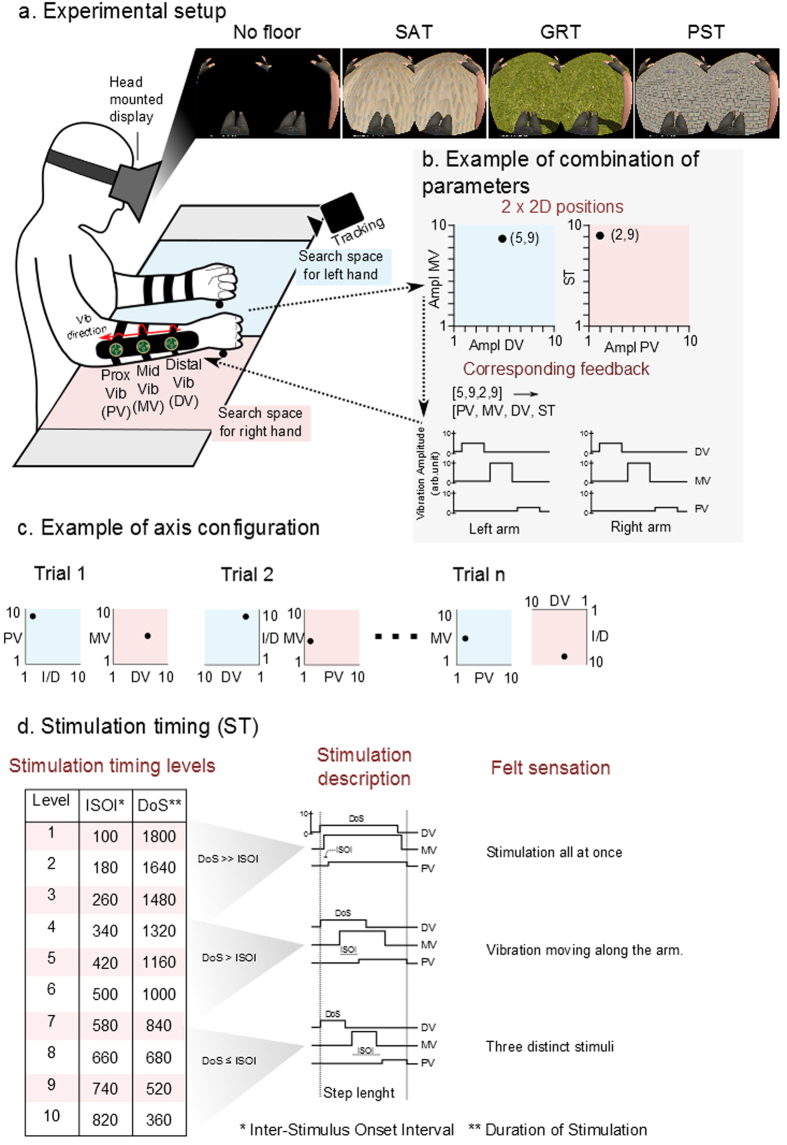
Spinal cord injuries disrupt bidirectional communication between the patient's brain and body. Here, we demonstrate a new approach for reproducing lower limb somatosensory feedback in paraplegics by remapping missing leg/foot tactile sensations onto the skin of patients' forearms. A portable haptic display was tested in eight patients in a setup where the lower limbs were simulated using immersive virtual reality (VR). For six out of eight patients, the haptic display induced the realistic illusion of walking on three different types of floor surfaces: beach sand, a paved street or grass. Additionally, patients experienced the movements of the virtual legs during the swing phase or the sensation of the foot rolling on the floor while walking. Relying solely on this tactile feedback, patients reported the position of the avatar leg during virtual walking. Crossmodal interference between vision of the virtual legs and tactile feedback revealed that patients assimilated the virtual lower limbs as if they were their own legs. We propose that the addition of tactile feedback to neuroprosthetic devices is essential to restore a full lower limb perceptual experience in spinal cord injury (SCI) patients, and will ultimately, lead to a higher rate of prosthetic acceptance/use and a better level of motor proficiency.
脊髓损伤破坏了患者大脑和身体之间的双向通信。在这里,我们通过将缺失的腿部/脚部触觉感觉重新映射到患者前臂的皮肤上,展示了一种在截瘫患者中重现下肢感觉反馈的新方法。一个便携式触觉显示器在使用沉浸式虚拟现实 (VR) 模拟下肢的设置中在八名患者中进行了测试。对于八名患者中的六名,触觉显示器诱导了在三种不同类型的地面表面上行走的逼真错觉:沙滩、铺砌的街道或草地。此外,患者在摆动阶段体验到虚拟腿部的运动或在行走时脚在地板上滚动的感觉。仅依靠这种触觉反馈,患者报告了虚拟行走过程中虚拟腿部的位置。虚拟腿部的视觉和触觉反馈之间的交叉模态干扰表明,患者将虚拟下肢同化,就好像它们是自己的腿部一样。我们提出,向神经假体设备添加触觉反馈对于恢复脊髓损伤 (SCI) 患者完整的下肢感知体验至关重要,最终将导致更高的假体接受/使用率和更好的运动熟练度。