Globevnik Velikonja Vislava, Lozej Tina, Leban Gaja, Verdenik Ivan, Vrtačnik Bokal Eda
University Medical Center Ljubljana, Division of Obstetrics and Gynaecology, Šlajmerjeva 3, 1000 Ljubljana, Slovenia.
Dr. Franc Derganc General Hospital, Ulica padlih borcev 13 a, 5290 Šempeter pri Novi Gorici, Slovenia.
Zdr Varst. 2015 Dec 16;55(1):1-10. doi: 10.1515/sjph-2016-0001. eCollection 2016 Mar.
The aim was to determine whether pregnant women conceiving through in vitro fertilization (IVF) differ from those conceiving spontaneously in terms of psychological well-being and the quality of life.
In a prospective study we included 75 women conceived after IVF and 78 who conceived spontaneously in the same time period (control group). All the women were sent a self-report questionnaire about demographic and reproductive history, health, pregnancy concerns, containing Subjective Quality of Life Scale (QLS), Positive and Negative Affect Schedule (PANAS), the Psychological Well-Being Scale (PWB), Beck Depression Inventory (BDI), and Zung Self-Assessment Anxiety Scale (SAS); obstetric and newborn's data were obtained from medical records. Response rate was 66.6% in the IVF and 83.3% in control group.
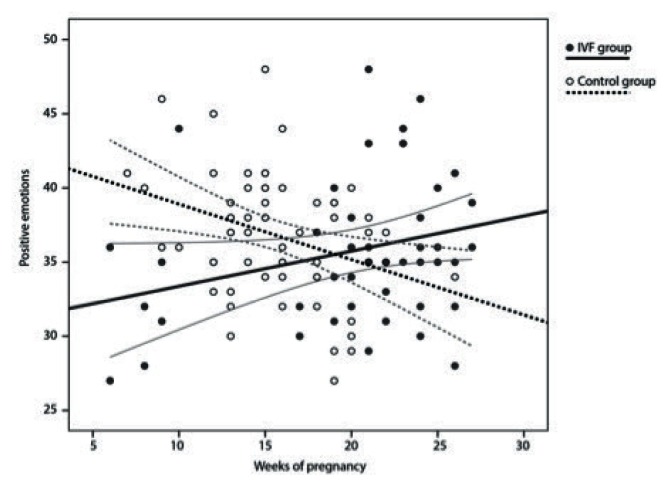
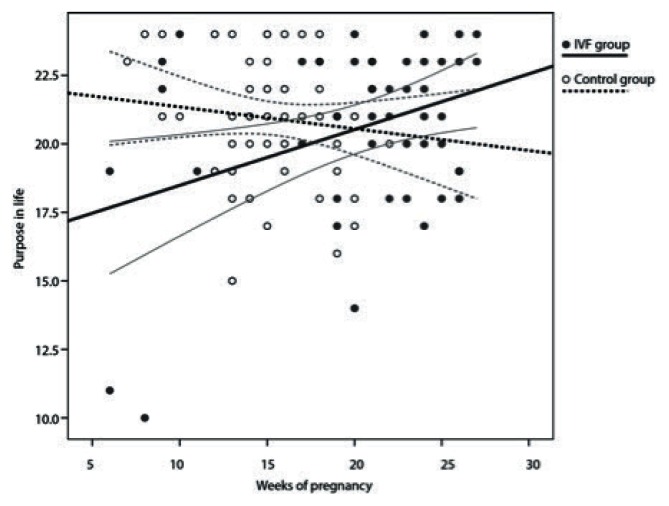
The mean women's age was 33.8 years in the IVF, and 32.5 years in the control group (NS). There were no significant differences between groups on the most of the outcome measures assessing psychological status. IVF mothers were just less satisfied in "friend/acquaintances" (P=0.03), a higher percentage had sexual problems prior to conception (P=0.03); the length of hospitalization during pregnancy was longer (P=0.02), and the preterm delivery rate was higher (P=0.01). Withingroup changes over gestation time indicated that IVF women, not controls, showed an increase in positive affect (P=0.04) and purpose in life (P=0.05).
IVF women are inclined to social isolation. Despite more medical problems during pregnancy, they reported improved positive emotions and purpose in life as the pregnancy progressed.
旨在确定通过体外受精(IVF)受孕的孕妇与自然受孕的孕妇在心理健康和生活质量方面是否存在差异。
在一项前瞻性研究中,我们纳入了75名通过IVF受孕的女性和78名在同一时期自然受孕的女性(对照组)。所有女性都收到了一份关于人口统计学和生殖史、健康状况、孕期担忧的自我报告问卷,其中包括主观生活质量量表(QLS)、正负性情绪量表(PANAS)、心理健康量表(PWB)、贝克抑郁量表(BDI)和zung自评焦虑量表(SAS);产科和新生儿数据从医疗记录中获取。IVF组的回复率为66.6%,对照组为83.3%。
IVF组女性的平均年龄为33.8岁,对照组为32.5岁(无统计学差异)。在评估心理状态的大多数结果指标上,两组之间没有显著差异。IVF母亲在“朋友/熟人”方面的满意度较低(P = 0.03),受孕前有性问题的比例较高(P = 0.03);孕期住院时间较长(P = 0.02),早产率较高(P = 0.01)。组内随妊娠时间的变化表明,IVF女性而非对照组的积极情绪(P = 0.04)和生活目标(P = 0.05)有所增加。
IVF女性倾向于社交隔离。尽管孕期有更多的医疗问题,但随着孕期进展,她们报告积极情绪和生活目标有所改善。