Zettl Uwe Klaus, Bauer-Steinhusen Ulrike, Glaser Thomas, Hechenbichler Klaus, Hecker Michael
Department of Neurology, Neuroimmunology Section, University of Rostock, Gehlsheimer Str. 20, 18147, Rostock, Germany.
Neurology, Immunology, and Ophthalmology, Bayer Vital GmbH, Leverkusen, Germany.
BMC Neurol. 2016 Sep 21;16(1):181. doi: 10.1186/s12883-016-0705-1.
Due to the preventive nature of disease-modifying therapies for multiple sclerosis, treatment success particularly depends on adherence to therapeutic regimens and patients' perception of treatment efficacy. The latter is strongly influenced by the confidence in the involved health care professionals and the relationship to the treating physician.
In this report, we considered physicians' and patients' evaluation of satisfaction with interferon beta-1b treatment efficacy for assessing the congruence in ratings. Data were queried in a study conducted between 2009 and 2013.
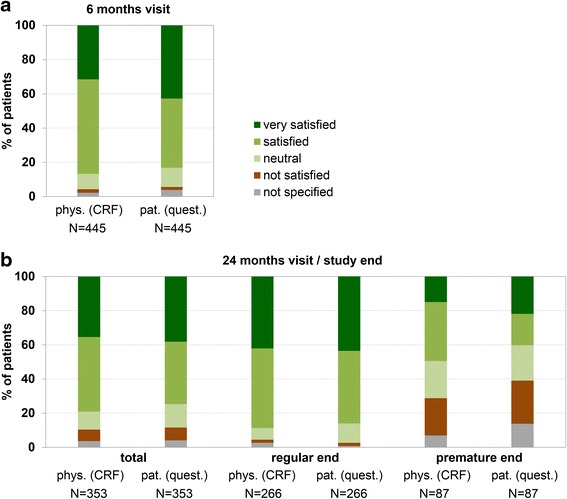
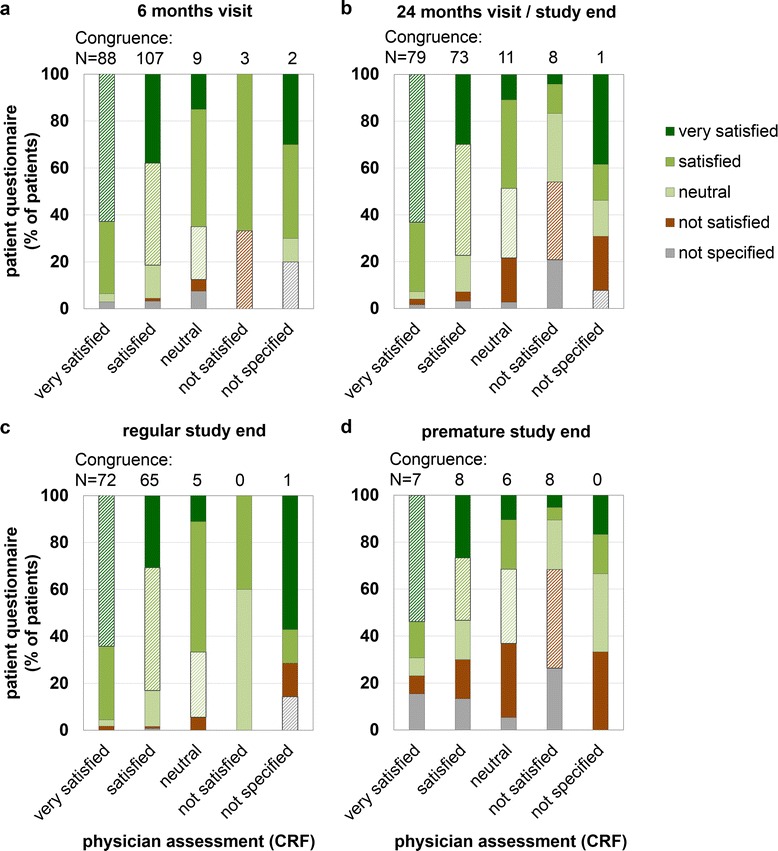
After 6 months of therapy, > 80 % of the patients and physicians (N = 445) showed high degrees of satisfaction regarding interferon beta-1b treatment, with only few physicians and patients (≤2.0 %) rating "not satisfied". The proportion of patients rating with the same category as their physicians was similar after 6 months (47 % congruence) and at the 24 months/study end visit (49 %). Discrepancies between ratings were observed with respect to study end: for patients with premature study end, more patients and physicians rated being not satisfied with the therapy, accompanied by a considerably lower congruence of 33 % compared to 54 % for patients receiving the therapy for at least 2 years and completing the study regularly.
Regular communication between physicians and patients about their perception of therapy might improve alignment of treatment evaluation and could result in increased therapy persistence. In addition, patients' willingness to perform a long-term therapy - even in the absence of disease symptoms - might be promoted by repeated exchange between health care providers and patients with regard to realistic treatment expectations.
ClinicalTrials.gov NCT00902135 (registered May 13, 2009).
由于多发性硬化症疾病修饰疗法具有预防性,治疗成功尤其取决于对治疗方案的依从性以及患者对治疗效果的认知。后者受到对相关医护人员的信任以及与主治医生关系的强烈影响。
在本报告中,我们考虑了医生和患者对干扰素β-1b治疗效果的满意度评估,以评估评分的一致性。数据来自2009年至2013年进行的一项研究。
治疗6个月后,超过80%的患者和医生(N = 445)对干扰素β-1b治疗表示高度满意,只有少数医生和患者(≤2.0%)评为“不满意”。6个月后(一致性为47%)和24个月/研究结束访视时(一致性为49%),患者与医生评分相同类别的比例相似。在研究结束时观察到评分存在差异:对于提前结束研究的患者,更多的患者和医生对治疗不满意,与至少接受治疗2年并正常完成研究的患者相比,一致性显著降低,为33%,而后者为54%。
医生与患者就他们对治疗的认知进行定期沟通,可能会改善治疗评估的一致性,并可能提高治疗的持续性。此外,医疗服务提供者与患者就现实的治疗期望进行反复交流,可能会促进患者即使在没有疾病症状的情况下也愿意接受长期治疗。
ClinicalTrials.gov NCT00902135(2009年5月13日注册)