Luo Youguang, Gao Siqi, Hao Ziwei, Yang Yang, Xie Songbo, Li Dengwen, Liu Min, Zhou Jun
Institute of Biomedical Sciences, College of Life Sciences, Key Laboratory of Animal Resistance Biology of Shandong Province, Key Laboratory of Molecular and Nano Probes of the Ministry of Education, Shandong Normal University, Jinan 250014, China.
State Key Laboratory of Medicinal Chemical Biology, College of Life Sciences, Nankai University, Tianjin 300071, China.
Oncotarget. 2016 Nov 15;7(46):75155-75164. doi: 10.18632/oncotarget.12090.
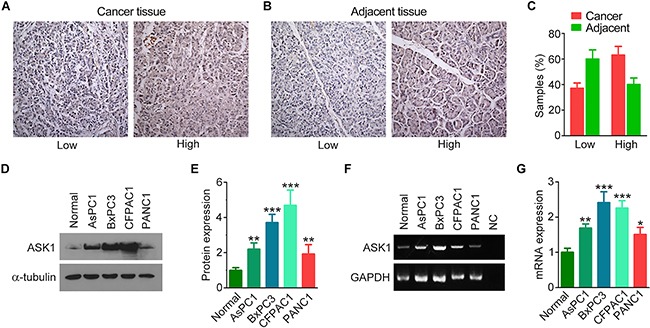
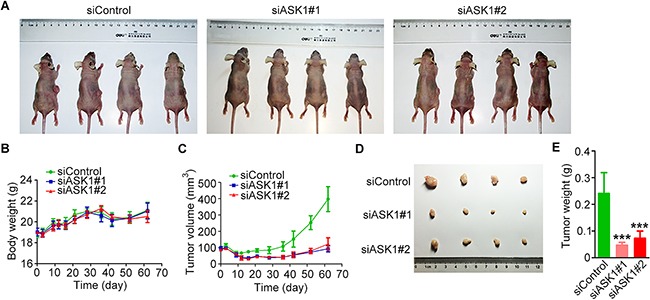
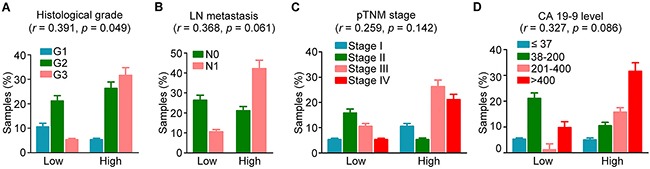
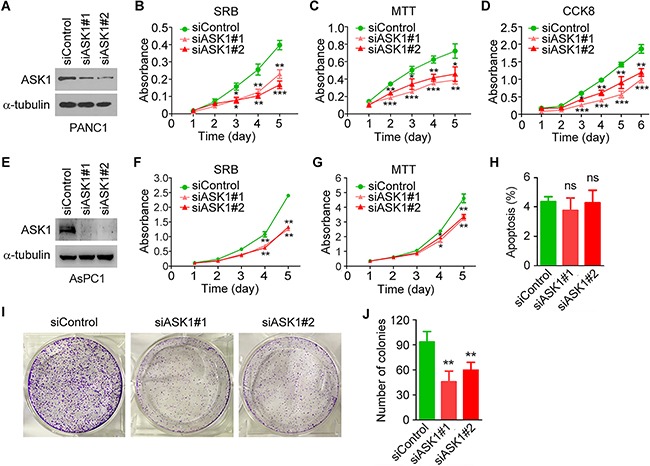
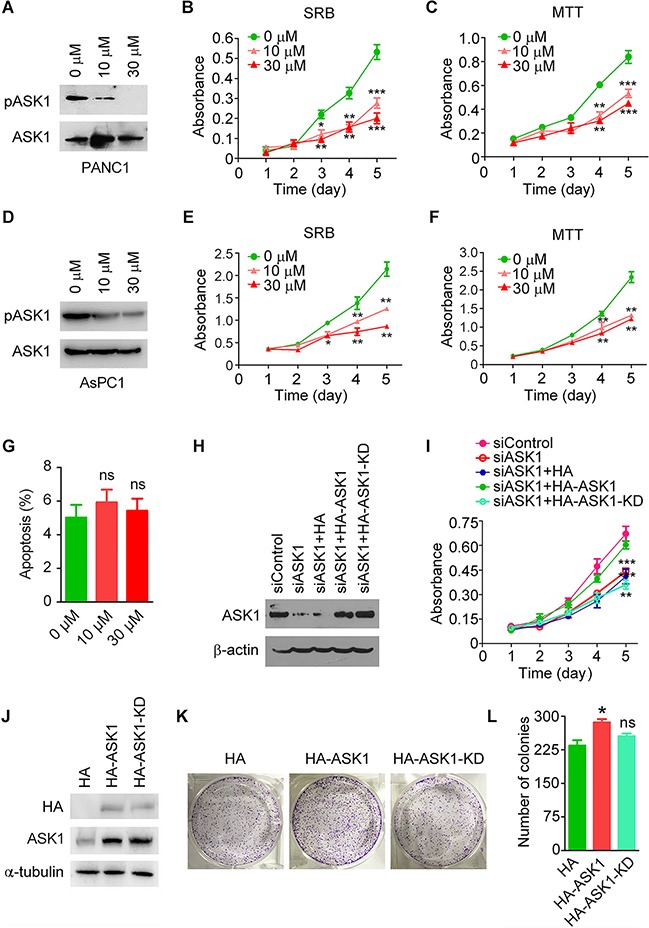
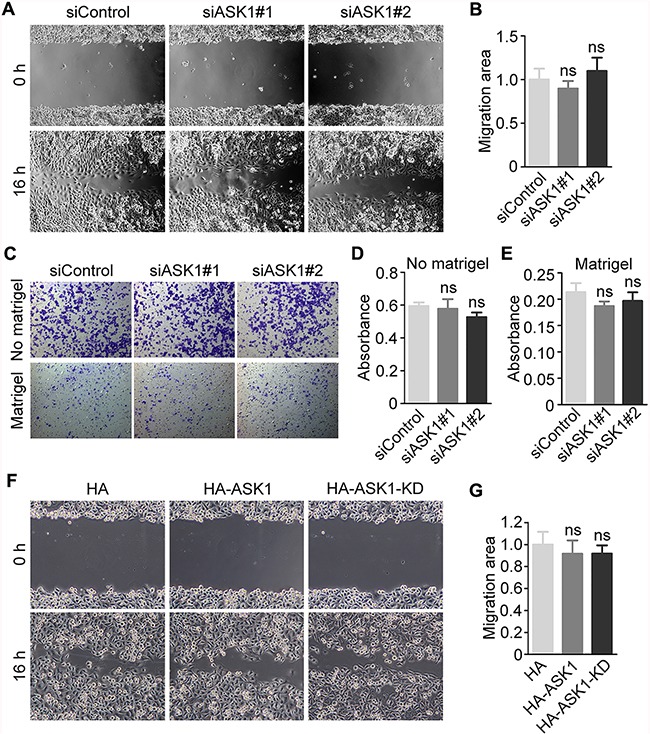
Pancreatic cancer has an extremely grim prognosis, with an overall 5-year survival rate less than 5%, as a result of its rapid metastasis and late diagnosis. To combat this disease, it is crucial to better understand the molecular mechanisms that contribute to its pathogenesis. Herein, we report that apoptosis signal-regulating kinase 1 (ASK1) is overexpressed in pancreatic cancer tissues and that its expression correlates with the histological grade of pancreatic cancer. The expression of ASK1 is also elevated in pancreatic cancer cell lines at both protein and mRNA levels. In addition, ASK1 promotes the proliferation and stimulates the tumorigenic capacity of pancreatic cancer cells. These functions of ASK1 are abrogated by pharmacological inhibition of its kinase activity or by introduction of a kinase-dead mutation, suggesting that the kinase activity of ASK1 is required for its role in pancreatic cancer. However, the alteration of ASK1 expression or activity does not significantly affect the migration or invasion of pancreatic cancer cells. Collectively, these findings reveal a critical role for ASK1 in the development of pancreatic cancer and have important implications for the diagnosis and treatment of this malignancy.
胰腺癌的预后极其严峻,由于其快速转移和诊断较晚,总体5年生存率不到5%。为了对抗这种疾病,更好地了解导致其发病机制的分子机制至关重要。在此,我们报告凋亡信号调节激酶1(ASK1)在胰腺癌组织中过度表达,并且其表达与胰腺癌的组织学分级相关。ASK1在胰腺癌细胞系中的蛋白质和mRNA水平也升高。此外,ASK1促进胰腺癌细胞的增殖并刺激其致瘤能力。ASK1的这些功能可通过其激酶活性的药理学抑制或引入激酶失活突变而被消除,这表明ASK1的激酶活性是其在胰腺癌中发挥作用所必需的。然而,ASK1表达或活性的改变对胰腺癌细胞的迁移或侵袭没有显著影响。总的来说,这些发现揭示了ASK1在胰腺癌发生发展中的关键作用,并对这种恶性肿瘤的诊断和治疗具有重要意义。