Chao de la Barca Juan Manuel, Bakhta Oussama, Kalakech Hussein, Simard Gilles, Tamareille Sophie, Catros Véronique, Callebert Jacques, Gadras Cédric, Tessier Lydie, Reynier Pascal, Prunier Fabrice, Mirebeau-Prunier Delphine
University of Angers, France Department of Biochemistry and Genetics, University Hospital of Angers, France Laboratory of Neurovascular and Mitochondrial Integrated Biology, National Institute of Medical Research (INSERM) U771, National Centre of Scientific Research (CNRS) UMR 6214, Angers, France.
University of Angers, France Laboratory of Cardioprotection, Remodeling, and Thrombosis, Université d'Angers, Angers, France.
J Am Heart Assoc. 2016 Sep 24;5(9):e003891. doi: 10.1161/JAHA.116.003891.
Remote ischemic preconditioning (RIPC) is an attractive therapeutic procedure for protecting the heart against ischemia/reperfusion injury. Despite evidence of humoral mediators transported through the circulation playing a critical role, their actual identities so far remain unknown. We sought to identify plasmatic RIPC-induced metabolites that may play a role.
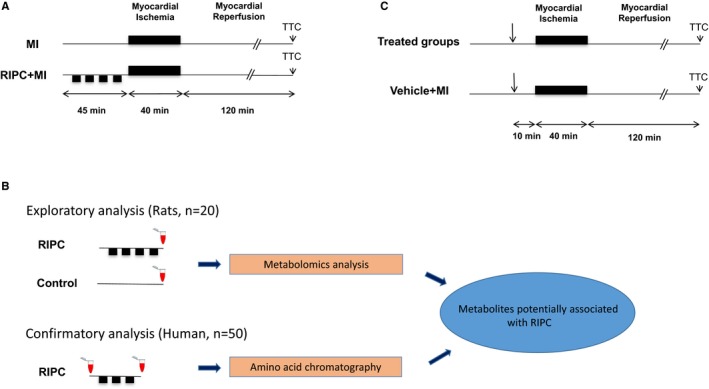
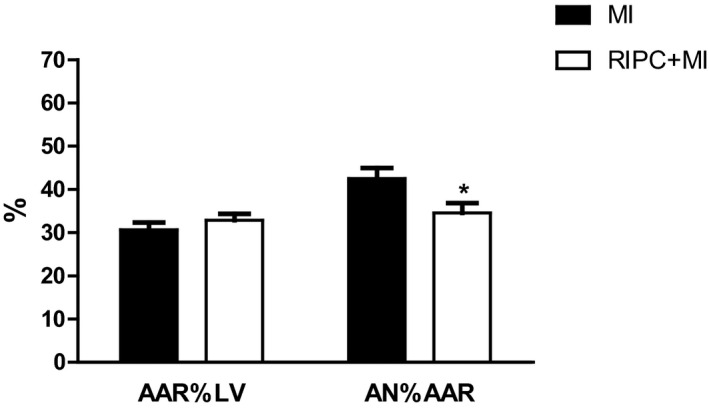
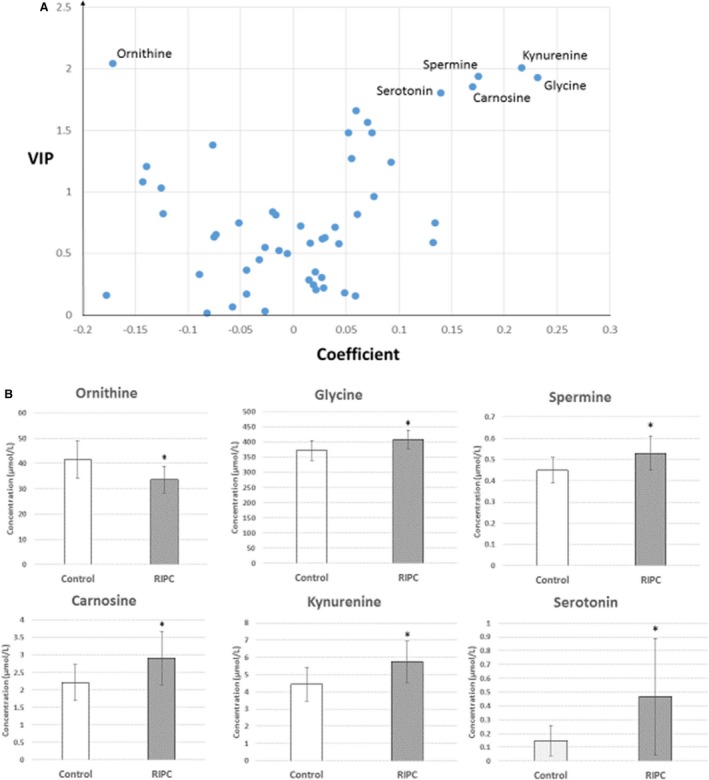
Rat plasma samples from RIPC and control groups were analyzed using a targeted metabolomic approach aimed at measuring 188 metabolites. Principal component analysis and orthogonal partial least-squares discriminant analysis were used to identify the metabolites that discriminated between groups. Plasma samples from 50 patients subjected to RIPC were secondarily explored to confirm the results obtained in rats. Finally, a combination of the metabolites that were significantly increased in both rat and human plasma was injected prior to myocardial ischemia/reperfusion in rats. In the rat samples, 124 molecules were accurately quantified. Six metabolites (ornithine, glycine, kynurenine, spermine, carnosine, and serotonin) were the most significant variables for marked differentiation between the RIPC and control groups. In human plasma, analysis confirmed ornithine decrease and kynurenine and glycine increase following RIPC. Injection of the glycine and kynurenine alone or in combination replicated the protective effects of RIPC seen in rats.
We have hereby reported significant variations in a cocktail of amino acids and biogenic amines after remote ischemic preconditioning in both rat and human plasma.
URL: http://www.clinicaltrials.gov. Unique identifier: NCT01390129.
远程缺血预处理(RIPC)是一种极具吸引力的治疗方法,可保护心脏免受缺血/再灌注损伤。尽管有证据表明通过循环系统运输的体液介质起着关键作用,但它们的实际身份至今仍不清楚。我们试图确定可能发挥作用的血浆中RIPC诱导的代谢产物。
使用靶向代谢组学方法分析RIPC组和对照组大鼠的血浆样本,旨在测量188种代谢产物。主成分分析和正交偏最小二乘判别分析用于识别区分两组的代谢产物。对50例接受RIPC的患者的血浆样本进行二次探索,以确认在大鼠中获得的结果。最后,在大鼠心肌缺血/再灌注前注射大鼠和人血浆中均显著增加的代谢产物组合。在大鼠样本中,124种分子被准确量化。六种代谢产物(鸟氨酸、甘氨酸、犬尿氨酸、精胺、肌肽和血清素)是RIPC组和对照组之间显著差异的最重要变量。在人血浆中,分析证实RIPC后鸟氨酸减少,犬尿氨酸和甘氨酸增加。单独或联合注射甘氨酸和犬尿氨酸可重现大鼠中观察到的RIPC的保护作用。
我们在此报告了大鼠和人血浆在远程缺血预处理后氨基酸和生物胺混合物的显著变化。